Coalition for reconciliation required – Declan Kearney

Sinn Fein

KearneySinn Féin National Chairperson Declan Kearney has said a coalition for reconciliation is required to unlock the next phase of the peace process.
Mr Kearney said;
“Those who share a strategic vision for the future of the peace process must reach out to each other and make alliances for the greater good.
A coalition for reconciliation, drawn from all sections of society and throughout Ireland and Britain, needs to be formed to unlock a new phase of the peace process.
The time has come for us all to develop reconciliation, promote healing and to embrace forgiveness.
ConversationsThat is a challenge which will be both difficult and painful because uncomfortable compromises inevitably need to be considered.
That challenges us all to open our hearts and minds and embrace respect, generosity, forgiveness and trust. These must be the foundations of a shared future.
Reconciliation and healing must be our future otherwise society and politics will remain trapped in the pain and resentment of the past.”

Coalition for reconciliation is essential, Declan Kearney tells Westminster audience

An Phoblacht News 14 July 2015

KearneySinn Féin National Chairperson Declan Kearney addressed a major reconciliation event in Westminster on Tuesday evening 14 July.,
He was speaking alongside former Labour Secretary of State Peter Hain; the Archbishop of Canterbury’s Canon of Reconciliation, David Porter; former Assembly Speaker John Alderdice; the Chief Executive of Irish in Britain, Jennie McShannon; and Sinn Féin West Tyrone MP Pat Doherty.
The event – based on the ‘Uncomfortable Conversations’ series of articles carried by An Phoblacht – was chaired by Professor Mary Hickman, St Mary’s University College.
This is what Declan Kearney said in his speech.

***

All wars and political conflicts create carnage and suffering.
One hundred years ago, the unimaginable horror of World War One was unfolding.
It was described as “the war to end all wars”.
Yet, within 30 years, a new world war had erupted and it too caused colossal devastation and suffering. World War Two included events like the blitz of London, and the mass atrocities at Auschwitz and Belsen.
Last May marked the end of that war in Europe 70 years ago. Three months before, in February 1945, the city of Dresden was carpet-bombed. It became another of the many horrific events which were part of the carnage of World War Two.
A play has recently been written about this particular episode in European history called After Dresden. A review of it said:
“Together the central characters ask each other painful questions. ‘Is forgiveness possible? How does reconciliation happen? And can we ever recover the truth about the past?’ It is more important than ever that we address these issues in a society that still has not healed.”
Such questions – and the compromises implied within them – are part of the ‘Uncomfortable Conversations’ which need to happen for reconciliation and healing to grow.
There is no distinction to be drawn between the carnage and suffering resulting from conflict.
No war can be romanticised.
Terrible devastation and human loss were caused by the political conflict in Ireland and Britain.
Victims were created by and on all sides – by republicans; the British state, its forces and agencies; and by unionists.
All sides were part of the conflict which occurred and continued.
IRA operations in this city resulted in many military and civilian fatalities and casualties as well as enormous commercial damage.
Regrettably, our collective past cannot be changed. Neither can it be disowned by republicans or anyone else.
Too many families from all sides, across Ireland and Britain, live with real and continuing pain. I am sorry that cannot be undone. No reasonable person could disagree that there are many things which we wish had been done differently or not at all.
This month marks the tenth anniversary of the IRA’s formal announcement to end its armed campaign and support the achievement of republican objectives of Irish unity and independence through democratic and political programmes.
Irish society has now moved irreversibly beyond war.

The Good Friday Agreement was the catalyst for that transition. It is the definitive benchmark against which to measure change.
The absence of war, however, is not in itself enough.
The time has come for us all to develop reconciliation, promote healing and to embrace forgiveness.
That is a challenge which will be both difficult and painful because uncomfortable compromises inevitably need to be considered.
After two wars in 30 years, Europe had to compromise in order to find a relationship with its history and avoid recycling past pain for the future.
Courage will be required but, as Nelson Mandela said:
“Courageous people do not fear forgiving for the sake of peace.”
The fact is that the hurt caused by war still needs to be healed long after wars finish.
Now that the war which divided Britain and Ireland is over, we have to explore how new political and human relationships can be made.
That challenges us all to open our hearts and minds and embrace respect, generosity, forgiveness and trust. These must be the foundations of a shared future.
Reconciliation and healing must be our future, otherwise society and politics will remain trapped in the pain and resentment of the past.
However, a minority still oppose that vision.
In Ireland, North and South, and here in Britain, some believe that dealing with the past is a new battlefield.
They prefer endless recrimination to reconciliation and refuse to accept that reconciliation should be set above political agendas or allegiances in the greater good.
In his recent article in The Irish Times, Professor Richard English commented:
“Many pro-Union people were louder in demanding that republicans should give up violence and that they should respect Northern majority opinion than they have been to engage in meaningful dialogue with republicans once those crucial changes were brought about.”
This is why symbolic initiatives and political leadership supporting the reconciliation vision remain so important.
Given our history, such gestures should not be taken for granted. But, when carried out in a spirit of mutual respect and equality, these gestures and initiatives can provide hugely important examples for wider society.
There was great significance attached to the private meeting which followed the public encounter between Prince Charles sand Gerry Adams during the recent royal visit to Ireland.
That meeting brought together Martin McGuinness and Gerry Adams, as the most central republican leaders of the last 45 years, with Prince Charles, the British royal figure most synonymous with the British military forces and imperial and military traditions of the British state and set to become the next British head of state.
Coming as it did in the context of Prince Charles’s own personal pilgrimage to Mullaghmore to remember his uncle, Lord Mountbatten, killed by the IRA, this meeting powerfully underlined the irreversibility of the Peace Process and our collective responsibility to open up a new phase based upon reconciliation.
It also symbolically gave expression to the multiple narratives about the past and was evocative of some (but not all) of the incidents which moulded the experience of our most recent conflict.
Importantly, this latest initiative happened not just because of the Sinn Féin leadership’s total commitment to reconciliation and healing but also because the British royal family and key elements of the British state had the independent foresight to recognise it represented another important opportunity to create positive forward momentum.
Queen Elizabeth has already made her own influential contribution to the Peace Process. The decision of Prince Charles to meet with Sinn Féin, repeat her words from 2011, and then offer his own words on regrets, resentment and attribution of blame, indicate the British royals are committed to developing authentic reconciliation and healing.
That sends a clear message to those who are hostile to this agenda.
There is a bigger picture.

Those who share a strategic vision for the future of the Peace Process must reach out to each other and make alliances for the greater good.
A coalition for reconciliation drawn from all sections of society and throughout Ireland and Britain needs to be formed to unlock a new phase of the Peace Process.
Nelson Mandela also referred to the importance of partnership in peace building:
“If you want to make peace with your enemy, you have to work with your enemy. Then he becomes your friend.”
No government or state system is monolithic.
There are always competing positions, both progressive and regressive.
Some sectional and political interests did not want the meeting between the Sinn Féin leadership and Prince Charles to take place.
They are unwilling to place reconciliation above the political process or to promote healing and authentic reconciliation as strategic priorities.
That mindset is indicative of British Government policy towards the North over the last five years.
The reality is that the biggest threat to the viability of the political institutions and political process was the approach of the Tory-led coalition.
It reduced the North to a political backwater through negative mismanagement of the peace and political processes. The imposition of its austerity agenda has directly contributed to political instability.
No political process can flourish without a sustainable economic framework or the expenditure to meet society’s needs.
The worsening austerity crisis in the North is incompatible with the Good Friday Agreement. The ideologically-driven approach of this majority Tory Government is now putting it on a direct collision with the very basis of the Agreement.
The current British Government’s economic and political policy is pushing the regional economy and political process into a negative downward trajectory.
That can only have extreme and long-term adverse consequences, including potentially fatal repercussions for the Good Friday Agreement itself and the North’s relationship with Europe.
The question which all of that poses is whether such an outcome has become a calculation of this British Government’s policy towards the North.
Deeper political instability and increased polarisation will surely undermine the prospects for reconciliation and healing.
That must not be allowed to happen.
But averting such a scenario will also depend upon the strength, depth and momentum of an emergent coalition for reconciliation.
The North is still a society emerging from conflict carrying deep-rooted structural economic inequality and under-development, endemic sectarian division, the highest mental health problems and child poverty, and the lowest wage structure and living standards of any region in Britain or Ireland.
The estimated loss of £2.3billion from the regional economy between 2010 and 2018 will have catastrophic economic, social and political consequences.
ConversationsThe North requires a ‘New Deal’ to build a fair society.
There is a need for a new negotiation with the British and Irish governments. New time and space has now been created to address the issues which threaten political progress.
If that does not happen – and British Government policy does not change – we will run out of road.
That will create the conditions for an unprecedented setback.
The alternative is a new negotiation process which delivers a ‘New Deal’ – a sustainable, workable budget – and which also restores political stability and proper power-sharing.
A defining period now faces the political and economic future of the North. What emerges from that will directly influence the potential for opening up a new phase of the Peace Process based upon authentic reconciliation, healing and a fair society.

Tory austerity biggest threat to political process – Declan Kearney

Sinn Fein

KearneySinn Féin National Chairperson Declan Kearney has said Tory austerity is the biggest threat to the political process in the North and the progress made over the last two decades.
Speaking ahead of a speech he will deliver at a major reconciliation event in the House of Commons tomorrow, Mr Kearney said;
“The reality is that the biggest threat to the viability of the political institutions and political process is the approach of the Tory government.
The worsening austerity crisis in the north is incompatible with the Good Friday Agreement.
That can only have extreme and long-term adverse consequences, including potentially fatal repercussions for the Good Friday Agreement itself and the north’s relationship with Europe.
Deeper political instability and increased polarisation will surely undermine the prospects for reconciliation and healing. That must not be allowed to happen.
The north requires a ‘New Deal’ to build a fair society. There is a need for a new negotiation with the British and Irish governments. Time and space has now been created to address the issues which threaten political progress.
A defining period now faces the political and economic future of the north. What emerges from that will directly influence the potential for opening up a new phase of the peace process based upon authentic reconciliation, healing and a fair society. That opportunity must not be lost.”

    Conversations`Uncomfortable Conversations – an initiative for dialogue towards reconciliation
    Tuesday 14 July, 7.00pm
    Hosted by Sinn Fein MP Pat Doherty and chaired by Professor Mary J. Hickman
    Speakers will include:
    * Declan Kearney, Sinn Fein national chairperson
    * Peter Hain, former Labour Secretary of State for the north of Ireland
    * Lord John Alderdice, former Assembly Speaker
    * David Porter, Archbishop of Canterbury’s Canon of Reconciliation
    * Jennie McShannon, Irish in Britain Chief executive

Tory budget will drive people deeper into poverty – Francie Molloy MP

Sinn Fein

MolloySinn Féin MP Francie Molloy has said today’s Tory budget will drive people deeper into poverty.
Speaking from Westminster, the Mid Ulster MP said;
“George Osborne’s budget is the latest attack on working people from David Cameron’s cabinet of millionaires.
Tory plans to cut tax credits are targeted against low-paid workers and will hit people in the North of Ireland particularly hard.
These draconian cuts will force more and more people, including children, into hardship and condemn future generations deeper into poverty.
This will also have a depressive impact on the wider economy as working-class families will have less money to spend in local shops and businesses.
It is clear that austerity is not working.
The alternative to austerity is workable and sustainable finances for the Executive and investment to stimulate economic growth.
We need to a united approach from civic society, business, community and the trade union movement to continue to oppose austerity.”

Week in Review 24-02 June/July 2015‏

Sinn Fein
The Week in Review
24 June – 2 July 2015

Martin McGuinness at packed Sinn Féin Westminster event:
`Tory austerity is biggest threat to political institutions’
McGuinness
On 2 July Sinn Fein’s Martin McGuinness addressed a packed Sinn Fein Summer reception, hosted by the party’s MPs.
Martin McGuinness, speaking to the gathering, said that `Tory recklessness’ and `their disastrous austerity agenda’ was endangering the political institutions `which have underpinned the peace process for almost two decades’.
The event in Portcullis House, was attended by a wide range of MPs and members of the House of Lords from across the political spectrum, by a host of Irish community organisations, trade union representatives, international guests, campaigning legal and human rights groups and social justice and anti-austerity campaigners.
Sinn Fein’s Spokesperson for the Diaspora Senator Trevor Ó Clochartaigh who was also in London met a number of Irish community and diaspora groups.
In his address Mr McGuinness highlighted how during the recent Westminster elections `Sinn Féin stood on an anti-austerity platform and we are absolutely determined to honour the mandate given to us.’
He said the role of deputy First Minister would not be `reduced to an implementer of Tory cuts.’
He concluded that `while these are challenging times we are living in, there is no one in this room who is afraid of a challenge and I greatly look forward to standing shoulder to shoulder with you all as we face them together.’
Chairing the event, Sinn Fein MP Francie Molloy said Sinn Fein looked forward to `continuing to work and campaign with other progressive forces across these islands over the weeks and months ahead’, adding Sinn Fein’s team of MPs and London office would be `at the forefront of that work.’
As part of the visit to London, Martin McGuinness also had a number of meetings, including with the trade unions and with the campaigning group the People’s Assembly Against Austerity, who organized the 250,000-strong demonstration in London in June.

Alliances needed to defeat austerity agendaBrady
Earlier in the week Sinn Fein MP Mickey Brady spoke at a Labour Against Austerity rally in Westminster Hall, which heard the devastating effects of Welfare Cuts on those living in Britain. Earlier that day he had also joined protesters outside Westminster opposing the cut to Disability Living Fund. Mr Brady expressed his solidarity and said that their experience only reinforced the case that the Welfare Cuts should not be extended to the north of Ireland.
At the meeting he joined MPs Jeremy Corbyn, Diane Abbott, Cat Smith and Richard Burgon, alongside London Syriza representative Marina Prentoulis. He reiterated that Sinn Fein would `oppose the Thatcherite policies of the Tory millionaire cabinet which are designed to destroy the welfare state at the expense of ordinary, decent communities throughout these islands.’
He concluded `austerity has failed and we need to work together to advance the progressive alternative.’

Sinn Fein Westminster meeting:
`Uncomfortable Conversations – an initiative for dialogue towards reconciliation’
ConversationsOn Tuesday 14 July, Sinn Fein MP Pat Doherty will host a panel discussion titled, `Uncomfortable Conversations – an initiative for dialogue towards reconciliation’. Speakers will include Sinn Fein national chairperson Declan Kearney; former Labour Secretary of State for the north of Ireland Peter Hain; former Assembly Speaker Lord John Alderdice; David Porter, Archbishop of Canterbury’s Canon of Reconciliation, and Irish in Britain Chief executive Jennie McShannon.
Speaking in advance of the meeting, Pat Doherty said `reconciliation is the next phase of the peace process.’ He added, `by bringing this discussion to Westminster this event will put a spotlight on the need for reflection and healing between Ireland and Britain, and to assert a new framework to take forward new and improved relations.’
For further details or to RSVP email jayne.fisher@parliament.uk. All welcome.

A bad week for women in EU and in IrelandBoylan
Dublin MEP Lynn Boylan expressed her disappointment this week with the EU Commission as it today announced the withdrawal of the draft EU directive on maternity leave.
Lynn Boylan stated that the move was `nothing short of scandalous and adds to the backlash against women’s rights, especially here in Ireland where women have been repeatedly victimised by Labour cuts to child benefit, back to school clothing allowances and now lone parent payments.’
She added that in Ireland childcare provision remained `wholly inadequate’ and many women are still “working under precarious contract terms and continue to earn less which, in turn contributes to the EU’s gender and pension pay gap.”

Child poverty strategy must address needFearon
Sinn Féin MLA Megan Fearon has said the Executive’s child poverty strategy must be based on addressing objective need. Ms Fearon noted that reports published this week demonstrate that levels of child poverty in the North are increasing.
She said that the rise `coupled with the prospect of further cuts from the Tory government in Westminster, will see those rates increase event further… which was `totally unacceptable.’
Ms Fearon argued for a robust child poverty strategy `to combat these rising levels so that more children do not slip into poverty… based on objective need’.
She concluded by reiterating Sinn Féin’s commitment to `working towards eliminating child poverty and call on all parties to ensure any strategy to combat child poverty is based on objective need.’

Week in Review is circulated by Sinn Fein MPs. Email jayne.fisher@parliament.uk to join the list. For further information visit www.sinnfein.ie or follow us on twitter @sinnfeinireland

False narratives obscure the need to negotiate ‘New Deal’ for the North

Declan Kearney, Sinn Fein National Chairperson – An Phoblacht 30 June 2015

KearneyTHE Sinn Fein Ard Chomhairle’s decision to conditionally support the current budget’s passage through the Assembly in the North has created space and time. Neither should be squandered.
That, however, will depend upon the commitment of the British and Irish governments and all the local parties to prevent the current austerity crisis pushing the North into an unprecedented political crisis with serious implications for the sustainability of the political institutions and the political process itself.
The party’s Ard Chomhairle meeting heard a range of different political opinions on what decision to take.
Everyone agreed that the election of a majority Conservative Government committed to cutting £25billion from public services, jobs, child tax credits and support for the long-term sick, disabled, the poor, and elderly had changed the context within which the discussion was happening.
In the end, the Ard Chomhairle decided that Sinn Féin would give conditional support to the current budget on the basis that it remained exempt from the immediate “in year” cuts which the Conservatives are trying to force upon the Executive and whatever further cuts to public expenditure will be announced in the 8 July Budget Statement.
The alternative was to vote down this budget, thereby triggering an immediate and real political crisis with ministerial powers being usurped by civil servants or Executive powers being handed back to the British Government.
In recent months and weeks, several false narratives have been encouraged (publicly and privately) to obscure the facts and to rationalise the continuing negative status quo in the North.
Both the British and Irish governments have been saying privately that Sinn Féin wants to collapse the political institutions because of the Southern general election.
That is both preposterous and absolutely untrue – and both governments know that to be the case.
However, it is a convenient fiction behind which to disguise their own inaction and indifference to the ramifications of the huge austerity crisis facing the North. Include in that (and not unlike in Greece) their ideological hostility to the anti-austerity politics of Sinn Féin and their annoyance that Sinn Féin in government refuses to support the Conservatives’ austerity agenda.
A second false narrative being jointly promoted by the Conservatives and all unionist parties is that failure to agree the welfare component of the Stormont House Agreement is the cause of all the economic problems in the North as well as continued political instability.
That is also untrue.
The welfare impasse is a by-product of the wider austerity crisis, not the cause!
The third fiction being pumped by the Conservatives and all the unionist parties (but particularly the DUP) is that there is no alternative to austerity and there is no more money. Wrong! There is always more money – the real crux is how that money is spent and the choices which governments and political parties make.
The Conservatives and unionist parties all support using 2% of Britain’s GDP on military spending. At the same time as the Conservatives plan to cut £25billion from state public expenditure before 2018, they want to spend over £23billion on replacing Trident nuclear submarines. And the local unionist parties agree with that.
Amazingly, the DUP went even further by proposing the the completion, equipping and deployment of two new aircraft carriers.
And all this while citizens are losing their homes and others live with mortgage distress. Why?
The latest figures from the British Office of National Statistics show that households in the North have the lowest incomes, on average, of any region in the British state. We already know that the standard of living is the lowest of any region in the British state or 26 Counties.
The fact is that more austerity in the North will set back the prospect of restructuring the regional economy. It could not be otherwise when the private sector is already too weak and British Government policy remains impervious to the special circumstances and needs of the North as a society emerging from conflict.
The welfare impasse does not have to hold up progress if the DUP reverts to the original agreement to maintain protections for future claimants and directs the Social Security Agency to proceed with implementation.
That doesn’t require a new negotiation.

The fundamental sticking point which has brought the political process to this crossroads is British Government political and economic policy. That needs to change. The political process will not deliver as envisaged under the terms of the Good Friday Agreement – and indeed the Executive’s Programme for Government – without a sustainable economic framework.
Most if not all sections of opinion and society in the North agree that a workable budget is needed to restructure the economy. There is broad consensus that the financial and economic resource is not available to the local Executive to ensure it can deliver its services, build infrastructure and housing, and grow the economy. That in itself becomes a source of further political instability.
Austerity is incompatible with the political compromises and governance arrangements which underpin the political process.
Unchecked, austerity will create greater inequality and reinforce existing and systemic inequalities within Northern society. It will undermine the development of a fair society and support for a potential shared future.
The trajectory set by the British Government for the regional economy will result in an estimated loss of £2.3billion to the North between 2010 and 2018. That carries with it catastrophic economic, social and political consequences.
The North needs a ‘New Deal’ to build a fair society going forward.
Negotiating and securing that ‘New Deal’ should become the focus for all political parties, the social partners and all stakeholders in civic society during this political space which has become available.
The positive and significant influence of Irish-America, the US administration and European Parliament should also be utilised.
The elements of a ‘New Deal’ should include delivery of a workable budget, provision of “off book” borrowing powers to the local Executive, and the agreed transfer of fiscal powers.
A ‘New Deal’ would equip the Executive with the tools to plan the regeneration of the regional economy with a mid- to long-term strategy and to draw upon the support and expertise of the key social partners from within the business, trades union, voluntary and academic sectors.
Such a strategy would depend upon the political parties and social partners uniting on a new economic and social agenda based upon a firm commitment to proper power sharing and partnership.
If that can be achieved, the next stage would be to commence a game-changing negotiation with the British and Irish governments.
The local parties and all social partners should meet and agree to speak with one voice.
A space has been created and the opportunity should be seized to remobilise the unity of purpose and goodwill which delivered the referendum endorsing the Good Friday Agreement. That possibility should inspire everyone.
If this does not happen, and British Government economic and political policy does not change, then we will quickly run out of road and no more political space will exist. In that context, we will all be left facing a very uncertain and unpredictable future indeed.

Alliances needed to defeat austerity agenda – Mickey Brady MP

Sinn Fein

BradySinn Féin MP Mickey Brady has said it is important to build alliances to defeat the austerity policies of the British Tory government.
Speaking at a Labour against Austerity rally in London yesterday Mr Brady said,
“Sinn Féin stood for election on an anti-austerity platform and we are mandated by our electorate to oppose austerity.
We will oppose the Thatcherite policies of the Tory millionaire cabinet which are designed to destroy the welfare state at the expense of ordinary, decent communities throughout these islands.
These policies not only destroy lives and living standards, they also threaten the peace process, and indeed now the power-sharing institutions of the Good Friday Agreement.
Austerity has failed and we need to work together to advance the progressive alternative. That is investment and growth, equality and prosperity, the safety net and a decent welfare state, jobs, fair pay and trade union rights.”

Reconciliation the next phase of the peace process – Martin McGuinness MLA

Sinn Fein

McGuinnessThe full text of Martin McGuinness’s address at the annual commemoration in Derry’s City Cemetery of the city’s Republican patriot dead.

Reconciliation the next phase of the peace process – McGuinness

“I am honoured to give the main address today and heartened to see so many here to pay tribute to our patriot dead.
In particular, I welcome the Volunteers’ families and – on behalf of Sinn Féin – would like to express our ongoing solidarity and support for you all.
This year marks the 30th anniversary of the death of Charles English, the 40th anniversary of Jim Moyne and the 45th anniversary of Tommy McCool, Joe Coyle and Thomas Carlin, who of course died in a tragic explosion, which also claimed the lives of Tommy McCool’s young daughters Bernadette and Carol.
We remember them all with a heavy heart but also a determination to continue to work tirelessly to build the kind of Ireland, which they – and generations of republicans before them – dreamed of.
A free Ireland. a just Ireland, an Ireland where all are cherished equally, regardless of creed, colour or class. An Ireland that respects all of the traditions on this island and where our differences are celebrated not feared.
We have come a long way along that road. Derry is now a very different place. Ireland is a very different place – a better place – but there is still some way to travel.
Irish republicans have been at the centre of that process of change. Initiatives taken by the leadership of the Irish Republican Army created the space to break the cycle of repression, resistance and conflict and to explore and construct, for the first time in the history of this state, peaceful and democratic options for tackling injustice and delivering essential change.
As a result there is now a political way forward. Thankfully the gun has been taken out of Irish politics.
However, the bitter divisions of the past continue to dominate politics in this part of Ireland and that is why reconciliation must become the next phase of the peace process and our contribution, as Irish republicans, must be to embrace and build that process of healing and accommodation.
The past cannot be changed or undone. Neither can the suffering, the hurt or the violence of the conflict, be disowned by Republicans or any other party to the conflict.
Therefore, the challenge for all of us involved in the peace process – including the British Government – is to ensure that there can never be a repeat of what went before.
That will require leadership and courage on all sides and I firmly believe that republicans have been and are willing to show that leadership.
Reaching out the hand of friendship, taking initiatives and working together in a spirit of generosity doesn’t mean surrendering our principles or our political allegiances.
The flags flying above this graveyard are orange as well as green. Seeking unity among our people is at the core of our Irish republicanism and has been since it was first articulated by Theobald Wolfe Tone.
Reconciliation, respect and accommodation – these are the right things to do. It is the republican thing to do.
But if this process is to be successful it cannot be a one-way street. To be successful it must be reciprocated by political unionism and by the British state.
There can be no hierarchy of victims, just as there is no single or agreed narrative of the conflict. Everyone involved needs to be addressed and dealt with on the basis of equality and parity of treatment.
There needs to be an acceptance that human beings cry, die, bleed and grieve and are mourned in the same way, and that our common humanity should acknowledge that.
Our history is a contested space. It probably always will be. But that doesn’t mean that our future must be also.
During the Stormont House negotiations, the British Government publicly acknowledged their role in creating and sustaining the conflict – and their responsibility in terms of addressing the legacy of it.
It’s a small step but a necessary one and one that needs to be built on.
Unionist political leaders also need to recognise their responsibilities and the enormously damaging role that the sectarian structure of this state played in generating decades of conflict.
The leadership of unionism has been slow to do so. In many ways they cling to a past that no longer exists – and in so doing encourage others to do the same.
The triumphalist demands of the Orange Order in North Belfast are one of the consequences of this failure of leadership. Rather than encouraging intransigence, unionist parties should demonstrate the leadership, dialogue and mutual respect that delivered the now peaceful Apprentice Boys demonstration in this city every August.
And I do believe that many within the unionist community support that approach. They want to put the failures of the past behind us and to build a shared future based on accommodation, inclusivity and mutual respect.
I do believe that our society is moving forward, slowly but steadily and we need to continue that process. And it is our duty to continue to demonstrate to unionists – our fellow countrymen and women – that they have nothing to fear from Irish republicans and nothing to fear equality and nothing to fear from reconciliation and unity on this island.
Building a united Irish republic, which cherishes all of the children of the nation equally is the only fitting tribute we can pay to those we remember here today.”

    conversationsSinn Fein’s Pat Doherty MP is hosting a panel discussion: Uncomfortable Conversations – a process of reconciliation on Tuesday 14 July, 6.30pm in the Macmillan Room, Portcullis House, Westminster. Sinn Fein National Chairperson Declan Kearney will be joined by a panel of speakers including Peter Hain former Labour Secretary of State for the north of Ireland; Lord John Alderdice former Assembly Speaker; and Jennie McShannon Irish in Britain Chief executive. Further details: jayne.fisher@parliament.uk

Week in Review 18-24 June 2015‏

Sinn Fein
The Week in Review
18 – 24 June 2015

Martin McGuinness joins 250,000 at London anti austerity march and rally: `Austerity has failed, let’s build a progressive alternative’McGuinness
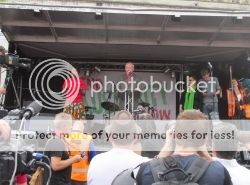
On Saturday 20 July, Sinn Fein’s Martin McGuinness joined 250,000 on the streets of London for the ‘End Austerity Now’ demonstration, organised by The People’s Assembly. Addressing the rally, Mr McGuinness sent a clear message to the Conservative government in Westminster – no to austerity. Here, Week in Review reproduces his speech in full:

    `I am delighted to be here and I bring solidarity from Ireland and from all of us fighting right wing Thatcherite policies on both sides of the Irish sea.
    Sinn Féin is an anti-austerity party. We stood for election on an anti-austerity platform and we are mandated by our electorate to oppose austerity. Sinn Féin is in coalition government in the North of Ireland. I am the deputy First Minister in that government. And in government we blocked the Welfare Bill and the welfare cuts that the Tory led coalition demanded we impose on the most vulnerable. We said no to the coalition government and we are saying an unambiguous, unqualified and uncompromising ‘no’ to this new Tory government.
    The Tories have no mandate for austerity in the north of Ireland. They stood in the elections and they were trounced in every constituency. But in Britain the Tories were elected on the lowest share of the vote ever for a Tory government – just 24 per cent of the electorate. 24 per cent is no mandate for austerity.
    Sinn Féin will not do Tory austerity. Unlike the Tory millionaires, I live in the heart of the proud working class community of the Bogside in Derry. The people the Tories are targeting are my friends, my neighbours, my family. They are fine, hard-working, proud and decent – just like our people in working class unionist communities. They are not parasites or spongers. It is Cameron’s cabinet of millionaires who are the real spongers given free rein to live out their Thatcherite fantasies at the expense of ordinary, decent communities throughout these islands.
    Austerity is devastating these communities. The working poor, public sector workers, the disabled and the vulnerable are the hardest hit by this bankrupt and ideologically driven policy. In the North of Ireland, where we continue to build the peace and a fragile economy, their policies threaten the power-sharing institutions of the Good Friday agreement. Those institutions – which have underpinned the peace process for almost two decades – are now on the brink of collapse because of Tory recklessness.
    In the south of Ireland we have witnessed at first hand the brutality of austerity. The debts of private business, of banks and developers were passed on to the people. Generations will be paying of the debts of the greed of the few. Austerity has failed. It has failed our young people, our public services and our economy. It is the communities of Dublin, Derry, Dundee, Cardiff and London that are paying the cost of Tory austerity while the wealth of the few continues to increase. Austerity means inequality, poverty and despair.
    McGuinnessThe alternative is investment and growth, equality and prosperity, the safety net and the helping hand. I am heartened by the huge numbers here today. Because it reminds us all that we are not alone in this fight. We are strong if we unite and act together.And, by continuing to stand together, we can succeed. Defeat is not an option. Austerity is not an option. Today we send a powerful message to the Tories that we will not be cowed, threatened, bullied or bribed. I congratulate you all for taking this stand and I look forward to continuing to stand shoulder to shoulder with you during the days, weeks and months ahead.’

Parties and civic society must work together to oppose austerityMurphy
Sinn Féin MLA Conor Murphy said political parties and wider civic society must use the space created by the passage of the budget bill to work together to oppose Tory austerity.
Speaking during an Assembly debate on the budget bill, Mr Murphy said: `The passage of the budget bill creates space to allow us to find a resolution to the challenges facing the Executive as a result of the austerity agenda of the Tory government in London.’
He added, `We have stood as a bulwark against the worst impact of the Tory plans. Their welfare polices have not had the same devastating impact here as in Britain. Civic society recognises the need to oppose austerity and want us to continue that fight. We all need to join together and work collectively to continue to oppose the Tory cuts agenda.
He concluded: `Austerity policies damage economic recovery and business, and punishes the working poor, public sector workers, people with disabilities and the vulnerable. We must now work together and use the space created by the passage of the budget to oppose Tory austerity and secure workable and sustainable finances for the Executive.’

Molloy joins disability protest at Westminster against Tory cutsMolloy
Sinn Féin MP Francie Molloy has said there is a `growing momentum’ of opposition against the British government’s austerity policies.
Speaking after joining disability rights campaigners at a protest against cuts to Disability Living Fund in Westminster on 24 June, Mr Molloy said he was delighted to join campaigners who had travelled to Westminster `to make their views known to British Prime Minister David Cameron and his cabinet of millionaires that the cuts agenda is unacceptable’. He said they were `particularly angered by the British government’s decision to cut the Independent Living Fund which helps people with disability live independently and with dignity’. MolloyMr Molloy said it was `clear there is a growing groundswell of public opinion against the austerity policies of the Tory government across all levels of society’ and concluded `we need to build on that momentum and engage all sectors to continue to oppose Tory cuts and protect the vulnerable and frontline public services.’

Sinn Fein Westminster meeting:
`Uncomfortable Conversations – an initiative for dialogue towards reconciliation’
ConversationsOn Tuesday 14 July, Sinn Fein MP Pat Doherty will host a panel discussion titled, `Uncomfortable Conversations – an initiative for dialogue towards reconciliation’. Speakers will include Sinn Fein national chairperson Declan Kearney, former Labour Secretary of State for the north of Ireland, Peter Hain, Lord John Alderdice former Assembly Speaker and Irish in Britain Chief executive Jennie McShannon.
Speaking in advance of the meeting, Pat Doherty said, `the need for reconciliation across society, and between the islands of Ireland and Britain, must represent the next phase of the peace process. Bringing this discussion to Westminster, this event will put a spotlight on the need for reflection and healing between Ireland and Britain, and to assert a new framework to take forward new and improved relations.’
For further details or to RSVP email jayne.fisher@parliament.uk. All welcome.

Sinn Fein in London to outline negative implications for Ireland of a British EU exitReilly&Molloy
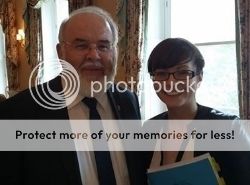
July 24 saw the launch at the Irish Embassy in London of a Joint Oireachtas Committee on European Union Affairs report on the implications for Ireland of Britain leaving the European Union.
Sinn Féin Senator Kathryn Reilly outlined the negative impact this would have on the Border region, at the launch of the report, also attended by Sinn Fein MP Francie Molloy.
Speaking of the importance of the report and the recommendations, she said it was `crucial that we start the debate on the implications for Ireland of a British exit from the EU as soon as possible’. She said that such an eventuality would be `devastating’ for the Border region in particular and would see `the reintroduction of check points, passport controls, custom checks, and many other negative measures’.
She added, `the economy of the whole island would be damaged, and this would no doubt be worsened in the Border region. The free movement of goods and services would no longer exist in its current format across the Border. This would have significant implications for trade and employment, it would also affect families and communities, and it would reinforce partition even further.’
Senator Reilly concluded `Sinn Fein is committed to seeing Britain remain in the EU, it is in the best interest of citizens in the Border regions, it is in the best interest of all the citizens on the island of Ireland, and it is in the best interest of Britain and the EU. We as a party will be actively campaigning for a no vote in the upcoming referendum and we will seek to have special treatment afforded to the north so the people of the six counties can decide their own future for themselves.’

Week in Review is circulated by Sinn Fein MPs. Email jayne.fisher@parliament.uk to join the list. For further information visit www.sinnfein.ie or follow us on twitter @sinnfeinireland

Francie Molloy joins disability protest at Westminster against Tory cuts

Sinn Fein

MolloySinn Féin MP Francie Molloy has said there is a growing momentum of opposition against the British government’s austerity policies.
Speaking after joining disability rights campaigners at a protest against austerity at Westminster today, Mr Molloy said;
“It is clear there is a growing momentum against the austerity agenda of the Tory government.
Disability rights campaigners travelled to Westminster today to make their views known to British Prime Minister David Cameron and his cabinet of millionaires that the cuts agenda is unacceptable.
MolloyThey were particularly angered by the British government’s decision to cut the Independent Living Fund which helps people with disability live independently and with dignity.
It is clear there is a growing groundswell of public opinion against the austerity policies of the Tory government across all levels of society.
We need to build on that momentum and engage all sectors to continue to oppose Tory cuts and protect the vulnerable and frontline public services.”