Week in Review 30 July-05 August 2016

Sinn Fein
The Week in Review
30 July – 05 August 2016

Gerry Adams calls for focus on September’s national forum/dialogueAdamsTD
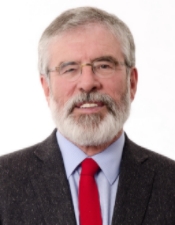
Speaking on 2 August, in Dundalk, the Sinn Féin President Gerry Adams TD called on the Taoiseach to “use the summer break positively to prepare the ground now for the national forum/dialogue which he has committed to setting up in September in response to Britain’s Brexit vote.”
Mr Adams continued: “The Taoiseach should bring together elected representatives, North and South, during the summer break to begin the process of agreeing an agenda and format for September’s national forum/dialogue.”
The Sinn Féin leader rejected Arlene Foster’s dismissal of all Ireland talks on Brexit, saying: “if the DUP does not want to engage in such a dialogue that is a matter for them. However there is clearly a widespread opinion that recognises the importance of a co-ordinated response to the economic difficulties that are already emerging following the Brexit vote. There should be no vetoes over the development of an all-Ireland dialogue to meet the challenge of Brexit.”
Mr Adams concluded by saying: “A national dialogue forum/conference which brings together political parties, civic society, business and the voluntary and community sectors is needed to assess the impact of Brexit, minimise its impact on peoples lives, protect jobs and the economy of the island, and ensure that the vote of citizens in the North to remain in the EU is respected.”

Reconciliation is an imperative – Declan Kearney MLAKearneyMLA

Sinn Féin MLA for South Antrim and Sinn Féin National Chairperson, Declan Kearney, has said that the time has passed when reconciliation within Irish society was optional.
Speaking at the “Healing, Honour and Hope: What next?” event in Duncairn Arts Centre as part of the Féile an Phobail programme Mr. Kearney said: “Huge suffering has taken place in Ireland, north and south, and that has extended to Britain. The divisions in our society which exist are visceral. The pain from past actions carried by our generation is very real. Instead of a few trying to develop the political and civic critical mass to support reconciliation and healing, we should be collectively accelerating its development as a new phase of the peace process.”
Mr Kearney continued: “In my view reconciliation is not an option in our society; it is an imperative. It must not be built upon resentment and recrimination.”
Addressing the issue of the legacy of conflict, Mr Kearney said: “The causes of division must be discussed. The legacy of the past cannot be avoided if we are to move forward to a new phase of the peace process. We all need to be prepared to deal with these issues by coming together privately and publicly to engage meaningfully, and not to score points.
Mr Kearney said that the mechanisms agreed under the Stormont House Fresh Start Agreement provide a vehicle for moving forward. He said that it was “unacceptable and wrong that the potential of this framework is being held back by the British Government’s veto on maximum information disclosure, and refusal to release the funds which would allow legacy investigations and inquests to proceed.”
Mr Kearney also cited Sinn Féin’s policy document on reconciliation and healing ‘Towards an Agreed and Reconciled Future’, noting: “We are absolutely committed to ensuring a process of reconciliation and healing is established. It is time for all political and governmental leaderships to step up to the mark. That should include active and unambiguous commitment from the leaderships of political unionism.”

Vision of 1916 remains relevant – Paul Maskey MPMaskeyMP

Sinn Féin MP Paul Maskey said the vision of Roger Casement remains as relevant today as it was in 1916.
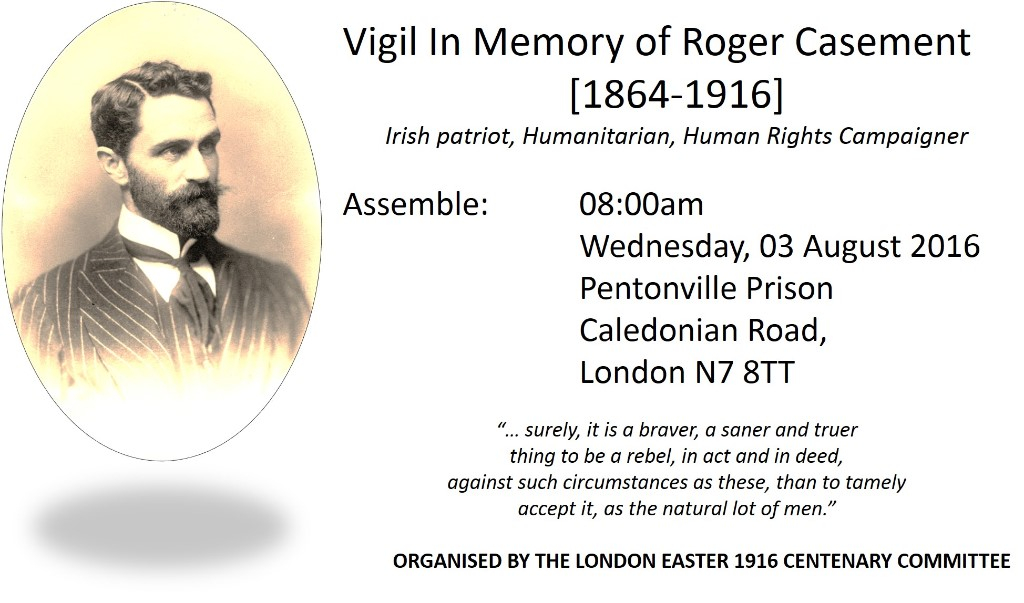
Mr Maskey was speaking after a vigil was held outside Pentonville Prison to mark the 100th Anniversary of Roger Casement’s execution.
The West Belfast MP commented: “The vigil organised by the ‘London Easter 1916 Centenary Committee’ highlighted the continued relevance of the vision of Casement and the other men and women of 1916.”
Mr Maskey said that Roger Casement was a great republican and humanitarian and said how: “In his speech from the dock, Casement outlined the aim of republicanism, stating: ‘We aimed at uniting all Irishmen in a natural and national bond of cohesion based on mutual self-respect.’ This remains the republican vision today. Every day Sinn Féin is working to realise this New Ireland.”
Mr Maskey concluded: “The struggle goes on and it falls on us today to complete the work of 1916.”

Turkey’s reassurances on human rights worthless – Martina Anderson MEPAndersonMLA

Sinn Féin MEP Martina Anderson has branded Turkish assurances on the protection of the rights of refugees as “worthless and hollow” and urged the European Union to change its approach to the refugee crisis.
The Sinn Féin MEP was reacting to an answer given by the European Commission to a question asked by Sinn Féin MEPs and colleagues on the left in Europe.
Martina Anderson said: “The response of the European Commission to our question is alarming. When pressed on reports that Turkey are returning desperate refugees to war-torn Syria, the Commission simply states it has received written assurances from Turkey that this is not the case. Turkey’s assurances are worthless and hollow, they are not worth the paper they are written on. Events in recent days and weeks show categorically that Turkey is neither a safe country nor a good partner for the EU in dealing with the refugee crisis.”
Ms Anderson called the current Turkish regime “both brutal and authoritarian.”
Turning to Turkey’s treatment of its Kurdish citizens, Ms Anderson added “The state is at war with its own Kurdish citizens and President Erdogan has used the recent ‘coup’ to clamp down ruthlessly on perceived opponents. Tens of thousands of journalists, academics, soldiers and civil servants have been interned in what is reported to be terrible conditions.”
Martina Anderson said that the EU-Turkey deal needs to be immediately scrapped, saying: “The EU cannot shirk its responsibilities in this humanitarian crisis. If member states cooperated and did their fair share, this crisis could be resolved. A humanitarian crisis requires a humanitarian response.”

Week in Review is circulated by Sinn Fein MPs. Email joseph.dwyer@parliament.uk to join the list or sign up here. For further information visit www.sinnfein.ie or follow us on twitter @sinnfeinireland
The Execution of Roger Casement

By Joe Dwyer

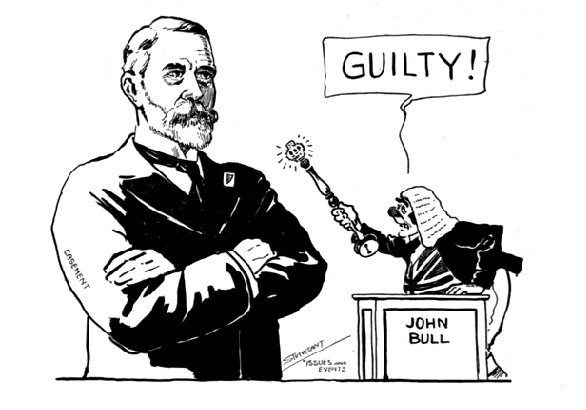
Wednesday 3rd August 2016 will mark one-hundred years since the execution of the Irish Patriot and international humanitarian: Roger Casement.
The occasion will be commemorated by a morning vigil outside Pentonville Prison on the Caledonian Road, London, commencing at 08:00am.
Casement
Casement’s last written words offer an insight into the person behind the mythologised figure. On the eve of his execution, Casement wrote: ‘I hope I shall not weep, but if I do it shall be nature’s tribute wrung from me – one who never hurt a human being – and whose heart was always compassionate and pitiful for the grief of others’. He continued: ‘as I stand face to face with death, I feel just as if they were going to kill a boy. For I feel like a boy – and my hands so free from blood and my heart always so compassionate and pitiful that I cannot comprehend how anyone wants to hang me…

On July 27th, he was permitted one final visit from his cousin Gertrude Bannister. Casement implored his cousin to ensure that he would not be buried inside Prison Walls, he pleaded: ‘take my body back with you and let it lie in the old churchyard in Murlough Bay.’ Later that evening Gertrude wrote: ‘I staggered down the road crying out loud, and people gazed at me. I got home somehow. Now, writing it down, I cry and cry and want to scream out, but what’s the good … He was there waiting for death, such a death. I was outside, and I wanted to die.

A fellow Pentonville inmate, the pacifist Archibald Fenner Brockway arrested for distributing anti-conscription leaflets, later claimed that he had seen Casement on the final night before his execution: ‘I was in my cell and I heard steps outside. I stood on my stool and looked from the window. There was Sir Roger Casement, in the only place of loveliness in that prison, a little garden of hollyhocks and other flowers, looking at the sunset for the last time. As he did it, one could see that his spirit and his personality became united with the infinite beauty of that scene.

Faithful to the last, Casement was firm in the belief that the cause of Ireland was a just cause. This resolve is evident throughout his final letters and writings. The former-Diplomat wrote of his accusers: ‘It is they – not I – who are the traitors, filled with a lust of blood – of hatred of their fellows.’ Turning to the conflict then engulfing the European continent, Casement lamented: ‘These artificial and unnatural wars, prompted by greed and power’. In a final letter to his cousins he denounced the War and praised the Dublin Rising: ‘What was attempted so valiantly this year by a handful of young men is the only episode from this war that should survive in history. The rest is either mistaken slaughter of brave men or plotting to destroy an enemy by hate for motives of greed and dominion. I cast no stone at the millions of brave dead men throughout Europe – God rest their souls in peace – but the cause it is alone that justifies the end, and the cause of all the great combatants is essentially selfish and greedy.

Although Casement had not fully abandoned the possibility of a last-minute reprieve, he no longer desired it. The growing certainty that he was to die seemed to calm him. He consoled himself that his death was that of a Patriot: ‘It is better that I die thus – on the scaffold. It was a glorious death for Ireland’s sake with Allen, Larkin, O’Brien and Robert Emmet – and the men of ’98 and William Orr – all for the same cause – all in the same way. Surely it is the most glorious cause in history. “Ever defeated – yet undefeated.”

When the time came, he did not weep as he had feared. The Pentonville Prison Chaplain, a Limerick man, Father Carey, recalled: ‘He feared not death, he marched to the scaffold with the dignity of a prince.’ Even the Hangman, a man by the name of Ellis, found himself greatly affected by the condemned man’s demeanour. With Ellis later recording: ‘The impression will ever remain on my mind of the composure of his noble countenance, the smile of contentment and happiness, as he willingly helped my assistant … the steady martial tread of his six feet four inches and soldiery appearance adding to the solemn echo of his prompt and coherent answers to the Roman Catholic chaplain while marching to his untimely doom. Roger Casement appeared to me the bravest man it fell to my unhappy lot to execute’.

At six minutes past nine, the tolling of the prison-bell announced that Roger Casement was dead. A small notice, signed by the Sheriff and Prison Governor, was placed on the prison gate and reported: ‘We, the undersigned, hereby declared that judgement of death was this day executed on Roger David Casement in His Majesty’s prison of Pentonville in our presence.’ In the street outside the Prison, a small crowd cheered and applauded as the bell tolled. It would have grieved Casement to know that ordinary men and women – most of them workers in the nearby munitions factory – should have reacted in such a way to his death. In his last letter to his sister, Nina, he had stated: ‘It is a cruel thing to die with all men misunderstanding – misapprehending – and to be silent forever.’ However, he was not entirely misunderstood – as down a side street adjoining the Prison a small group of Casement’s companions and supporters knelt in silent prayer.

A few hours later, Roger Casement was buried within the prison grounds in a quicklime grave – a violation of established law that the body of a ‘traitor’ be handed back to the family for a Christian burial.

In the event, Father McCarroll officiated the burial. Thirty years later, McCarroll recounted: ‘I was the sole mourner at his grave, yet we were not all alone, for around were the prayers of his friends – and the souls of noble men who though the same thoughts and dreamed the same dreams as Roger Casement.

The vigil will take place outside Pentonville Prison, Caledonian Road, London, commencing at 08:00am.

479bf0e4-f6d7-4ab6-858b-cfe4640289d5

Week in Review 22-29 July 2016

Sinn Fein
The Week in Review
22 July – 29 July 2016

North to lose billions from Brexit’ – Martin McGuinness MLAMcGuinnessMLA
The North stands to lose billions from its economy if forced out of the European Union, Sinn Féin MLA and Joint First Minister Martin McGuinness has said.
Mr McGuinness, speaking after the British Irish Council summit in Cardiff last week, said:
“The meeting heard how our economy was set to receive €3.5 billion in European funds between 2014 and 2020. A sizeable portion of that will be at risk if we are forced out of Europe. Such funds will, of course, not be available at all in the years following 2020 and I don’t think anyone seriously believes that the British Government will reimburse these losses.”
Mr McGuinness stated that the north also risked losing “an unquantifiable amount of private investment as foreign direct investors turn their attention to regions which can guarantee access to the European market.”
Mr MrcGuinness criticised the British Government’s handling of the situation, saying:
“We are in this mess because the previous British Government called the referendum in a foolish attempt to placate racist and loony right wing elements within both UKIP and the Tory Party. And, rather than respect the democratic wishes of the people here who voted to remain in the EU, it seems the new British Government is determined to drag us out against our will.”

Brexit would cause serious damage to agri-food industry – Linda Dillon MLADillonMLA
Sinn Féin MLA Linda Dillon has said that leaving the European Union would cause serious damage to the agri-food industry.
The Agriculture Spokesperson said:
“Key players from within the sector have expressed their concern about the impact that Brexit will have on the agri-food sector. They have expressed concern about their workers, many of whom are from European countries and play a pivotal role in the success of the industry. They have also expressed concern over funding for the industry and the trading implications that may be put in place as a result of Brexit.”
Ms Dillon added: “The Brexiteers never had plan and have offered no long-term or short-term guidance to people within the industry. I will continue to meet with people from within the agri-food regarding their concerns. Sinn Féin will continue to fight to have the decision of the people North to remain in the EU respected.”

Border communities would be hit hardest by Brexit – Martina Anderson MEPAndersonMLA
Sinn Féin MEP Martina Anderson has said that being dragged out of the EU would hit border communities particularly badly.
Ms Anderson commented: “The border region has suffered immensely as a result of partition and any hardening of the border will only have a negative impact on the lives of people who live, work and study in the area.
“The people of the North voted to reject that and I would encourage all interested groups to raise their voices to ensure the democratic wishes of the majority who voted to remain are respected.”

Sinn Féin calls on Brokenshire to release legacy inquest funding

Sinn Féin MLA Martin McGuinness has called on the newly appointed British Secretary of State James Brokenshire to release funding for legacy inquests.
Mr McGuinness said:
“James Brokenshire has made positive comments in Derry on dealing with the legacy of the past following his meeting with the Pat Finucane Centre, including the family of Paul Whitters, who was 15 years-old when he was killed by a plastic bullet. Now it is incumbent on James Brokenshire to follow these words up with positive actions and for his government to provide funding for legacy inquests.
“He can do that by changing the policy of his predecessor and putting the needs of grieving families ahead of bogus national security concerns by immediately approving the Lord Chief Justice’s request for funding to enable him to fast-track some 56 inquests involving up to 100 deaths.”

Why is Fianna Fáil keeping Fine Gael in government? – Gerry Adams TDAdamsTD
Sinn Féin President Gerry Adams TD has accused the Fianna Fáil leadership of “putting narrow party self interest above the needs of citizens” and he has asked Micheál Martin “what is the point in keeping Fine Gael in government?”
Deputy Adams said: “As the Cabinet meets for the last time before its summer break, the big question is what is the point of Fine Gael in government? It is constantly looking over its shoulder seeking approval from Fianna Fáil for every decision it takes. The Taoiseach has been gifted his office by Fianna Fáil who were unwilling to go into government themselves after the last election but who play at being in government and opposition at the same time.”
Deputy Adams criticised Fianna Fáil noting that: “They have obliged the Government at every turn, or every U-turn; on bin charges, on the national monument in Moore Street, and on the issue of Banded Hours Contracts. Last October, Fianna Fáil called for a Commission of Investigation into the sale of NAMA’s Northern loan book – Project Eagle. This was repeated in the Dáil by Micheál Martin. Then Fianna Fáil did another U-turn and now opposes the establishment of a Commission.”
Deputy Adams concluded: “It’s all about political power. It’s nothing to do with so-called ‘new politics’

Week in Review is circulated by Sinn Fein MPs. Email joseph.dwyer@parliament.uk to join the list or sign up here. For further information visit www.sinnfein.ie or follow us on twitter @sinnfeinireland

British government must release funding for legacy inquests – Jennifer McCann MLA

Sinn Fein

McCannMLASinn Féin MLA Jennifer McCann has said the British government must release funding for inquests into conflict-related deaths.
Speaking after joining the Ballymurphy Massacre families at Stormont this morning, Ms McCann said;
“I and other Sinn Féin representatives joined the Ballymurphy families at Stormont today ahead of the visit by British Prime Minster Theresa May.
It is important that Theresa May recognises the responsibility of her government to deal with the legacy of the past.
At today’s meetings Martin McGuinness will be raising the need for Theresa May and the British government to release funds for inquests into conflict-related inquests, in line with the proposal from the Lord Chief Justice.
The British government cannot keep denying truth to grieving families, some of whom have been waiting for more than 40 years.
Sinn Féin will continue to support the Ballymurphy families in their campaign for truth.”

Britain must respect Remain vote – Martina Anderson MEP

Sinn Fein

AndersonMLASinn Féin MLA and party spokesperson for young people Catherine Seeley said:
“Following the Brexit result and concerns expressed by young people in my constituency I invited Martina Anderson MEP into the area to meet with youth representatives.
The young people shared concerns about EU study opportunities, EU employment opportunities and the implications of a hard border.
Martina has conducted a series of meetings and has promised to continue to fight for the North and for the democratic decision to remain to be respected by the British government.”

History at House of Commons event by Sinn Féin MPs for 1916 Rising centenary

By Jayne Fisher

Originally appeared on An Phoblacht, Thursday 14 April 2016

THE CENTENARY of the 1916 Easter Rising and its relevance to the politics of today was marked at a House of Commons reception hosted by Sinn Féin MPs where deputy leader Mary Lou McDonald TD was the keynote speaker.
 photo Mary Lou McDonald delivering keynote address1_zpsus3bnvew.jpg
PatDocOpening the event at Portcullis House on Wednesday 13 April organised by MPs Paul Maskey, Pat Doherty and Mickey Brady, Pat Doherty said the words of the Proclamation still rings true today, facing the same economic and political choices.
In a poignant moment, Paul Maskey made history by reading out the Proclamation – for the first time ever – in the precincts of the Palace of Westminster.
The packed room included MPs from across the political spectrum, in particular from Labour, the Scottish National Party and Plaid Cymru – The Party of Wales, together with a myriad of organisations from within the Irish community, trade unions, social justice and equality movements and campaigners.
DunbarThe audience also included many from the fields of human rights, academics, media and the arts, such as actor Adrian Dunbar.
In her speech, Mary Lou McDonald spoke about the huge significance of 1916 and its legacy for today. She stressed the need to build alliances across Ireland, Scotland, Wales and England on a crucial social and economic issues and campaigns for equality and justice.
Directly addressing the Peace Process, she asserted that building peace is crucial, and involves “hard work”. Sinn Féin would “continue to work for reconciliation between the Orange and the Green and between Ireland and Britain,” she said, adding:
“Sinn Fein will never shy away from hard conversations and difficult decisions that must be made if we are to reconcile communities and deal with the past and legacy issues.”
On dealing with those legacy issues, she warned that the British Government by “refusing to give full disclosure on its role in events in the past – hiding behind a veil of national security – does nothing but prolong the suffering and hurt of all victims”.
DianeAbbottAddressing the role of women in 1916, she paid tribute to the “vibrant and progressive feminist movement – some sought simply the extension of the vote to women, others campaigned for full equal standing with men, adequate healthcare provision for themselves and their children, the eradication of poverty and disease, the ending of discriminatory laws and practices against women”.
She said women were very often driving force behind the republican and the labour struggles yet their contribution was airbrushed out of history. “Only now is their contribution being given rightful recognition,” she said, citing the roles of Margaret Skinnider and Constance Markievicz, who also made history in being the first woman elected to the British House of Commons. Mary Lou reminded people that that Markievicz was an abstentionist MP – just as Sinn Féin MPs today maintain that principle.
She said that the state existing in Ireland today did not reflect the vision of and the aspirations of 1916 and the Proclamation. However, she said, progressive change is asserting itself and she praised the “overwhelming” Yes vote for marriage equality which showed that “progress has been made – Ireland is now pluralist society – Home Rule no longer means Rome Rule”.
SalmondUnderlining the need for social and economic equality, she said that achieving this means Irish reunification to develop a truly independent and progressive economic policy. She said that devolution of fiscal powers to the Executive and Assembly at Stormont is “urgent”.
Dealing with the recent Dáil general election, she said that “seven weeks of no government reflects deep changes in the political landscape” in the South. Sinn Feein now had 23 TDs – “the largest Oireachtas team in modern times, and the latest milestone in our political road”.
The Stormont elections on 5 May provide a further opportunity to take this forward, taking place on the 35th anniversary of the death of Bobby Sands, the Dublin TD noted.
Addressing the issue of the Diaspora, she said:
“Behind every story of the Irish in Britain lies stories of huge personal sacrifice and family separation. No matter how long you are away, Ireland was and still is home.”
WolfeToneMcGinnShe paid tribute to those who have worked with Irish emigrants here over the years:
“You are truly patriotic – and you didn’t turn back on your compatriots. It is now time Ireland didn’t turn its back on you by giving votes for the Diaspora.”
Dealing with the crucial issue of the upcoming EU referendum in Britain, she stressed Sinn Féin’s opposition to a Brexit from Europe:
“Whilst we fully support a Brexit from Ireland, it would be a fundamental mistake for a Brexit from Europe.
“It is unconscionable to have Ireland both in and out of Europe . . . and it is unacceptable to have border controls and checks on island of Ireland. The EU is unquestionably in need of radical reform and change but it is not in the interests of Irish agriculture, commerce or society to have exit imposed on the North of Ireland – it is for the people of the North to decide whether the North remains with the rest of us within Europe.”
Mary Lou’s speech was met with huge applause.
Pat Doherty MP, speaking afterwards, said the positive response to Sinn Féin’s message and the big turn-out for the event reflected a resonance with Sinn Féin’s message that a better Ireland is possible and which struck a chord with those advancing a progressive alternative in Britain and across Europe.
He said there is an ongoing support for the Peace Process and a heightened awareness given the focus on the 1916 centenary year.
The recent Dáil elections – which saw a sea-change in Irish politics – have also provoked much interest. With the British Conservative Government facing growing opposition to austerity, and in the context of concern over issues such as tax avoidance and rising inequality, the opportunity to build alliances across the Irish sea is stronger than every.

    Terrace* The Sinn Féin event in Westminster forms part of party’s work in London and more widely in England, Scotland and Wales. Sinn Féin MPs and TDs have also been participating in a range of events in cities and towns to mark 1916 (in Glasgow, London, Liverpool and Birmingham, for example) and will continue to do so throughout the centenary year.

More Photos from the evening can be viewed here.

Conor Murphy MLA welcomes report on €35bn economic potential of Irish Unity

Sinn Fein

MurphySinn Féin MLA Conor Murphy said a new report, which estimates the economic benefits of Irish unity could total €35.6 billion in GDP within eight years of reunification pointed up the need for an informed debate on the future of the island.
The ‘Modelling Irish Unification’ was written by economic experts at the Canadian University of British Columbia was launched in Belfast this morning.
Conor Murphy said:
“This important economic research merits serious debate by all of those who claim to have the welfare of every person on the island of Ireland – North and South – at heart.
The report estimates that the economic benefits of the reunification of Ireland could total €35.6 billion in GDP for the island in the first eight years of economic unification. That’s an increase in GDP of €5,500 per person north and south over 8 years.
According to the report this economic boost would derive from a series of steps including the removal of barriers to trade, the elimination of duplication of government services as well as the exchange rate benefits from the adoption of a single currency.
It is predicted that over the long term, GDP per capital in the North would increase by 4 to 7.5 percent, while the Republic of Ireland would see a boost of 0.7 to 1.2 percent.
It is remarkable that this is the first report of its kind since the Partition of Ireland. There was great hope after the Good Friday Agreement that the all-Ireland economy would be developed to its full potential.
Unfortunately preconceived political ideology has reigned supreme over the economic opportunities that would have accrued for the whole island.
It’s imperative that politicians of all perspective take note of the analysis in this report and put the future economic well-being of those they represent above political ideology.”

We are in the countdown to a United Ireland – Gerry Kelly MLA

Sinn Fein

KellySinn Féin MLA Gerry Kelly has said we are now on the countdown to a united Ireland.
Speaking at an Easter Rising commemoration in Carrickmore, county Tyrone, Mr Kelly said;
“The 1916 Easter Rising had a global effect which has inspired many successful national liberation struggles around the world during the last 100 years.
It lit a fire which is still burning bright in the hearts of all Irish Republicans as we move ever closer to achieving a United Ireland.
Across Ireland now Sinn Féin are stronger than we have ever been in our history. Irish politics is undergoing its biggest shake-up since partition. We are at the core of that change.
Our goal as Irish republicans is an Irish unity that is inclusive, that unionists will feel welcome in, that they are a part of.
There is much work to do. But we believe that we are in the countdown to a United Ireland. We believe that together we can make huge progress and truly transform society on this island forever.”

Week in Review 25-01 March/April 2016

Sinn Fein
The Week in Review
25 March – 1 April 2016

Gerry Adams’ Easter Centenary AddressAdams
On Sunday 27th March, Sinn Féin President Gerry Adams TD addressed the Easter Rising commemoration in Belfast’s Milltown Cemetery. Mr Adams stated that hurts and divisions must be healed if we are to realise the vision of the 1916 Proclamation.
The Week in Review reproduces his speech in full:

    Address by Úachtarán Shinn Féin, Gerry Adams TD:
    A chairde agus a chomráidithe,
    I want to welcome you all here today to this holy place on this historic date. I want to especially welcome the families and friends of our patriot dead.
    Tá muid fior buioch daoibhse go leir. Your loved ones died not for the past but for the future. Like the men and women of 1916 they went out to undo the centuries of colonisation and injustice by building a new future; a better future.
    It was one hundred years ago, on Easter Monday 1916, in the centre of Dublin, when a small band of revolutionaries proclaimed an independent Irish republic.
 
This group of poorly equipped Irish men and women took on the might of the largest empire the world had ever seen. It was an empire built on conquest, exploitation, brute force, and repression. 

Following six days of heroic resistance the centre of Dublin lay in ruins.
    The leaders of the Provisional Government met for the last time in 16 Moore Street and ordered a surrender.
 
They were court martialled by the British. 14 were executed in the stone-breakers yards in Kilmainham. Tomas Ceannt was executed in Cork. And Roger Casement was hanged in London.

Bhí an Sasanaigh ag iarraidh splanc na saoirse in Éirinn a mhúchadh le méid agus luas na mbásanna.
    Ach ní raibh an ceart acu.
 
Thug an Éirí Amach agus an cogadh a thainig ina dhiaidh sampla a leanadh le ar fud an domhain sna tíortha eile a raibh an Bhreatain i gcumhacht ann.
 
Ag croílár Éirí Amach Naoi Déag is a Sé Déag ná Poblacht neamhspleách na hÉireanna bhunú.

But the Civil War and counter-revolution ushered in the partition of Ireland and the creation of two conservative states in place of the 32 County Republic which was the aim of the Rising.

The North became a one-party, Orange State where Irish nationalists were excluded from power and denied opportunity.
    As we all know, that power and privilege was imposed and protected by British guns.

Republican resistance was offered at various stages over the decades.
    In the late 1960s, the violent state response to the democratic demands of the civil rights campaign developed into full scale armed conflict.

Today we also pay tribute to all of those who, in every decade since 1916, stood by Ireland and stood by the Republic.

Our country and our people suffered hugely as a result of conflict in the 1970s, ‘80s and ‘90s.

Huge progress has been made in recent years. The Peace Process and the Good Friday Agreement marked a historic shift in politics on this island.

For the first time, the roots of conflict were addressed and a democratic route to Irish unity opened up.

But there is much yet to be done. Hurts must be healed. Divisions ended.
    The scourge of sectarianism must be tackled and ended.

The effects of Partition on the South must also be addressed. By executing the signatories and other leaders the British removed the revolutionary leadership and the most advanced and progressive thinkers and activists.
    They paved the way for the counter revolution that was to follow the revolutionary period and the establishment of two mean spirited -narrow minded states. In the Civil War, the forces of conservatism – the Church hierarchy, the media and big business – all supported the Free State regime and opposed those who held out for the Republic proclaimed in Easter Week 1916.

The people of the north were abandoned.
    The Free State was harsh on the poor, on women and on republicans or radicals of any kind. Our native language was devalued and subverted. Most, if not all of our renowned writers were banned. Censorship was rife. A false morality was imposed on our people. The scandals we witnessed recently emerged from this post-colonial condition.
    Seo an rud a fágadh linn ar deireadh in áit na Poblachta.

Is chun leasa na ndaoine in Éirinn sa lá atá inniu ann an fíor-Phoblacht sin a chruthú.

 While there have been improvements since it was first established the southern state is not the Republic proclaimed in 1916.
    Current efforts by the Dublin establishment to pretend that it is are an insult to the men and women of 1916. There are those who say that honouring the 1916 leaders might retrospectively justify violence. They refuse to attend commemorations. But they say nothing critical of John Redmond and Edward Carson’s role in sending tens of thousands of young men, from the Shankill and the Falls and villages throughout the north and the rest of the island to fight Germans, Austrians and Turks – with whom they and Ireland had no quarrel.
    38 million people were killed in that imperial adventure. Were John Redmond and Edward Carson not ‘men of violence’? Carson certainly was an imperialist – a big house unionist with little concern for the social or economic needs of working class unionists or the rest of us. 

    For our part the 1916 Proclamation remains the mission statement for Irish republicans today.
 
It is a freedom charter for all the people of this island which guarantees religious and civil liberty and promotes equal rights and opportunities for all citizens.
 
The Proclamation is also a declaration of social and economic intent for a rights-based society in which the people are sovereign.

Agus Bliain an Chéid linn, déanann fórmhór na ndaoine in Éirinn agus thar lear, comóradh go bródúil ar Éirí Amch Naoi Déag a Sé Déag agus ar Fhorógra na Poblachta.

These are the principles on which Sinn Féin stands today.
    When the centenary has come and gone there should be more left behind that a memory of a good day out. The year ahead is a time for renewal and planning, a year for promoting the republican ideals of democracy and equality.
    Last month Sinn Féin took further strides forward. As a result of the general election there are now 23 Sinn Fein TDs in Leinster House. We expect to double our representation in the Seanad next month. We hope they will include Niall Ó Donnghaile, a good East Belfast republican. And in May there will be Assembly elections.
    With each election the Sinn Féin vote grows and the number of elected representatives increases. But it’s what we do with this political strength that is really important. Sinn Féin is now the main opposition party in the Dáil.
    In the Assembly Sinn Fein has been the driving force behind the progressive measures that have blocked water charges, protected free prescriptions and defended welfare payments and promoted the Irish language.
    Despite the Irish and British government’s negativity Sinn Féin has delivered the Fresh Start deal which protects core public services, particularly in health and education and the most vulnerable in our society. The Assembly elections will be on May 5th – the anniversary of Bobby Sands death after 66 days on hunger strike.
    We remember Bobby and his comrades and the blanket men and the women in Armagh. After the Assembly election we want to emerge with a stronger mandate. A mandate that will allow us to continue with our work. A mandate to tackle sectarianism, racism, and homophobia. A mandate to deliver marriage equality. A mandate to deliver a future of equals, in a society of equals for all our citizens. That means fighting for every seat and every vote.
    In June Sinn Féin will oppose Brexit. While we are correctly critical of the EU nonetheless the imposition of land borders and economic barriers is not in the interest of the people of this island.
    Our centenary celebrations would be incomplete without due recognition being paid to the American connection.

The Rising was funded by Irish Americans – the children of An Gorta Mór/The Great Hunger.

I want to welcome our Irish American friends and our friends from Canada who are with us today.
    A united Ireland means the unity of the people of this island, including those who see themselves as British.

That is why Irish governments must pursue every avenue to promote all-Ireland co-operation and to build relationships between all our people.

This must include genuine efforts to outreach to the unionists on the basis of equality.

There was never a better time to plan and deliver on an all-Ireland basis.
    Thinking unionists know this makes sense for the economy, agriculture, healthcare, energy, the environment and many other sectors.

Elements of the Good Friday and subsequent Agreements remain to be implemented.

There is an urgent need for the Irish Government to face up to the British Government’s refusal to fulfil its obligations.
 
There is also an ongoing need to enlist the support for this necessary endeavour of our friends internationally, including and especially in the USA.
    I want to commend the families of the 1916 leaders who took the Irish government to court to prevent the demolition of Moore St, the last meeting place of the 1916 leaders. It is a metaphor for our times that the families were forced to do this because the state was about protecting a developer who planned to replace the laneways of history into a shopping mall. But the government lost.So did the developer. Well done to the 1916 relatives. It is clear that had Pearse and Connolly and their comrades gone on to form a working government Ireland today would be a better place, and a fairer and more equal society.
    So that is the challenge facing us. We must give our children the best possible chance to fulfil their potential and to live happy, full and contented lives. An Ireland which is the best place to grow up in, to grow old in and to enjoy life in. We love Ireland. We value this small island.
    But it is the people who are at the centre of our core values of equality, liberty and fraternity. So our resolve must be to end all divisions and to unite our people, especially in this city of Belfast. I also want to thank the republican people of this great city for remaining true to the cause of Irish independence. Without your support, your loyalty, your resilience and generosity we would not be where we are today.
    In conclusion, I want to single out the contribution of women in our struggle. Both Connolly and Pearse praised the women of 1916. Before the Volunteers left the GPO Padraig Pearse told the women that the fight would not have lasted so long without them and when the history of that week would be written the highest honour and credit should go to the women. So we salute all our sisters in struggle. There can be no Saoirse na h’Éireann gan Saoirse na mBan.
    As we stand by the graves of our friends and comrades let us be clear. The reactionaries and revisionists, the naysayers and begrudgers, the modern day Redmonites pontificate and waffle about how wrong 1916 was. Sinn Féin is crystal clear on this. 1916 was right. The men and women of that rising were right. It was Republic against Empire. Republicanism versus Imperialism. We know what side we are on. We stand by and for the Republic.
    Pearse put it well. He told his court martial; “You cannot conquer Ireland. You cannot extinguish the Irish passion for freedom.” Connolly also faced his court martial unbowed and unbroken. He told them: “We went out to break the connection between this country and the British Empire and to establish an Irish Republic.”
    That is our resolve also. So, join the Rising.
    Bígí linn. Ar aghaidh linn le chéile.

Up the Republic – An Phoblacht abú.

Diaspora key to delivering on vision of ProclamationTrevor
Irish emigrants are key to the delivery of the vision embodied in the words of the Proclamation according to Sinn Féin’s Diaspora spokesperson Trevor Ó Clochartaigh. Speaking after a series of events in San Francisco to commemorate the 1916 Rising, Mr Ó Clochartaigh said: “The Proclamation speaks of cherishing all the children of the nation equally. That includes those Irish people who have had to leave Ireland for whatever reason.”
Mr Ó Clochartaigh noted that the recent academic report on ‘Modelling Irish Unity’ was developed “in conjunction with the University of British Columbia – by our emigrant community here” thereby demonstrating “the positive role the diaspora is still playing in shaping a better Ireland.”
Speaking from San Francisco, Mr Ó Clochartaigh commented: “I have witnessed once again the commitment of the Irish community to the ideals of the Proclamation and their untiring support in achieving the goals envisioned in it.”
Mr Ó Clochartaigh reiterated Sinn Féin’s commitment to political representation for the diaspora in the Houses of the Oireachtas and diaspora voting rights in Presidential elections.

Fine Gael and Fianna Fáil are engaged in a farce that is impeding the work of the DáilCullinane
Sinn Féin TD David Cullinane has said the continued refusal by both Fine Gael and Fianna Fáil to talk to each other is a farce and is impeding TDs from doing their jobs.
Speaking from Leinster House Deputy Cullinane said that; “It is now over a month since the election and we are continuing to witness the farce of Fine Gael and Fianna Fail refusing to talk to each, while both know any government will depend on their mutual support.” Mr Cullinane added that the work in the Dáil is being held to ransom by both parties.
Deputy Cullinane called on Fine Gael and Fianna Fail to end “this farce” and “come to the Dáil with a proposal for government that allows us all to get on with the work of addressing the crisis in health and housing and representing the constituents who put us there in the first place.”

If the political will exists we can get rid of water chargesBoylan
Sinn Féin MEP Lynn Boylan has said legal advice leaked to the Irish Times on the legality of abolishing water charges does not tally with information her office has received from the EU Commission.
Speaking in Dublin, Ms Boylan called on Irish Water to publish the full legal opinion, saying; “Irish Water should publish the legal advice it received in full as it does not tally with the information my office has received from the EU Commission. Our view is that there is nothing to stop Ireland from using the derogation and we have that in black and white from the EU Commission. The reality is that if the political will exists we can get rid of water charges.”

Aengus Ó Snodaigh TD to speak in London on Saturday 02 AprilAengus
Sinn Féin TD Aengus Ó Snodaigh will be participating in a panel discussion titled ‘A Struggle Not Yet Ended‘ next Saturday (02 April 2016) as part of the Connolly Association event “A Celebration of 1916“. Deputy Ó Snodaigh will be speaking alongside Dr. Ruan O’Donnell, Robert Ballagh, Eamon O’Cuiv TD, Padraig Yeates, Cat Boyd, and Therese Moriarty.
‘A Celebration of 1916’
18:00, Saturday 02 April 2016
Rich Mix London
35-47 Bethnal Green Rd,
E1 6LA, London

Tickets can be purchased here.

Week in Review is circulated by Sinn Fein MPs. Visit www.sinnfein.ie or follow us on twitter @sinnfeinireland

Week in Review 27-03 February/March 2016

Sinn Fein
The Week in Review
27 February – 3 March 2016
Election results special

A vote for change in Ireland – a realignment of Irish PoliticsAdams
The elections for the 32nd Dail took place on 27 February. Sinn Fein President Gerry Adams hailed the results as `a historic realignment of Irish politics.
Commenting on the result, Party President Gerry Adams said Sinn Féin had fought the election with `a plan for a fair recovery and alongside those standing on the Right2Change platform’, which had secured `a substantial increase in support.’ He said the election demonstrated a `fundamental realignment of Irish politics’ particularly as Fianna Fáil and Fine Gael `no longer command a majority of support.’ Mr Adams said it was `evident that a progressive alternative exists’ and pledged that Sinn Féin would work with those elected on the Right2Change platform and other progressives, `to determine how best to use our increased mandates to fairness, growth, jobs and investment in public services.’ Sinn Féin has ruled out the prospect of `propping up’ either a Fine Gael or a Fianna Fail government, but has entered discussions with others, particularly those aligned to the Right2Change platform, on how best to forge the way forward.
The election saw a clear rejection of the devastating austerity policies of the outgoing coalition government of Fine Gael and the Labour Party. Sinn Féin increased its percentage of first preference votes to just under 14% of the vote.
Fine Gael lost 16 seats, down to 50. Meanwhile Labour fared even worse losing 26 seats and are now left with only 7 Seats. This marks Labour’s lowest ever level of Dáil representation. The public’s rejection of the government was also reflected by the number of Cabinet Ministers who failed to be re-elected.
Fianna Fáil saw an increase in seats, bringing them up to 44. However, this remains the party’s second worst election performance in its history.
Sinn Féin had a very successful election and secured 23 Seats (with one seat still in contention at time of writing). This represents Sinn Féin’s best electoral performance in the south since the Tan War and Civil War period.
Many smaller parties also an increase in votes: the Anti-Austerity Alliance/People Before Profit which secured 6 seats (+2), the Social Democrats which gained 3 seats, and the Green Party gained 2 seats. Some 23 Independent candidates were elected, 6 of whom have organised themselves into the Independent Alliance.
The election saw a 40% increase in female representation in the Dáil. Sinn Féin’s Imelda Munster became the first ever female TD to be elected in Louth.
Elected Sinn Féin TDs are: Kathleen Funchion TD – Carlow/Kilkenny; Caoimhghín Ó Caoláin TD – Cavan/Monaghan; Pat Buckley TD – Cork East; Jonathan O’Brien TD – Cork North Central; Donnchadh Ó Laoghaire TD – Cork South Central; Pearse Doherty TD – Donegal; Denise Mitchell TD – Dublin Bay North; Mary Lou McDonald TD – Dublin Central; Louise O’Reilly TD – Dublin Fingal; Eoin Ó Broin TD – Dublin Mid-West; Dessie Ellis TD – Dublin North West; Aengus Ó Snodaigh TD – Dublin South Central; Seán Crowe TD – Dublin South West; Martin Ferris TD – Kerry; Brian Stanley TD – Laois; Maurice Quinlivan TD – Limerick City; Gerry Adams TD – Louth; Imelda Munster TD – Louth; Peadar Tóibín TD – Meath West; Carol Nolan TD – Offaly; Martin Kenny TD – Sligo-Leitrim; David Cullinane TD – Waterford; John Brady TD – Wicklow.

Electorate has rejected water charges – Mary Lou McDonald TDMary Lou
Sinn Féin deputy leader Mary Lou McDonald has said the death knell for domestic water charges has sounded as the results of the general election come to light.
Deputy McDonald said the issue of water charges is now front and centre because more than 400,000 people voted for Right2Change candidates and others who stood against water charges, adding that as the Fine Gael/Labour government is booted out, domestic water charges should follow.
She said that the Fine Gael/Labour Government had been `comprehensively booted out of office and domestic water charges must follow’. Sinn Féin, she concluded, had `campaigned for the abolition of water charges and we will hold no truck with those who would install them, now or in the future.’

    * Mary Lou McDonald TD will address a Westminster reception, hosted by the Sinn Fein MPs on 13 April, `100 years on – the significance of Easter 1916 for today’.

New Sinn Fein deputy joins Cadbury’s workers picket lineMitchell
On 3 March, in one of her first acts as a newly elected TD, Sinn Fein’s Dublin Bay North TD Denise Mitchell demonstrated her support for the striking Cadbury’s workers joining them on the picket line in Coolock.
Deputy Mitchell was also joined by local Sinn Féin councillors Larry O’Toole and Míchéal MacDonncha. Deputy Mitchell said she was joining the picket line as workers took industrial action against the proposed outsourcing of 17 jobs in its stores division.
She urged management at the plant `to sit down with the unions UNITE and SIPTU and discuss the alternative proposals put forward by the unions to achieve efficiency.’

Iceland conference `an opportunity to develop broader European opposition to EU exit’Kearney
Last weekend Sinn Féin National Chairperson Declan Kearney was in Iceland to meet Nordic Green Left Parties and leadership delegates of key Left Parties from across Europe, including the Nordic countries, Denmark, Germany, Greece and Cyprus, and elsewhere.
Declan Kearney said that among the topics under discussion would be the political situation in each country, `as well as issues such as the humanaritian crisis, the closure of borders, and the poverty and economic instability which is affecting European countries.’
He said he would also be providing `a political and economic analysis of developments in Ireland, North and South’ and expected `intense interest in the unfolding election results over the weekend from the southern general election.’ He said he would be `reporting on the news of increased seat gains for Sinn Féin in the next Dáil, and also discussing our very advanced preparations for the Assembly elections in May’.
The issue of a potential Brexit was, he added `seriously exercising political opinion across Europe and this will be addressed in detail at the conference’ and said he would be `setting out Sinn Féin’s position of opposition to Brexit and our commitment to promoting a Social Europe.’ The Sinn Fein chair would aslo provide `a detailed assessment of what a Brexit would mean in terms of lost investment, negative implications for border controls and common travel, and the protection of workers and other rights’.
He concluded: `this weekends conference is an important opportunity to expand international, progressive and anti-austerity alliances, to develop broader European opposition to a potential Brexit, and also to build on the considerable support which exists within the European left for the Irish Peace Process’.

Sinn Fein MEP to launch legal opinion on impact of Repeal of 1998 Human Rights ActAnderson
On 2 March Sinn Féin MEP Martina Anderson launched a specifically commissioned legal opinion into the repeal of the 1998 Human Rights Act.
Martina Anderson MEP said the party, along with colleagues in the GUE/NGL group of MEPs, had commissioned a legal opinion on the impact the proposed Repeal of the 1998 Human Rights Act by the British government would have on society.
Launching the document with Caoilfhionn Gallagher and Katie O’Byrne of Doughty Street Chambers and a representative from Kevin Winters Law being joined by the north’s Human Rights Commissioner Les Allenby, Ms Anderson said the party was determined `to mobilise against any attempt to diminish Human Rights protections for our people.’

Week in Review is circulated by Sinn Fein MPs. Visit www.sinnfein.ie or follow us on twitter @sinnfeinireland