Report of Public Briefing: ‘The Loughinisland Massacre: A Policy of Collusion’

By Joe Dwyer

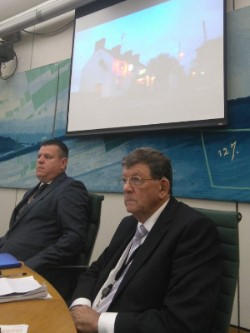
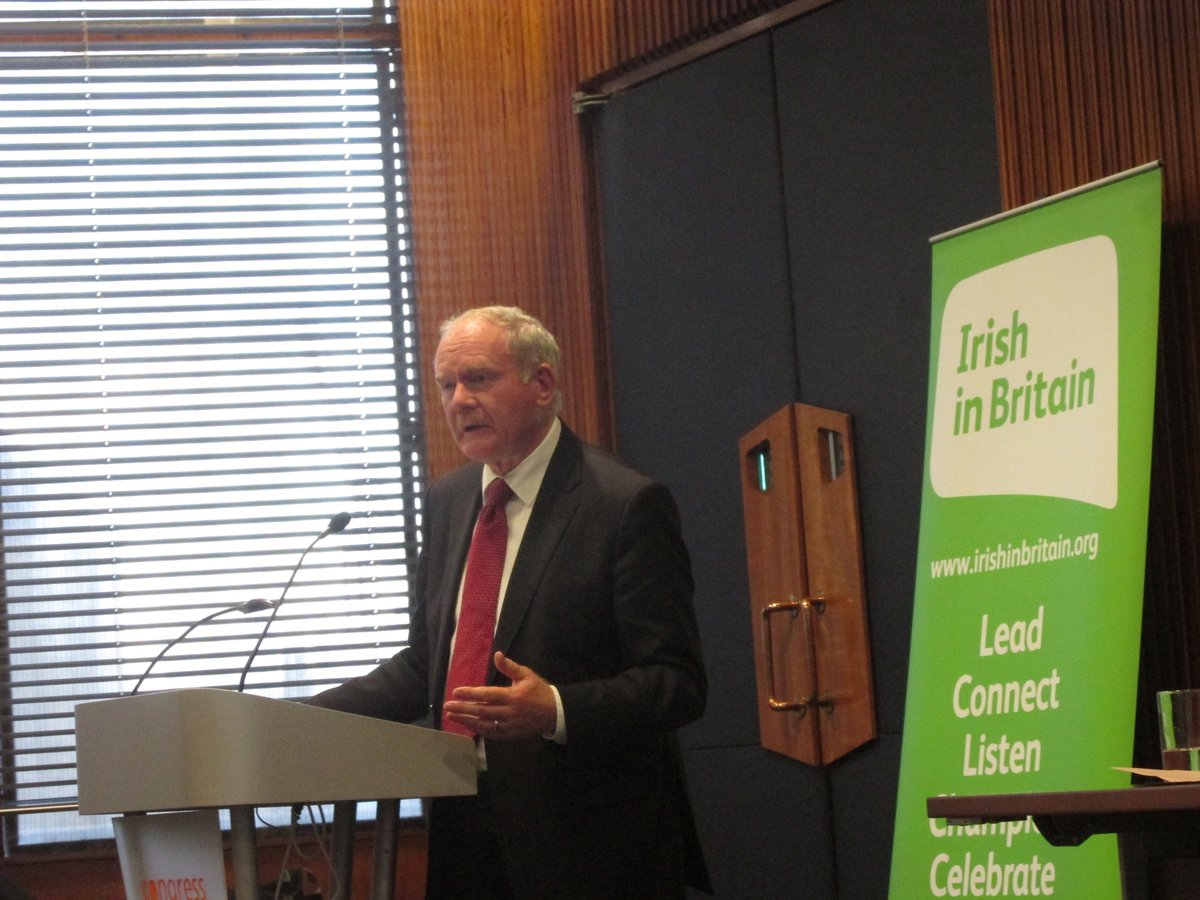
Doherty&MurphyMr Pat Doherty MP opened the event by welcoming Niall Murphy, the solicitor and Human Rights Lawyer for ‘KRW Law’ currently representing the Loughinisland families and survivors; and also extending the apologies of Trevor Birney, the award-winning producer, for being unable to attend.

Mr Doherty stated that Loughinisland was not an aberration, but rather it formed a part of an immediate military and political objective, set by the British security services, to try and frustrate the potential of an unilateral IRA ceasefire and the then emerging Irish Peace Process. Mr Doherty said that collusion was not just a series of isolated incidents. Collusion was, and is, a systematic, deliberate and targeted policy. The West Tyrone MP stated that the recent Ombudsman Report produced by Dr Michael Maguire revealed a shocking scale of collusion between the British Security Services, the RUC, and loyalist paramilitaries. Mr Doherty conveyed his condolences with the victims and survivors of Loughinisland.

Niall Murphy began by thanking Sinn Féin for the invite and for organising the event. Mr Murphy then introduced a brief excerpt from the ESPN Documentary ‘The Ceasefire Massacre’.

Following the documentary clip, Mr Murphy provided a detailed briefing on the Police Ombudsman report by Dr Michael Maguire.

NiallMurphyMr Murphy stated that the Ombudsman report showed that it was “paid RUC agents who pulled the triggers and it was the RUC who failed to investigate the atrocity, with houses not searched and no arrests made for a month, despite having names within a day. Alibis weren’t checked out and evidence was persistently destroyed by the police.”

Mr Murphy added that “The absence of the Rule of Law and the perfunctory and cosmetic nature of investigations as evidenced in this report, is akin to the state endorsed death squads, which operated in Central and Latin America at the same time.”

Mr Niall Murphy’s full briefing can be read here and we would encourage people to take the time to read through it. As was said on the evening, the findings of Dr Maguire’s Report cannot just gather dust on a shelf; they have to be read and circulated.

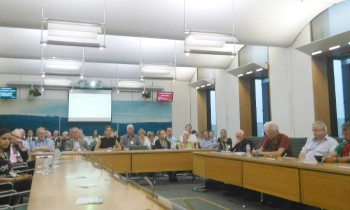
AudienceMr Murphy’s address was followed by an engaging Q&A session. The evening saw a significant turnout with the in region of 60 people in attendance – thereby demonstrating the level of interest in the issue of British State Collusion.

Week in Review 02-09 September 2016

Sinn Fein
The Week in Review
02 – 09 September 2016

Collusion was a ‘deliberate and concerted’ policy – Pat Doherty MPDohertyMP
On Wednesday 7th September, Sinn Féin MP Pat Doherty hosted an Public Briefing titled: ‘The Loughinisland Massacre: A Policy of Collusion‘ inside Portcullis House, Westminster. The Public Briefing was addressed by Niall Murphy, the solicitor and Human Rights Lawyer for ‘KRW Law’ currently representing the Loughinisland families and survivors.
Mr Doherty stated that Loughinisland was not an aberration, but rather it formed a part of an immediate military and political objective, set by the British security services, to try and frustrate the potential of an unilateral IRA ceasefire and the, then emerging, Irish Peace Process.
Mr Doherty stated that collusion was not just a series of isolated incidents. Collusion was, and is, a systematic, deliberate and targeted policy. The West Tyrone MP stated that the recent Ombudsman Report produced by Dr Michael Maguire revealed a shocking scale of collusion between the British Security Services, the RUC, and loyalist paramilitaries.
Mr Doherty conveyed his condolences with the victims and survivors of Loughinisland.
A brief excerpt from the ESPN Documentary ‘The Ceasefire Massacre’ was then shown.
Following the clip, Mr Niall Murphy delivered a detailed briefing on the Police Ombudsman report by Dr Michael Maguire. Mr Murphy stated that the report showed that it was “paid RUC agents who pulled the triggers and it was the RUC who failed to investigate the atrocity, with houses not searched and no arrests made for a month, despite having names within a day. Alibis weren’t checked out and evidence was persistently destroyed by the police.”
Mr Murphy added that “The absence of the Rule of Law and the perfunctory and cosmetic nature of investigations as evidenced in this report, is akin to the state endorsed death squads, which operated in Central and Latin America at the same time.” Niall Murphy’s full briefing can be read here.
His address was followed by an engaging Q&A. In the region of 60 people turned out for the evening’s discussion.

The Loughinisland Massacre. “Liverpool Says: Time For Truth, Time For Justice”BradyMP
Mickey Brady MP was also in Liverpool, on the 3rd-4th September, to support the Loughinisland Justice Group.
On the Saturday he joined a march for Truth & Justice through the City Centre. This was followed by speeches and a rally.
On the Sunday he attended a ‘Community Briefing by Relatives ‘ held in St Michaels Irish Centre.
Mr Brady said it was important to hear first-hand accounts from the families and survivors of Loughinisland. He stated that: “Sinn Féin will continue to stand by the relatives of victims of collusion as they campaign for truth and justice.”

Time to begin the debate on the future – Declan Kearney MLAKearneyMLA
Sinn Féin National Chairperson Declan Kearney MLA has said a wide-ranging debate on what a united Ireland would look like is required. Mr Kearney was speaking after the publication of a MORI poll.
Mr Kearney said; “This poll is significant because it shows that a quarter of the people of the North support a United Ireland before the debate has even begun. I believe this underestimates the true level of support given the current vote of SF and SDLP.”
Mr Kearney continued, “The reality is we all now live in a dramatically changed political and economic context, and the British state is in Constitutional and institutional crisis, and a debate needs to take place about the future. Sinn Féin believes the future for all our people will be best guaranteed in an agreed, united Ireland emerging from an inclusive national conversation, and new accommodations and compromises. No one wants a future in which Tories in Westminster dictate to the people her.”
Mr Kearney called on parties in the south in favour of unity to “join the debate on the shape of a new Ireland and how we bring it about.”
Mr Kearney called the Brexit decision “a watershed for the entire island” and stated that “all the old certainties have been swept away. Let’s begin the debate about the future.”

Liadh Ní Riada MEP briefs trade union delegation in the European ParliamentNíRiadaMEP
Sinn Féin MEP Liadh Ní Riada has met with a delegation from the IMPACT Trade Union in the European Parliament in Brussels this week, where she briefed them on a range of European affairs including the TTIP and CETA trade agreements and the fall out from the Brexit Referendum and budgetary affairs.
Liadh Ní Riada said: “Sinn Fein stands for a just, prosperous and social Europe in which Ireland can take her place as an independent, united and prosperous nation. Unfortunately we are a long way from realising that vision.”
She noted that Sinn Féin MEPs work alongside MEPs from progressive and left political organisations all across Europe in advocating for decency and fairness at work, for the defence of social services, and in combatting the neo-liberal agenda.
Ms Ní Riada added “This weeks meeting with IMPACT was very positive and we had the opportunity to cover a wide range of issues from CETA, TTIP, Brexit and the introduction of a living wage.”
She called the trade union movement “the driving force in much of the social progress in Europe over the decades. In the months and years ahead trade unions such as IMPACT will once again be called upon to stand up for workers across Europe and oppose destructive trade deals such as CETA and TTIP. I will stand with IMPACT and the trade union movement in opposing these deals, and in defending the rights of workers against big businesses and their backers in Government.”

Decision to block candidature of Arnaldo Otegi undermines democracy – Gerry Adams TDAdamsTD
Sinn Féin President Gerry Adams TD, following the announcement of a decision by the Spanish Constitutional Court to disqualify the Secretary General of Sortu Arnaldo Otegi from seeking election to the Basque Parliament in upcoming elections in the Basque Country, has said the decision is “unhelpful and undermines democracy”.
Teachta Adams said: “I am disappointed to learn that the Spanish Constitutional Court has chosen to uphold a decision by the election commission to deny Arnaldo Otegi the right to seek office in elections taking place later this month in the Basque County. It’s an unhelpful decision that undermines democracy and the Basque peace process.”
Mr Adams continued, “since the 1990s, Arnaldo has been acknowledged as the leader of the Basque pro-independence political movement, and is also undisputedly the leader of the Basque peace process. He has faced unrelenting political persecution by Spanish authorities, and this latest decision is just another example of that treatment.”
The Sinn Féin President concluded by extending the party’s continued solidarity to Arnaldo and full support in his efforts to develop the Basque peace process.

Week in Review is circulated by Sinn Fein MPs. Email joseph.dwyer@parliament.uk to join the list or sign up here. For further information visit www.sinnfein.ie or follow us on twitter @sinnfeinireland

Loughinisland, Kerr and Kitson – Britain’s ‘dirty war’ legacy still overshadows the Peace Process

By Declan Kearney

Originally appeared on An Phoblacht, Tuesday 21 June 2016
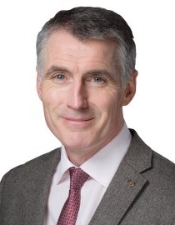
KearneyMLAAT THIS TIME, 22 years ago, Ireland was ten weeks away from the declaration of the IRA’s first unilateral ceasefire.

At the same time as this blog is being written, 22 years ago, six men were going about their own business. They may even have already decided to go to the Heights Bar the next night to watch Ireland play in the European Championship.

One man, Adrian Rogan, was on his way home from a family holiday.

Loughinisland is a quiet, rural part of County Down. By 10:30pm on 18 June 1994 it changed forever.

That night a unionist death squad entered the Heights Bar and emptied the magazine of a VZ58 assault rifle that had been imported by the British security services to rearm death squads under their control.

Unionist paramilitary state agents had imported a consignment of weapons into the North in 1987/88 specifically to increase the killing capacity of the unionist death squads, primarily the Ulster Defence Association and the Ulster Volunteer Force. The importation of weapons (including VZ58 assault rifles such as those used at Loughinisland) and other munitions was organised by the UDA, UVF and Ulster Resistance.

The formation of a new paramilitary group in 1986, known as Ulster Resistance, played a very significant role in the weapons procurements which the British state security services enabled.

The killings at Loughinisland were not an aberration. They were integral to an immediate military and political objective set by the security services – to try and frustrate the potential of an IRA unilateral ceasefire being announced and, as a result, the single most decisive contribution to the development of the Irish Peace Process.

The strategic sub text to the sectarian massacre of the six Catholic men in Loughinisland was to undermine the embryonic Peace Process.

Niall Murphy is a renowned human rights lawyer who has represented the Loughinisland victims’ families. He said what I was thinking when he compared the nature of these killings to the work of death squads in Guatemala and El Salvador.

The Heights Bar massacre and many other killings in the 1970s, 1980s and onwards were characteristic of the state-sponsored assassinations carried out by the right-wing regimes in Latin America in the 1970s and 1980s.

During that period, the US-sponsored governments organised, armed and directed death squads.

These operated at arm’s length from the official state forces, which themselves were involved in widespread assassinations, torture and repression.

The Latin American death squads were used to indiscriminately massacre local communities, execute political activists, human rights lawyers, trade unionists, journalists and civic leaders. Their purpose was to terrorise and repress actual and potential political and social opposition.

From the very beginning of the last phase of political conflict in Ireland, those in charge of the British military and security establishment began using a range of counter-insurgency tactics which had been pioneered in other colonial conflicts such as Kenya and Aden since World War Two.

Brigadier Frank Kitson was the personality most associated with this British counter-insurgency strategy against the Northern nationalist population and the rise of the IRA’s armed struggle.

He helped to develop an integrated political, military and legal doctrine that would oversee Britain’s war in Ireland. From the beginning that included use of the internment and torture policy; the recruitment of counter-gangs (death squads) within nationalist areas to target republican activists and ordinary civilians; intelligence and psychological operations; and, the deployment of clandestine military units and special forces (such as the SAS) alongside conventional combat troops.

Kitson’s doctrine left an enduring influence on British military and security policy towards the North. By 1982, he had been promoted to rank of general and became overall “Commander-in-Chief, UK Land Forces”.

The Hillsborough Agreement in 1985 signalled a qualitative step-change in British policy under the political direction of Prime Minister Margaret Thatcher. The British and Irish governments sought to politically neutralise the electoral rise of Sinn Féin by promoting and investing in constitutional nationalism. Simultaneously, the British security services and military began to systematically infiltrate and reorganise existing unionist paramilitary groups such as the UVF and UDA.

They were also instrumental in the formation of Ulster Resistance.

Key British agents such as Brian Nelson assumed central operational intelligence roles.

New shadowy military intelligence agencies such as the Force Research Unit (FRU) were deployed to the North under the command of Brigadier Gordon Kerr.

The clandestine FRU became central to the recruitment of agents and running of military, political and psychological operations during the late 1980s and 1990s. Its motto was “Fishers of Men”.

The FRU had a prolific influence in the running of unionist death squads. That influence led directly to their reorganisation and rearming with weapons from apartheid South Africa in the late 1980s; the exponential increase in the number of political and sectarian killings being carried out; and, also the extension of their range of targeting through organised collusion with the RUC Special Branch, the British Army’s Ulster Defence Regiment, and British Intelligence itself.

Approval for all these decisions – including the policy of systematic assassination of Sinn Féin elected representatives and party members during the 1980s and 1990s and other civic and human rights advocates such as Pat Finucane – were taken at the highest levels of the British state.

State-sponsored collusion and assassination in the North was never an illusion – it was a British state policy.

In February this year, Secretary of State Theresa Villiers gave a very important insight into the systematic nature of that policy when she publicly dismissed the fact of British state collusion in running unionist death squads as a “pernicious counter narrative”.

Since then, the British Government has repeatedly refused to support the mechanisms agreed for dealing with the past under the Stormont House Fresh Start Agreement by imposing a veto on maximum information disclosure under the pretext of “national security”.

Significantly, Theresa Villiers, on behalf of the British Government, refused to withdraw her February statement and apologise for it (and specifically to the Loughinisland families) after the Police Ombudsman’s report into the inquiry of their loved ones’ killings was published.

That’s because the same powerful sections of the British security and military establishment which directed Britain’s ‘dirty war’ in Ireland still exert a huge influence.

They haven’t gone away.

Those who were always hostile to the Peace Process within the British Ministry of Defence and security services in Whitehall are still politically and psychologically at war with the Sinn Féin leadership.

They are responsible for the current impasse in relation to dealing with the past because they are determined to conceal the reality of British state collusion, assassination and systematic illegality.

According to their zero-sum view, the British state would have too much to lose. For them, legacy issues represent a new battleground.

Twenty-two years after the Loughinisland massacre, those who tried to wreck the potential of the first IRA cessation are still trying to undermine the Peace Process. The British security services are directly involved in promoting the sustained black propaganda strategy, aimed at vilifying and undermining the current Sinn Féin leadership.

The war is over. However, some in Britain’s military and security services have still to embrace that reality.

The legacy of Britain’s dirty war continues to cast a poisonous shadow over the Peace Process and the work of continued democratic transformation in the North.

Those who remain opposed to peace and democratic political processes must not be allowed to succeed.

An international and national political campaign is now required to bring maximum political and diplomatic focus on the British state’s role in collusion during the conflict and its opposition during the Peace Process to help to finally deal with the legacy of the past.

The Loughinisland Massacre: A Policy of CollusionLoughinisland
Wednesday 7th September, 7:00pm,
Boothroyd Room, Portcullis House, House of Commons, London SW1A OAA.
Westminster Tube, public entrance to Portcullis House, Victoria Embankment

Please allow at least 20 minutes to pass through the House of Commons security.
A public meeting with Niall Murphy; a human rights lawyer and solicitor representing the Loughinisland Massacre families and survivors, and Trevor Birney, an award-winning producer and director currently working on a feature length documentary film on the Massacre and Collusion across the north of Ireland during the conflict.
The evening will discuss the recent Police Ombudsman’s report into the massacre, which once again confirmed a shocking scale of collusion between the RUC and loyalist paramilitaries. The evening will also be screening a brief documentary feature, ‘Ceasefire Massacre’, produced by Trevor Birney for ESPN.
The evening will be chaired by Pat Doherty MP.
A Facebook Event Page can be found HERE.
RSVP by emailing: joseph.dwyer@parliament.uk or Eventbrite - The Loughinisland Massacre: a Policy of Collusion.

Week in Review 26 August – 02 September 2016

Sinn Fein
The Week in Review
26 August – 02 September 2016

British and Irish governments must explore ways to respect remain vote – Máirtín Ó MuilleoirÓMuilleoirMLA
Sinn Féin MLA and Minister for Finance Máirtín Ó Muilleoir has said that the British and Irish governments must explore ways to respect the vote of the majority of people in the North of Ireland to remain in the EU if and when Britain decides to exit.
Speaking after a meeting with the British government’s Brexit Secretary and the British Secretary of State, Mr Ó Muilleoir said; “I met today with David Davis and James Brokenshire to discuss the impact of the recent EU referendum and made clear to him the fact that the majority of people in the North, unionist, nationalist and republican voted to remain in the EU. We expect the British government to recognise and respect that vote.”
Mr Ó Muilleoir continued; “I asked David Davis to underwrite Peace and Interreg applications post Autumn statement and to do so now and asked him to guarantee that EU citizens making their lives here would not be expelled under any circumstances. The economic, cultural and social damage an EU border – whether hard or soft – would have on the island of Ireland would be huge. And it would be most keenly felt in border areas.”
Mr Mr Ó Muilleoir concluded “In short both the British and Irish governments must explore ways in which the North can remain as part of the EU if and when Britain decides to exit.

Seanad must be recalled in light of Apple tax ruling – Senator Rose Conway-WalshSenConway-Walsh
Sinn Féin Seanad Leader Rose Conway-Walsh has submitted a formal request for a recall of the Seanad to discuss the EU Commission ruling on Apple’s Irish tax arrangements.
Speaking on Thursday the Mayo Senator said: “The ruling by the European Commission for Ireland to recoup taxes of €13 billion, plus interest, is of monumental import. What’s of even greater consequence is the view held by the government that we should appeal this decision. There are over thirty days within which to decide whether this decision should be appealed. The immediate priority for TDs and Senators and for the general public is to get access to the full version of the Commission decision which has not yet been published. It is vital that every member of the Oireachtas has an opportunity to debate this unprecedented ruling of the European Commission to declare the State’s tax arrangements with Apple illegal.”
Ms Conway-Walsh said that all elected representatives should have the opportunity to express their views on the ruling.
Sinn Féin party whip Aengus Ó Snodaigh has also written to the Ceann Comhairle to ask that the Dáil be recalled next week for a debate.

Martina Anderson MEP welcomes UN concerns over plans to scrap Human Rights ActAndersonMEP
Sinn Féin MEP Martina Anderson has said the United Nations is right to be concerned about implications for the North of the British government’s plans to scrap the Human Rights Act.
Speaking after the publication of a report by a United Nations Committee, Ms Anderson said; “The Human Rights Act gives effect to the European Convention on Human Rights, gives people direct access to the European Court of Human Rights and underpins the Good Friday Agreement. The Tories are on an ideological crusade to remove it.”
Ms Anderson continued; “Another important conclusion of the committee was their declared support for a Bill of Rights specifically for the north. This Bill of Rights was to supplement the Human Rights Act and enhance human rights provision in the north of Ireland.”
Ms Anderson noted that the introduction of a Bill of Rights for the North was agreed in the Good Friday Agreement and yet the British Government has still not made any progress. She stated, “Given that we now face a British Government with human rights safeguards firmly in their crosshairs, it is now essential we both protect the Human Rights Act and move towards the introduction of a Bill of Rights for people in the north of Ireland.”

Adams welcomes end of conflict in ColombiaAdamsTD
Sinn Féin President Gerry Adams TD has “warmly welcomed” the commencement today of a ‘definitive ceasefire’ by FARC and the ending of military actions against it by the Colombian government.
Teachta Adams said: “This is an historic moment in the efforts to secure a lasting peace in Colombia. I want to commend the leaderships of FARC and of the Colombian government for their perseverance and courage.”
The Sinn Féin President stated, “Sinn Féin has sought to play a supportive role in the peace process. Last year, I met with the FARC negotiators while on a visit to Cuba and Sinn Féin representatives have met with both sides as part of our international commitment to promoting peaceful solutions to conflicts. Two years ago, Martin McGuinness travelled to Colombia and met with Colombian President Juan Manuel Santos. Conor Murphy MLA, Alex Maskey MLA, Jennifer McCann MLA and others have been involved in discussions with both sides. Finally, I want to thank Cuban President Raul Castro and the Cuban and Norwegian governments for their positive role in facilitating the Colombian peace process. Their patient engagement over many years has contributed significantly to this progress.”
Concluding, Gerry Adams said: “Agreements are only part of any resolution of conflict. As we know from the Irish peace process, the implementation and honouring of agreements is crucial to their success. There is an onus on all of the participants to the Colombian peace process, but especially the government, to ensure that the agreement reached is implemented in full.”

EVENTS…
* Liverpool Says: Time For Truth, Time For Justice, 3rd-4th September
Cairde na hEireann Liverpool. Mickey Brady MP will be in attendance.

    March & Rally
    Saturday 3rd September
    Assemble 12 noon, Chinatown, Liverpool.

    A Facebook Event Page can be found HERE.

    Community Briefing by Relatives
    Sunday 4th September
    12.30pm, St Michaels Irish Centre 6 Boundary Lane Liverpool L6 5JG.
    A special community briefing by members and relatives of the Loughlinisland Campaign for Truth and Justice.
    Hear first hand the accounts of how the truth was finally revealed and how the search for truth and justice continues for hundreds of others killed by collusion between Loyalist paramilitaries and elements of Britain’s security services.

    A Facebook Event Page can be found HERE.

* The Loughinisland Massacre: A Policy of CollusionLoughinisland
Wednesday 7th September, 7:00pm,
Boothroyd Room, Portcullis House, House of Commons, London SW1A OAA.
Westminster Tube, public entrance to Portcullis House, Victoria Embankment

Please allow at least 20 minutes to pass through the House of Commons security.
A public meeting with Niall Murphy; a human rights lawyer and solicitor representing the Loughinisland Massacre families and survivors, and Trevor Birney, an award-winning producer and director currently working on a feature length documentary film on the Massacre and Collusion across the north of Ireland during the conflict.
The evening will discuss the recent Police Ombudsman’s report into the massacre, which once again confirmed a shocking scale of collusion between the RUC and loyalist paramilitaries. The evening will also be screening a brief documentary feature, ‘Ceasefire Massacre’, produced by Trevor Birney for ESPN.
The evening will be chaired by Pat Doherty MP.
A Facebook Event Page can be found HERE.
RSVP by emailing: joseph.dwyer@parliament.uk or Eventbrite - The Loughinisland Massacre: a Policy of Collusion.

Week in Review is circulated by Sinn Fein MPs. Email joseph.dwyer@parliament.uk to join the list or sign up here. For further information visit www.sinnfein.ie or follow us on twitter @sinnfeinireland

Week in Review 19-26 August 2016

Sinn Fein
The Week in Review
19 – 27 August 2016

Concerns over Brexit must be heard – Caoimhe Archibald MLAArchibaldMLA
Sinn Féin MLA, Caoimhe Archibald has called on businesses, universities and other organisations who avail of EU funding to ensure that they make their concerns over Brexit heard.
The East Derry MLA was speaking after a day of engagements in the area with MEP Martina Anderson. Ms Archibald stated that: “There is a lot of concern among the business community, for the universities and the many others who avail of EU funding, and of course for farmers, as to the impact of the EU referendum result and the uncertainty that has resulted.”
Ms Archibald reiterated that: “It is very important that all of these stakeholders make their opinions and concerns known to their representatives in all forums, be that unions, chambers of commerce or elected representatives. The people of the North voted to remain and that vote must be recognised and respected.”

West Belfast comments no surprise – Paul Maskey MPMaskeyMP
Sinn Féin MP Paul Maskey has said comments made by a former head of the civil service about West Belfast revealed as archive papers are released will not surprise people in the area.
The West Belfast MP said: “The comments made by the then head of the civil service in 1987 about West Belfast will come as no surprise to anyone who lives in the area. They are indicative of the attitude of the NIO and British government to West Belfast for decades.”
Mr Maskey continued, “West Belfast was subjected to a systematic campaign of state-sponsored violence and murder and was starved of funding and investment for many years in an attempt to keep the community down. Attempts were made to turn West Belfast into a ghetto and to criminalise and demonise its people. Those days are gone and are not coming back. While problems still exist as a result of the legacy of decades of underinvestment, West Belfast has been transformed since power was taken from the hands of unelected and unaccountable civil servants.
Mr Maskey concluded by saying: “Sinn Féin have led this transformation and continue to work daily to for the people of West Belfast and to challenge discrimination and injustice.”

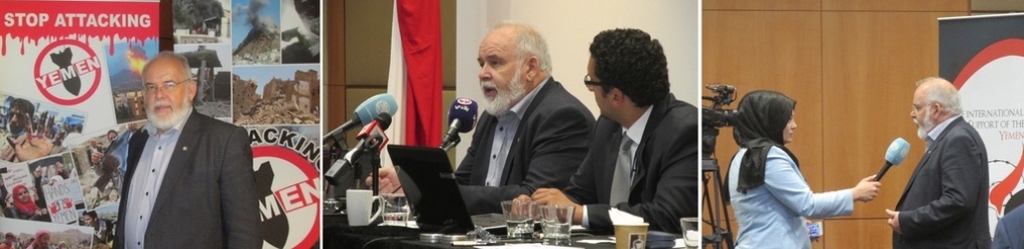
Francie Molloy MP at ‘International Conference in Support of the People of the Yemen’MolloyMP
On 20 August, Francie Molloy MP addressed ‘The International Conference in Support of the People of the Yemen’ in London as a delegate on behalf of Sinn Féin.
Mr Molloy outlined the experience of the Irish Peace Process. He highlighted the importance of inclusivity, stating that: “one of the things that you had to do when you’re sitting down with former enemies was you had to recognise and respect their right to be there. Everyone had to respect each other. We had to be inclusive so that no-one was left out.”
Mr Molloy said although not all conflicts are the same, lessons can be learnt from each other’s experiences of conflict resolution and Peace Processes.
Turning to the conflict in the Yemen, Mr Molloy extended Sinn Féin’s solidarity to the people of the Yemen. He commented: “We in Sinn Féin support completely the idea of an arms embargo; there should be no arms exports from any country, the US, Britain or any other, to Saudi Arabia.”
He concluded: “Sinn Féin, as an Irish republican party, will stand with you, and support you, and wish you well in the negotiations of the future.“

Conor Murphy MLA welcomes Colombia peace dealMurphyMLA
Sinn Féin MLA Conor Murphy has welcomed a historic peace accord between FARC and the Colombian government.
Mr Murphy, who previously travelled to Colombia to assist the peace process, said: “The peace accord between FARC and the Colombian government is a welcome step forward in the Colombian peace process. It is a further historic step in the process to end the most long-running conflict in the world.”
Mr Murphy continued, “This follows two years of peace talks in Havana, which Sinn Féin supported and participated in. I and other Sinn Féin representatives have travelled to Colombia and Cuba to meet with both sides and share our experiences of building peace. It is encouraging that both sides have agreed to work together to tackle the major political and economic issues facing the Colombian people and to deliver justice for all victims of the conflict.”
Mr Murphy pledged Sinn Féin’s continued support to the Colombian peace process as it continues to move forward.

The Loughinisland Massacre: A Policy of CollusionLoughinisland
Wednesday 7th September, 7:00pm,
Boothroyd Room, Portcullis House, House of Commons, London SW1A OAA.
Westminster Tube, public entrance to Portcullis House, Victoria Embankment

Please allow at least 20 minutes to pass through the House of Commons security.
A public meeting with Niall Murphy; a human rights lawyer and solicitor representing the Loughinisland Massacre families and survivors, and Trevor Birney, an award-winning producer and director currently working on a feature length documentary film on the Massacre and Collusion across the north of Ireland during the conflict.
The evening will discuss the recent Police Ombudsman’s report into the massacre, which once again confirmed a shocking scale of collusion between the RUC and loyalist paramilitaries. The evening will also be screening a brief documentary feature, ‘Ceasefire Massacre’, produced by Trevor Birney for ESPN.
The evening will be chaired by Pat Doherty MP.
A Facebook Event Page can be found HERE.
RSVP by emailing: joseph.dwyer@parliament.uk or Eventbrite - The Loughinisland Massacre: a Policy of Collusion.

Week in Review is circulated by Sinn Fein MPs. Email joseph.dwyer@parliament.uk to join the list or sign up here. For further information visit www.sinnfein.ie or follow us on twitter @sinnfeinireland

Francie Molloy MP at ‘International Conference in Support of the People of the Yemen’

MolloyMPOn 20 August, Francie Molloy MP addressed ‘The International Conference in Support of the People of the Yemen’ in London as a delegate on behalf of Sinn Féin.
Mr Molloy outlined the experience of the Irish Peace Process. He highlighted the importance of inclusivity, stating that: “one of the things that you had to do when you’re sitting down with former enemies was you had to recognise and respect their right to be there. Everyone had to respect each other. We had to be inclusive so that no-one was left out.
Mr Molloy said although not all conflicts are the same, lessons can be learnt from each other’s experiences of conflict resolution and Peace Processes.
Turning to the conflict in the Yemen, Mr Molloy extended Sinn Féin’s solidarity to the people of the Yemen. He commented: “We in Sinn Féin support completely the idea of an arms embargo; there should be no arms exports from any country, the US, Britain or any other, to Saudi Arabia.
He concluded: “Sinn Féin, as an Irish republican party, will stand with you, and support you, and wish you well in the negotiations of the future.IMG_3258a

Remain must mean remain: why we need an all-Ireland response to Brexit

Martin McGuinness: ‘Economic uncertainty is damaging trade and investment and causing currency fluctuations that impact particularly on cross-Border business and exports’

By Martin McGuinness MLA
Originally appeared in The Irish Times, 19/08/2016

McGuinnessMLA

The island of Ireland is facing the biggest constitutional crisis since partition as a result of the Brexit referendum. The negotiations in the lead-up to Easter 1998 concluded with agreement on three interdependent strands relating to: issues within the North, between the North and the Republic, and between Ireland and Britain. Like a three-legged stool, take away one leg and it collapses.

The Good Friday (or Belfast) agreement, as it became known, was endorsed by 94 per cent of the voters in the Republic and 71 per cent in the North. Bunreacht na hÉireann was amended, institutions North and S outh were established and 18 years of political progress proceeded on the basis of that democratic vote.

The decision by the Conservative Party to press ahead with the Brexit referendum was a snub to the agreement. The decision to press ahead with Brexit following the referendum fundamentally undermines the Belfast Agreement and other agreements. It represents a major setback for the political process in the North.

Brexit will undermine all-Ireland bodies and co-operation created by the peace process and it will harden partition. It will have consequences for human rights legislation which, again, is specifically referred to in the Belfast and subsequent agreements.

The agreements, the Irish economy, the views of the Irish Government and the wishes of our people have been set aside by the British government.

The current economic uncertainty is already damaging trade and investment and causing currency fluctuations which impact particularly on cross-Border business and exports. But all of that will become overshadowed if we see the imposition of tariffs and the restriction of free movement of goods, services and people on the island of Ireland.

An EU frontier, hard or soft, stretching from Dundalk to Derry, is not in our national interest. And it’s all very well for Theresa May to say she doesn’t want a return to the borders of the past. But when she was home secretary, she was absolutely clear that Brexit would inevitably lead to renewed border checks in some form.

Hard Border
I have raised all these issues directly with the British prime minister and with the Taoiseach. However, the simple fact is that neither Theresa May nor Enda Kenny can rule out a hard Border. It is not within their gift. It will be a matter for wider negotiation between the British government and the EU institutions.
“Brexit means Brexit” is the rhetoric of the Tory Party, but nobody – not even Theresa May – has any idea of what it actually means.

It is abundantly clear from the engagements I have had with the highest levels of the Westminster government that they are scrambling in the dark. They have no demonstrable plan to plot a way through this crisis because they didn’t expect this to actually happen.

I personally warned David Cameron nine months ago that he was sleepwalking us all out of the European Union.

The British government recklessly caused this crisis for entirely self-serving reasons. It was a foolish attempt to placate Ukip racists and the loony right within the conservative party.

However, I am clear that the democratic vote in the North must be respected. Remain must mean remain.

From our perspective, what is needed now is an island-wide approach to dealing with this crisis. That is why Sinn Féin called on the Taoiseach to establish an all-Ireland forum to discuss the impact of the referendum, to develop strategies and options to ensure that the vote in the North is respected and to safeguard our national interests.

This now needs to go ahead as a matter of urgency, including all interested groups and parties. Let those who want to work together come together, and let us get on with the work at hand. No party should be afforded a veto in this process. It is too important.

The people of the North voted to remain in the EU and we have to explore all options to give effect to that mandate. The example from Scotland has shown that such a debate can be carried out in a mature, reasonable and sensible manner.

The Brexit vote should also be a wake-up call for the EU institutions.

The Tories and the British government have demonstrated yet again that they care little for the people and economy of Ireland.

ClD-FaJXEAAl6A6Taoiseach needs to lead
The Taoiseach needs to lead in defending our national interest in the working out of the Brexit vote. The clock is ticking. The economic impacts of the Brexit vote are being felt. The British have made clear that they will trigger Brexit early in the new year. This will be followed by at least two years of EU negotiations.
An immediate and first step would be for the Taoiseach to call together all interested parties and bodies to map out the options for the future.

Our party will play a full role in working along with the Taoiseach to defend our national interests and the democratic vote in the North.

I believe people here see their future as part of an outward-looking, positive and inclusive new Ireland in a changed EU. The agenda being pursued by the Tories is contrary to all of that, and it is time we had a genuine, mature and rational debate about the challenge of Brexit.

Week in Review 12-19 August 2016

Sinn Fein
The Week in Review
12 – 19 August 2016

Sinn Féin mark the 35th Anniversary of the 1981 Hunger Strike
On 14 August, Sinn Féin activists from all over Ireland gathered in their thousands in a celebration of the life and sacrifice of the 1981 H-Block hunger strikers.
A transcript of the day’s speeches featured can be read here.

Martina Anderson MEP meets women’s groups to discuss BrexitAndersonMEP
Sinn Féin MEP Martina Anderson met with a group of women involved in the women’s sector in Derry on 17 August to discuss the impact of Brexit.
Following the meeting, Ms Anderson reiterated Sinn Féin’s belief that leaving the European Union will pose particular risks which would have negative impacts on women. Of particular concern is the potential “roll back” of rights and equality legislation.
Ms Anderson noted that there remain serious concerns, among many sectors, about what will happen if the British government succeeds in its plan to drag the north of Ireland out of the EU.
Ms Anderson concluded: “The reality is that the majority of people in the North voted to remain in the EU and that democratically expressed view must be recognised and respected.”

Mickey Brady MP calls for immediate release of Palestinian hunger strikerBradyMP
Sinn Féin MP Mickey Brady has called for the immediate release of Palestinian prisoner Belal Kayed, currently being held on Administrative Detention.
Mr Brady, who has visited the Middle East on a number of occasions on what he described as “fact finding missions and to express solidarity with the Palestinian people”, said Mr Kayed’s detention amounted to internment.
Mr Brady noted that there are serious human rights concerns surrounding the treatment of Belal Kayed. Mr Brady commented “He should have been released after the completion of his 14-year sentence. However the Israeli authorities are continuing to hold him despite a continued deterioration in his health and he is being tied to a hospital bed by his hands and legs.”
Mr Brady called for the intervention of the international community and called on the Israeli government to end the administrative detention of Palestinian prisoners.
McCann&GavanMr Brady’s colleagues Fra McCann MLA and Senator Paul Gavan are currently part of of an international parliamentary delegation to Palestine. As part of their visit they have met with Palestinian prisoner and human rights groups in Ramallah. These engagements were hosted by the Addameer Prisoner Support and Human Rights organisation and it’s Director Saha Francis. Sinn Féin representatives also met with Defence For Children and the Palestine Boycott, Divestment and Sanctions Movement.

Brokenshire needs to look no further than Remain vote – John O’Dowd MLAODowdMLA
Sinn Féin MLA John O’Dowd has said if British Secretary of State James Brokenshire wants to canvas public opinion in the North on Brexit then he should look at the results of the referendum.
Mr O’Dowd commented: “The people of the North have spoken and they have clearly stated at the ballot box that they want to stay in the European Union. Before embarking on his grand tour Mr Brokenshire needs to acknowledge and respect that vote.”
Mr O’Dowd continued, “We have heard much about the British Government’s wish to consult and listen to the devolved administration. However, if you want proof of what value they actually put on consultation you only have to look at the announcement by the Chancellor at the weekend, there was zero consultation and no attempt to ensure the needs of the people of the North were being met.”

Sinn Féin did not have any knowledge of alleged contact with NAMA witnessesMcGuinnessMLA
Sinn Féin MLA Martin McGuinness has said Sinn Féin did not have any knowledge of any alleged contact with witnesses appearing before the Assembly’s NAMA inquiry.
Mr McGuinness said; “I want to state categorically that I had absolutely no knowledge of this exchange or contact. And having spoken to all relevant personnel in the Assembly I am now entirely satisfied that Sinn Féin had no knowledge of any such contact.”
Later, following his resignation, Mr Daithi McKay apologised “whole-heartedly” for his “inappropriate, ill-advised and wrong” contact with Jamie Bryson ahead of the blogger’s appearance before the Stormont Nama inquiry.
Carál Ní Chuilín, Sinn Féin’s chief whip in the Assembly, commented that Mr McKay had “accepted that he made an error of judgement” and had been suspended from the party. She added that the party would: “co-operate fully with any inquiry” and that “any examination of the facts will confirm that Sinn Féin had absolutely no knowledge of, or involvement in, these events.”

Week in Review is circulated by Sinn Fein MPs. Email joseph.dwyer@parliament.uk to join the list or sign up here. For further information visit www.sinnfein.ie or follow us on twitter @sinnfeinireland

‘National unity is in the national interest’

Gerry Adams argues it is time for a united Ireland

By Gerry Adams TD
Originally appeared on thejournal.ie, 11/08/2016

AdamsTD

The issue of Irish unity has been absent from official Ireland’s centenary celebrations to mark 1916.

Parades and TV specials were seen, books were written, and reams of newspaper articles published. Songs of the period have been sung and debates held. But the fracture of the island by partition, the abandonment of the 1916 Proclamation as a declaration of freedom and justice for all of Ireland, has been ignored.

The Republic envisaged by the leaders of 1916 and by the Proclamation was to be a rejection of all that was bad, divisive and elitist in British imperialism and colonisation. It was to be an Ireland of equal citizens. A republic for all.

Today those of us who desire that outcome are told by some that we are being divisive. We are told that there will be a united Ireland at some undefined time in the future. But it will not happen through wishful thinking or sitting in a bar singing songs – not that there is anything wrong with singing songs of freedom – or simply talking about it.

It needs a political strategy with clear objectives and actions.

Failure to honour commitments

Those who advocate the wishful thinking approach to Irish unity point to the enhanced relationships between London and Dublin. They praise the ‘special’ relationship between the Irish and British governments as evidence of change. And while it is true that much progress has been made, the reality is that the British government has failed to honour key commitments within the Good Friday and other agreements.

It has unilaterally set aside elements of the various agreements, with barely a whimper of protest, especially from the Irish establishment. It has failed to deliver on a range of important issues, including:

    * A Civic Forum in the north

    * An All-Ireland Civic Forum

    * A Bill of Rights for the North

    * A joint north/south committee of the two Human Rights Commissions

    * An All-Ireland Charter of Rights

    * Honouring its obligations in compliance with the European Charter for Regional or Minority Languages

    * The introduction of Acht na Gaeilge

The British have also obstructed efforts to resolve the legacy of the past by refusing to honour its commitments under the Haass agreement, failing to provide information on the Dublin/Monaghan and Dundalk bombs, and reneging on its Weston Park commitment to hold an inquiry into the murder of human rights lawyer Pat Finucane.

Brexit

The real value of the special relationship between the Irish and British governments was demonstrated in the recent Brexit campaign. It is clear the economic interests of the island of Ireland are collateral damage in a fight between factions of the right wing of British politics.

The implications of Brexit are becoming increasingly apparent. It is a real threat to the economy, imposing barriers to trade and a possible EU frontier across Ireland, creating a fundamental crisis in North-South co-operation.

At no time in the Brexit debate was the impact on Ireland, North or South, considered. Our national concerns were dismissed.

The people of the North voted against Brexit. Just as they did in the Good Friday Agreement referendum, all sections of the community, republican and unionist, voted in the best interest of all. They voted to remain in the EU. Yet the British Government say they will impose Brexit on the North against the expressed will of the majority.

The economies north and south are interlinked and interdependent. It has been estimated that 200,000 jobs depend on all-Ireland trade. A recent report on economic modelling of Irish unity demonstrated a dividend and growth in a united Ireland.

The aftermath of the Brexit vote is a clear demonstration of the injustice of partition. It is fundamentally undemocratic and economically wrong. Partition makes no sense. Yet it continues.

Towards a new Ireland

Unity

A mechanism exists to end partition and bring about Irish unity, through a border poll.

The vast majority of people across Ireland voted for the Good Friday Agreement. It is worth remembering that 94% of people in the south and 74% of people in the North voted for the agreement.

It included a peaceful and democratic pathway to Irish unity that provided for concurrent referendums north and south. It obliged the two governments to legislate on the basis of referendums for Irish unity.

National unity is in the national interest. Wishful thinking will not bring about unity. We have a mechanism to achieve unity. We need all of those in favour of unity to act together to bring it about.

This is the time to plan and to build the maximum support for unity. The leadership of those parties which support Irish unity, acting together, could be the leadership which delivers it.

Eighteen years after the signing of the Good Friday Agreement, we should not need to convince the leaders of Fianna Fáil or Fine Gael to become persuaders for Irish unity.

The Irish government should have a plan for unity. A first step in the next term of the Oireachtas would be the development of an all-party group to bring forward a green paper for unity.

In addition, we need to develop plans for an all island health service; for public services in a united Ireland, through a united Ireland investment and prosperity plan.

Now is the time

The New Ireland Forum in its time created a space for discussion on constitutional options of change and developed a comprehensive economic options paper on the cost of partition.

It failed because it excluded Sinn Féín and operated at a time of a British veto on change – given voice by Margaret Thatcher with her “out, out, out” rejection. Thatcher is gone and so is the British veto.

Constitutional change is in the hands of the people of Ireland, North and South. The politics of exclusion failed, and Sinn Féin is jointly leading the government in the North.

We have the opportunity to end partition and build support for a new and united Ireland. A new Ireland that is built on equality and which is citizen centred and inclusive. The shape of that new Ireland remains to be drawn.

Now is the time for all parties who support Irish unity to come together to design the pathway to a new and united Ireland.

Week in Review 05-12 August 2016

Sinn Fein
The Week in Review
05 – 12 August 2016

Martin McGuinness MLA saddened at the death of Bishop Edward DalyMcGuinnessMLA
Following the death of the former Bishop of Derry, Dr. Edward Daly, the Joint First Minister, Martin McGuinness MLA reflected:
“It was with deep sadness that I learned of the death this morning of the much-loved former Bishop of Derry Edward Daly. Bishop Daly is remembered internationally for the iconic image from Bloody Sunday when he was waving a white handkerchief to British soldiers while aiding the dying Jackie Duddy. But he was also an immense figure in the city. He was very forthright in his views at a time when a war was raging in the city but thankfully he also lived to see the peace.”
Mr McGuinness continued: “I met with him on a number of occasions in 1992 and 1993 about the developing peace process and he was always compassionate, honest and backed the efforts of me and others to help bring the conflict to an end. He is a huge loss to the city and its people and I extend my sincerest condolences and those of my party to his family at this very sad time.

Removing walls opens door to a new shared space – Megan Fearon MLAFearonMLA
Junior Minister Megan Fearon highlighted the Executive’s continued commitment to removing interface barriers and structures of division as she addressed an audience at the New Lodge Community Festival on Tuesday.
The Junior Minister said: “Through its Together Building a United Community strategy, the Executive is committed to reduce and remove all interface barriers by 2023.”
Ms Fearon said that: “By removing a peace wall we open a door to a new shared space and I believe we should be ambitious in our efforts. Reconciliation has been hampered by physical divisions so to help build a truly shared, united and reconciled community, we need to put in place the conditions and circumstances to remove these structures.”
The Minister recognised the challenges in removing interface barriers and praised the courage of the community for their efforts. Ms Fearon added: “Taking down these barriers can only happen by engaging with, by building relationships with, and by seeking the consent and support of the people who live in their shadows. It takes courage to engage on such difficult issues, but the courage that many in the community have shown, and continue to show on a daily basis, can, and will change our society for the better. Progress is being made.”
The Minister concluded by saying: “The Executive will continue to support communities on this journey and I commend the excellent work of Duncairn Community Partnership which has been vital in shaping progress in north Belfast.”

Adams appeals to Kenny to intervene in Ibrahim Halawa caseAdamsTD
Sinn Féin President Gerry Adams TD welcomed news this week that lawyers acting on behalf of Ibrahim Halawa are to submit a new application for an Egyptian Presidential decree, in spite of comments made in the Egyptian parliament, and has called on An Taoiseach Enda Kenny, to directly intervene on Ibrahim’s behalf.
Teachta Adams said: “Ibrahim Halawa, a twenty year old Irish citizen, has now spent over one-thousand days incarcerated in a filthy and over-populated Egyptian jail. His trial has been postponed an astonishing fourteen times and he has detailed the ill-treatment and torture he has faced, as well as what other prisoners have been subjected to. It is despicable.”
Mr Adams noted the unhelpful comments made in response to the Oireachtas all-party motions calling for Ibrahim’s release that were passed unanimously last month, but welcomed the fact that a new application for his release under a Presidential decree is being made on his behalf.
Mr Adams continued: “The Government’s strategy to date, although very well intended, in attempting to secure his release has been unsuccessful and I would again today appeal to Enda Kenny to exert pressure at the highest levels in Cairo to secure Ibrahim’s release. It is my firm belief that the Taoiseach needs to make direct contact again with the Egyptian President and Prime Minister and demand Ibrahim’s release without delay.”

Sinn Féin will continue to raise the concerns of the Palestinian peopleSheehanMLA
Sinn Féin MLA Pat Sheehan has stated dialogue is essential and that Sinn Féin will continue to raise the concerns of the Palestinian people in all forums and at all levels.
Pat Sheehan said: “Sinn Féin’s record of supporting the Palestinian people is clear and consistent. We have highlighted the injustices being inflicted on the Palestinian people in their legitimate struggle for freedom, independence and statehood and demand a formal recognition of the State of Palestine on the basis of the 1967 borders with East Jerusalem as its capital.”
Mr Sheehan stated Sinn Féin’s belief that inclusive dialogue between the representatives of the Palestinian and Israeli people is the key to resolving the conflict.
Mr Sheehan stated that “Any meetings between Sinn Féin representatives and Israeli political parties are on the basis of critical engagement,” and that, “all such engagements put the concerns of the Palestinian people front and centre whether it be the atrocious conditions faced by the people of Gaza, the ill-treatment of political prisoners, illegal Israeli settlements and building international pressure towards ending on-going conflict in the Middle East. Those who represent the Palestinian people are aware that we raise these issues at all levels and wish us to do so.”
Mr Sheehan also noted the continued imprisonment of Belal Kayed, currently held on Administrative Detention. Mr Kayed is engaged in a prolonged Hunger Strike. Pat Sheehan said: “Belal Kayed began his hunger strike on the 15th June in protest against being held without trial or charges under what the Israeli authorities term ‘Administrative Detention’. This in essence is internment without trial, a policy which many republican prisoners were subjected to during the conflict in the north.”
Mr Sheehan concluded: “The international community must intervene immediately and call on the Israeli government to end the administrative detention of Palestinian prisoners.”

Máirtín Ó Muilleoir MLA calls for stimulus measuresÓMuilleoirMLA
The Finance Minister, Máirtín Ó Muilleoir has called on the Treasury to release funds to boost the local economy including capital investment in our infrastructure.
The Minister said: “The Executive’s allocation of capital funding for key infrastructure projects identified in the Fresh Start Agreement will go some way towards providing investment for infrastructure however, in the wake of the EU referendum it is incumbent on the British government to release the necessary funds to stimulate the economy, boost the construction sector, and support local employment.”
Ó Muilleoir concluded “I spoke to the Chancellor recently and urged him to bring forward measures to address the difficulties caused by the referendum result.”

Week in Review is circulated by Sinn Fein MPs. Email joseph.dwyer@parliament.uk to join the list or sign up here. For further information visit www.sinnfein.ie or follow us on twitter @sinnfeinireland