Gerry Adams expresses “deep sadness” at death of Tony Benn

By Gerry Adams
Sinn Fein

Sinn Féin President Gerry Adams TD has expressed his deep sadness on the death of veteran activist, MP and former British cabinet minister Tony Benn.Benn Speaking from the United States Mr. Adams said:
“It was with a great sadness that I learned of Tony Benn’s passing this morning. Tony was a true friend of the Irish people.
“A principled politician and activist, he spoke up passionately for the idea of a united Ireland. He remained an avid supporter of Irish freedom throughout his life. Tony was a champion of the downtrodden
and the voiceless in Britain, in Ireland and
throughout the world.Benn2
“I met Tony many times over the years. He was a thoughtful and highly intelligent human being and a genuinely nice man, whom I will greatly miss. I wish to extend my condolences and those of Sinn Féin, to Tony Benn’s family at this time.”

Week in Review 05-12 March 2014

Sinn Fein
The Week in Review
5-12 March 2014

Peace agreements made must be honoured – Adams
On 11 March, speaking in the Dáil, Sinn Féin President Gerry Adams TD called on the Irish government to `remind the British government’ of its outstanding obligations to the peace process.
The Sinn Féin leader expressed concern that `the unionist parties – particularly the DUP – have put back the issues that were dealt with by Richard Haass and Meghan O Sullivan until after the Local Government elections which then brings us into June and that means the marching season.’
The Taoiseach, Enda Kenny was in London that day meeting British Prime Minister David Cameron. Gerry Adams welcomed the Dáil contribution by the Tánaiste in which he clearly said that there should not be `any unpicking of difficult decisions that were made and arrangements that were put in place … the issue post the St. Patrick’s period is the continuation of the Haass O’Sullivan talks … it isn’t satisfactory to the Irish government that this is an issue that is parked until after the elections in May.’
The Sinn Féin leader raised the issue of the OTRs, which is among several legacy issues in common with all conflict resolution processes. Gerry Adams put to the Tánaiste that there `needs to be a very basic principal, in terms of peace keeping that when agreements are made, when commitments are given, they have to be kept …’
The Tánaiste Eamon Gilmore said he agreed that `when agreements are made they have to be kept.’

Villiers comments smack of `partisan approach’ to the North
On 8 March Sinn Féin MP Conor Murphy said British Secretary of State Theresa Villiers’ comments regarding the North and the OTR issue displayed `yet again her government’s partisan view when it comes to the North’.
The Newry/Armagh MP said that whilst Theresa Villiers talked about victims of the conflict in the North, she failed to mention `those many victims of the British State’.
He said it was `ironic that in one part of her speech Theresa Villiers talks about dealing with legacy issues and then goes on to say that the OTR issue, which is a legacy issue, is not going to be dealt with’.
Mr Murphy said the comments revealed a `complete lack of understanding of the Peace Process and the political view points of republicans and nationalists, something which has been typical of her tenure in the North’.
He concluded: `Both the British and Irish governments signed up to deal with this anomaly at the Weston Park talks and this current British government adhered to it. To renege on this agreement between governments, following pressure from unionists, is a sign of bad faith.’
Sinn Fein MPs were also in London during the past week, to continue to press MPs on the case for progress and to not allow agreements to be reneged upon.

Sinn Féin launch proposals on Diaspora
On 11 March Sinn Féin Leader Gerry Adams TD launched new Sinn Féin policy proposals on the Irish Diaspora.
Joined by Sinn Féin Foreign Affairs and Diaspora Spokesperson Seán Crowe TD, Mr Adams outlined seven key proposals to improve the relationship between the state and Irish citizens overseas.
Later that day Mr Adams moved Sinn Féin’s Constitutional Amendment Bill 2014. The Bill seeks to amend the Constitution to allow the voting age be lowered to 16 and to introduce votes in Presidential elections for citizens in the north and for the Irish diaspora, as recommended by the Constitutional Convention.
Mr Adams said Sinn Féin was `committed to real, participatory democracy, based on equality and inclusivity’. He added `We advocate extending the right to vote in Dáil and Presidential elections to all adults of voting age and legally resident in the country for at least five years, a reformed Seanad and proper representation for the the diaspora in the Oireachtas’.
He said the diaspora was `an important part of the Irish nation’ and that since the beginning of the economic crisis in 2008, `approximately 300,000 Irish people have emigrated, leaving them with no voice in the Dáil’.
He said the `current inequality of citizenship, which punishes Irish citizens living outside the State must be ended’ and urged the creation of a new Minister of State for the Irish Overseas and Irish Diaspora which would `provide permanent representation for those forced to leave our shores’. He said the new Minister of State `would be tasked with working with Irish community groups, helping to improve the relationship between Ireland and its diaspora’.
Mr Adams added, `Last year the Constitutional Convention took a significant step forward in its recognition of the equal rights of all Irish citizens by recommending voting rights in Presidential elections for citizens living in the north and those abroad. This was a significant contribution to the peace process and an important decision for all democrats, but particularly for citizens in the north.’
He concluded: `Sinn Féin urges the government to consider our recommendations and also to accept the Sinn Féin Bill, allowing time for its transition through the Houses of the Oireachtas, thereby triggering a referendum on an issue of huge importance for the Irish people.’

    Sinn Féin Proposals Include:

Diaspora* Extending the right to vote in Presidential elections to Irish citizens living and working outside the State.
* Extending the right to vote in Dáil and Presidential elections to all adults of voting age and legally resident in the country for at least 5 years.
* Introducing appropriate diaspora representation in the Dail by way of reserved constituency, with voting rights subject to a valid passport and regular registration requirement.
* Reform of the Seanad and provide diaspora representation.
* Appointing a Minister of State for Diaspora Overseas.
* Establishing a Government taskforce on emigration.
* Providing permanent provision for diaspora representation on the Council of State

Sinn Fein MPs to join St Patrick’s diaspora celebrations
Padraig MacLochlainnThis week and next week Sinn Fein MPs and TD will join a range of St Patrick’s events in cities across Britain. On 11 March Sinn Fein TD Padraig Mac Lochlainn joined the `Champ’ cross-party event in the House of Commons in London, which was addressed by the Taoiseach, Enda Kenny, British Secretary of State Theresa Villiers and Labour leader Ed Miliband.
Later on 16 March Sinn Fein Senator Trevor O’Clochartaigh will join the Manchester St Patrick’s Parade, whilst MP Francie Molloy will be in London at the capital’s parade and festival. Mr Molloy will travel to Nottingham on 17th to lead the parade as special guest in the city, and later return to London for the Westminster All-Party Irish in Britain cross-party MPs’ group reception. On 19 March Paul Maskey MP will also be in London for the Annual Irish Embassy event, at the invitation of the Ambassador.
In advance of his visit, Francie Molloy said `It is important for us to join people for the St Patrick’s celebrations, and to recognise the important role of the diaspora in building the social, economic and cultural life in all of these cities. I will be delighted to be in London and Nottingham, whilst colleagues will also join other events in Manchester and elsewhere. It is particularly important in a week when we launched our own proposals for the diaspora, to create greater political rights and representation, which have been denied for too long. It is doubly important at a time when we need the involvement of the diaspora community in pressing forward with the peace process. At a time of celebrations around St Patrick’s Day, we need to remember all of the progress that has been made, and ensure it continues to go forward.’

Sinn Fein MP at Cuban Five International Inquiry
Sinn Fein MP Conor Murhpy attended the International Inquiry into the Miami Five in London on 8-9 March, at the Law Society. Mr Murphy joined over 300 delegates from across Europe and wider, to hear evidence and testimony in relation to the case of the 5 and the unfair nature of their trial and continued imprisonment of three of the mend, and continued calls for their release. Cuba 5International judges, including from South Africa and India, presided, and leading lawyers and international figures such as Alice Walker and MEP Miguel Angel Martinez were among speakers, alongside the families of the Five. Mr Murphy also added his name to a call for one of the Five, Rene Gonzalez, to be given a visa in order to attend Britain to give evidence to the Inquiry, after the British government denied him one.

Michelle Gildernew joins `Walk in her shoes’ event for International women’s day
Intl Women's DayMichelle Gildernew MP joined women in London on International Womens’ day for the `Walk in Her Shoes’ event in the City, organised by Care UK, to raise money to help women and girls overcome poverty and raise awareness of the issue. The event underlines the difficulties of women who walk miles every day to collect water for their familes and often fail to go to school, and so are unable to reach their full life potential. She was joined by one of the organisers, Dr Helen Pankhurst, grand-daughter of suffragette Emmeline Pankhurst and CARE International UK Ambassador, who has spoke out about the issues affecting womens rights globally.

* Meanwhile on 20 March, Sinn Fein MP Paul Maskey will host the annual new year `Newroz’ celebrations with the Kurdish community in the House of Commons. Mr Maskey said he was `delighted’ to be hosting this year’s event alongside other MPs.

Week in Review is circulated by Sinn Fein MPs. Email fisherj@parliament.uk to join the list. For further information visit www.sinnfein.ie or follow us on twitter @sinnfeinireland

Week in Review 26-5 February/March 2014

Sinn Fein
The Week in Review
27 February – 5 March 2014

Gerry Adams lays out the facts over the `OTRs’ issue
Writing in his Leargas‘ blog, Sinn Fein President Gerry Adams said that `grandstanding by the DUP and other unionist politicians over OTRs’ was `a sham crisis which has more to do with upcoming elections than with dealing with and resolving legacy issues’.
Writing at the end of last week, Mr Adams said that recent days had seen `deliberate misrepresentation about the OTR issue and the provision of letters by the British government’. Unionist leaders had `intentionally engaged in hyperbole and feigned anger over an issue that has been on the political and public agenda since the Good Friday Agreement negotiations’.
He said `The fact is that there was no agreement between Sinn Féin and the British government on how to resolve the issue of OTRs. Those who received the letters, as they are entitled to, were citizens who were not wanted by the British forces and they received their letters because this was the case. Others who were wanted by the British for alleged offences would have been released under the terms of the Good Friday Agreement if they had been in prison. If they were tried and sentenced at any time after the Agreement they would have served only two years in prison.’
He added `Despite accepting that the position of OTRs was an anomaly under the Good Friday Agreement the British government did not produce a satisfactory way of resolving the matter. Jonathan Powell, Tony Blair’s Chief of Staff has acknowledged: “As we were not able to find an across the board solution that worked we had to deal with the ‘On the Runs’ as individual cases through an administrative system …”’
Mr Adams said the administrative system was `an entirely legal process, compliant with the law, involving all of the relevant senior law officers of the north and of the British state’. He said it was `important to understand that the letters provided cannot be rescinded. If you’re not wanted – you’re not wanted. The anomaly of OTRs has been referenced to publicly on countless occasions.
He added `The British and Irish governments acknowledged this at Hillsborough Castle in March 2001. Several months later the issue of resolving the issue of OTRs was covered in Paragraph 20 of the Weston Park Agreement. In May 2003 following negotiations at Leeds Castle the two governments issued a Joint Declaration, including a separate paper dealing specifically with OTRs. And in October 2005 the then British Secretary of State said in the British Parliament that the government planned to legislate in respect of OTRs. In January 2006 Sinn Féin and the other parties, for differing, reasons rejected the legislation but the OTR issue continued to be the focus of discussions publicly and privately.
`It has been the subject of discussion at Policing Board meetings at which SDLP and DUP members, some of whom are lawyers, were present; was referenced in the Eames/Bradley proposals; and is covered in Jonathan Powell’s account of the negotiations. Powell for example, acknowledged talking to the DUP on this matter and that they accepted the implementation of the Joint Declaration proposals on OTRs provided they had a letter from Tony Blair effectively blaming Trimble.
`The British government should ensure that if anyone else comes forward seeking clarification of their status that they are treated in the same way as the others covered by the administrative system Under Article 3 of the European Convention on Human Rights and Human Rights Act all persons have a legal right upon request to be informed if the police require them for questioning.
`The letter that those who made application received makes it clear that if any evidence emerges of any offence then the person receiving the letter can expect to face due process. Clearly, despite all of the feigned brouhaha and hot air generated by unionist leaders this process is not an amnesty. It is also worth recalling that the Good Friday Agreement, which the people of the island of Ireland overwhelmingly voted for in two referenda, saw the early release of over 400 republican political prisoners, and loyalist prisoners from jails in Britain and Ireland, north and south, many of whom were serving lengthy prison sentences.
`The referenda vote reflected the desire of citizens north and south for an end to conflict and for peace and a recognition that the issue of prisoners was one that had to be resolved. While the DUP campaigned against the Good Friday Agreement they lost that vote and are obliged to respect the democratic wish of the Irish people, including at that time a majority of unionists. The DUP also signed on to work the power sharing institutions in 2007 and now share the Assembly and the Executive with former political prisoners.
`In an effort to ensure that our past does not undermine the peace and the hope for a better future Richard Haass and Meghan O Sullivan produced a comprehensive compromise package to achieve this. Sinn Féin signed up for these. The DUP and other unionists thus far have refused. The legacy of the past and parades issues and other matters are of such critical importance that the opportunity presented by the Haass proposals needs to be seized and seized now.’
Meanwhile, Sinn Féin North Belfast MLA Gerry Kelly described recent days of unionist `bluster’ over the OTRs (‘On the Runs’) as `collective amnesia, revisionist history and untruths’ by the DUP in particular. See his comments HERE.

Sinn Fein chair urges British Labour `spell out strategy for consolidating peace process’
Writing in the Belfast Telegraph on 27 February, Sinn Fein Chair Declan Kearney said that British Labour should spell out its future policies in relation to the peace process and the North of Ireland.
Declan KearneyWriting in his regular blog, Declan Kearlney said that Labour had `accurately pointed out’ that the current Conservation coalition government was `in clear default of its joint responsibility to guarantee the terms of the Good Friday and other agreements’.
He said that this had `become most obvious through its failure to unambiguously support the Haass compromises and call for their implementation’. He added `recent comments and interventions by British Government politicians and officials which fail to concentrate minds on the need to embrace the Haass proposals are unhelpful and counterproductive’. He said this would `deepen the current political impasse, reinforce political unionists’ intransigence, and energise the orange and unionist extremists wedded to a wreckers’ agenda’.
Sinn Féin endorsed the Haass compromises, Mr Kearney said `because they represent the best way forward’. Pointing to the British Labour Party’s recent statements that `the outcome of the Haass process offers the basis for a positive way forward’, he said that both Labour’s previous and current spokespersons on the north had criticised the British government’s role, and correctly assessed that the Conservatives `must engage much more directly and positively in support of the peace process’.
Pointing out that all parties would be setting out thie programmes for next year’s Westminster General Election, Mr Kearney commented that Labour `has a deserved legacy for its stewardship of the peace process and role in achieving the Good Friday Agreement’ and that `against the backdrop of the Conservative’s strategic disengagement, unionist intransigence, and with sectarian extremists attempting to exert a veto on progress, it is essential that Labour stands with rest of us in support of the Peace Process’.
He concluded: `It should continue to disassociate itself from Conservative acquiescence in the undermining of the power-sharing institutions by a sectarian minority, and immediately spell out its strategy for stabilising the political and Peace processes. The implementation of the Haass compromises can help consolidate the Peace Process. That is an agenda which commands popular support both in Ireland and Britain.’
The article can be read in full HERE.

Adams attacks austerity policies and sets out Sinn Fein’s alternative
Gerry AdamsSpeaking on 4 March Sinn Fein President Gerry Adams TD spoke in the Dail debate on the ‘Government’s Priorities for the Year Ahead’, where he slated government austerity policies and accused Fine Gael and Labour of breaking election promises.
The Sinn Féin leader accused the government of recycling the ‘same old failed politics and the same old way of doing business.’
He said the Government had `made choices that are not in the interests of the vast majority of citizens’.
Spelling out Sinn Fein’s alternative strategy, Mr Adams urged a 48% tax on income over €100,000, to raise €365 million. He also said the government could `re-introduce the non-principal private residence charge at €400, raising €151 million’.
He further called for restoring capital gains tax to 40%, which would raise €98 million; and an increase in capital acquisitions tax to 40% and lower the thresholds, raising €108 million. He said a 1% wealth tax, even temporarily, on net wealth over €1 million should be introduced.
Sinn Féin had also proposed that Oireachtas pay and allowances, including that of the Taoiseach and Ministers, `be reduced by 50% of all amounts over €75,000, and that of Deputies and Senators be reduced to €75,000 and €60,000’, which would save €3.7 million, Mr Adams added. This would help pay for essential services such as home help hours, funding for children with disabilities or medical cards, cut by the current government.
He said Sinn Féin had been `robust in holding the Government to account’ and `to defend the interests of those on low and middle incomes, and to protect and support the most vulnerable of our citizens’. Sinn Fein `have sought to be constructive in opposition’ and `put forward proposals which, unlike those of the Government parties, are based on fairness’.
In contrast, Mr Adams said `Fine Gael and Labour assumed office on the promise of a new way of doing politics but yet have compounded the worst excesses of their Fianna Fáil predecessors’. He concluded, `the old discredited way of doing politics continues with slightly different partners in Government’.

Irish Government `has role to play in truth and support for victims of conflict’
On 6 March Amnesty International presented proposals to deal with the past conflict in the north of Ireland, at the Good Friday Agreement implementation committee.
Speaking at the meeting, Sinn Féin’s Sean Crowe TD said Sinn Féin supported the rights of victims and survivors of conflict to truth, and argued `the best mechanism to deliver truth would be a fully independent, international commission’.
He said Sinn Féin supported the proposals of the Haass process as a further step in providing a truth recovery process, adding `however, unionist parties have so far failed to either endorse these proposals or to concisely outline their opposition to them. It appears that unionists do not want a fair, open and equal process of truth recovery’.
He said the Irish Government needed to `assert their role as coequal guarantor of the Agreements’, which included the need to `hold the British Government to account for its refusal to have an inquiry into the killing of Pat Finucane and for their failure to provide information with regard to the bombing of Dublin and Monagahan’.
He said the Irish government `also needs to address the inequality in the provision of supports and services for victims and survivors north and south’, adding `all victims of the conflict regardless of circumstance are entitled to truth and support’. At present there is a `disparity between North and South.’
He said families had `on-going investigations into the failings of the RUC being carried out by the Police Ombudsman in the north’, which was `contrasted by the fact that they cannot have GSOC investigate the actions of the Gardaí in relation to historic cases’.
He concluded: `The government has also cut funding to victims advocate groups and supports to individual victims. This is unacceptable and should be addressed by the Irish Government as a matter of urgency.’

Sinn Fein MP in London for International Commission of Inquiry into the case of the Miami Five
Sinn Féin MP Conor Murphy was London on 6 March, to attend an International Commission of Inquiry into the case of the Cuban Five being held on 7th and 8th March at the Law Society. Mr Murphy also attended a briefing in Westminster for MPs and European parliamentarians.
Earlier, Mr Murphy strongly criticised the British Government’s refusal to grant René González, one of the Cuban Five, a visa to visit Britain.
René Gonzalez was released from prison after 15 years and returned to Cuba last year. He was due to be one of the principal witnesses at the International Commission.
Conor MurphyMr Murphy said he looked forward to attending the Commission and added ` The breadth of participants and support for the event reflects the high level of international concern over the case of the Cuban Five.’ However, he added `the decision of the British Government to deny René Gonzalez an entry visa is entirely wrong. Rene was due to attend and give his evidence to the Commission’.
He said the trial which convicted Rene and four other people, `was labelled as unjust by Amnesty International’ and was `criticised by the UN Human Rights Commission, and eight Nobel Prize winners have petitioned the US attorney general, calling for freedom for the Five’.
He said the International Commission this week `is tasked with investigating the fairness of the trial. The event will go ahead, with an impressive array of international figures taking part and giving support’.
He concluded `Given the highly politicised case of the Cuban Five, I can only conclude that this decision has not been taken in the public interest, but for purely political reasons. To deny Rene entry to Britain and the opportunity to give his evidence at the Commission is wrong. I strongly support the organisers in their efforts to reverse the decision.’

Week in Review is circulated by Sinn Fein MPs. Email fisherj@parliament.uk to join the list. For further information visit www.sinnfein.ie or follow us on twitter @sinnfeinireland

“New London focus for Sinn Féin” – Agenda Magazine

First published via Agendani, Friday 14th February 2014

Sinn Féin has increased its profile at Westminster by hosting a public meeting on the Haass proposals and launching a website: www.londonirishunity.com
Conor Murphy hosted the meeting in the Wilson Room of Portcullis House. The party is seeking to build support from the Irish community in Britain and has close links with the Labour left e.g. Ken Livingstone, Diane Abbott and John McDonnell.
Sinn Féin has demanded that the governments back the Haass document although it has not yet been agreed by the parties in Northern Ireland. Murphy also called for the UK Government to cover the implementation costs, which have not yet been quantified.
“In recent weeks, our MPs have been in London to press this case and to urge all those with political influence and who support progress to do likewise,” he remarked. “It is time the Government in London stepped up to the plate on this matter.”
The party has an office in the House of Commons, led by Jayne Fisher, who writes a weekly review column for the website. Its MPs can use the facilities of Parliament but not its procedures as they abstain from taking the oath.

 photo agendani_zps790fbd46.jpg
www.agendani.com

Week in Review 20-26 February 2014

Sinn Fein
The Week in Review
20-26 February 2014

Sinn Fein MP Conor Murphy urges British government to `re-engage positively with the peace process’
On 25-26 February Sinn Fein MP Conor Murphy was in London for a series of meetings with MPs in Westmister, including Labour Shadow Secretary of State Ivan Lewis, and to continue to press the case for the implementation of the Haass’ proposals and for the British Government to positively engage with the peace process.Conor Murphy
Speaking from London Mr Murphy said: `It is now nearly two months since Richard Haass and Meghan O’Sullivan put their recommendations at the end of the talks. That period has seen a continued lack of leadership by political unionism, continuing to stall for time rather than back the compromise proposals.
He said there had been `an abject failure on the part of the British government to live up to its responsibility as co-guarantor of the Good Friday Agreement.’ He added: `The fact is this Tory/Lib Dem coalition government is failing to positively assist the peace process. By its continuing refusal to come out and back Haass’ proposals, and inaction over seeing their implementation, the British government is actively allowing unionist intransigence. He said `Whilst disengaging on the peace process, the British government is allowing important elements of the Good Friday Agreement to be blocked, such as a Bill of Rights, and an Irish Language Act, and attempting to unpick other key cornerstones, such as on policing and justice issues.
`Maintaining the current impasse is not a benign position, but one which will give succour to the destructive minority who oppose the peace process. The government and political parties in Britain must face up to their own responsibilities. Moving forward now on Haass is the right, crucial next step’.

Gerry Adams comments on Downey case decision
On 25 February Sinn Féin leader Gerry Adams TD welcomed the decision by a court in London to release John Downey. The court concluded that the prosecution of John Downey was an abuse of process.
Gerry Adams said: `Following the Good Friday Agreement in 1998 it was publicly accepted by the British and Irish governments that an anomaly existed in respect of those who are described as OTRs (On the Runs). Both governments gave firm commitments to deal with this matter. A process was put in place to deal with outstanding cases including that of John Downey’.
He added `The arrest of John Downey by the London police was in clear breach of this and of the commitments given by the British government in 2004 during the peace process negotiations at Weston Park and in subsequent negotiations.’
He concluded: `John Downey should never have been arrested and this has been vindicated by the court decision.’

GFA Implementation Committee meets to discuss agreements & cross-border working
On 25 February a meeting of the Good Friday Agreement Implementation Committee took place to discuss the Irish Government’s approach to the Agreement’s All-Ireland and cross-border working. It was attended by Minister of State at the Department of Foreign Affairs and Trade Joe Costello TD.
Speaking after the meeting Sinn Fein TD Sean Crowe, who had attended with party colleague Michelle Gildernew MP, commented on recent controversy surrounding Gardaí accountability and the powers and independence of the Garda Ombudsman. The Dublin TD said there was `much that we can learn for the experience of the north’. It was now recognised `that the North is an international leader with regard to change and accountability of the policing and justice system’, he said.Crowe & Gildernew
He added `I believe that the Policing and Justice should be an area of work for the North South Ministerial Council and believe that many of the safeguards that where negotiated by Sinn Féin could and should be put in place in this part of Ireland.’
Michelle Gildernew MP commented on issues for border communities who ` face barriers to public services, investment, jobs and barriers to trade’. These communities, she said, were `continuing to pay for the historic failure of partition.’
She said she was `heartened that the Minister said that the A5 cross border road linking Dublin, Derry and Donegal will now be a priority’, but argued `more needs to be done to promote jobs and investment and development a cross border approach to health care provision and education’. She urged the government and `to make the border region a priority and to realise the potential of greater cross border co-operation.’

London lobby for exemption over `damaging’ HGV tax
On 25 February Sinn Féin MP Conor Murphy lobbied British politicians to support an Exemption for the North of Ireland from the impending imposition by the British government of a levy on heavy goods vehicles (HGV’s) which will be detrimental to our expanding cross border trade.
Speaking as he left for London, Conor Murphy said the new Westminster legislation meant from April HGVs crossing the border into the North would be liable to pay up £10 a day levy. As a representative from a border region this would `have a detrimental effect on the expanding cross border trade which currently generates £2.3bn for this island and could dissuade investment in northern operations by southern based parent companies’. He said it could have `a particularly negative impact on the agri-food sector – our fastest growing sector’.
I was, he added, another `unhelpful proposal from Westminster [and] another example of the need for the transfer of fiscal powers to the north. Sinn Féin had been `vocal in its opposition to this levy, and our representatives north and south have been to the forefront in highlighting the issue in every elected forum’.
He concluded, saying the British government needed to amend the legislation `to exempt the north from this regressive charge and the Irish government must ensure that they pressurise their British counterparts to stop this charge which has the potential to severely affect the future viability of small and medium businesses especially along the already struggling border region.’

Week in Review is circulated by Sinn Fein MPs. Email fisherj@parliament.uk to join the list. For further information visit www.sinnfein.ie or follow us on twitter @sinnfeinireland

Week in Review 13-20 February 2014

Sinn Fein
The Week in Review
13-20 February 2014

Sinn Féin National Chairperson calls on British government to `re-engage with peace process’
On 16 February Sinn Fein chairperson Declan Kearney, urged the British government to `re-engage with the peace process’.
Mr Kearney said that Sinn Féin had `endorsed the Haass compromises, because they were in the wider interests of our society.’ He said that the Irish government had also agreed the proposals `represent the best way forward’, a view shared by the US administration and that the British government `needs to get on to the same page as the rest of us’.Declan Kearney
He added `comments and interventions by British politicians and officials which fail to concentrate minds on the need to embrace the Haass compromises are entirely counterproductive’. That approach, he said, would only serve to ` deepen current difficulties, and reinforce unionist intransigence’. He called on the British government to `immediately and unambiguously support the Haass compromises, and call for their implementation’.
He said the `prevarication and intransigence of political unionism is also no longer sustainable’ and `must end’, adding `there is no alternative to the implementation of the Haass compromises or the exercise of real power sharing’. He said it was `not acceptable for unionist and orange extremists to continue exerting a veto over political progress, power sharing, and the viability of the political institutions’. Some six weeks after the Haass negotiation had concluded, he said it was `now time for political unionism to state without further delay, whether it will step away from the extremists and wreckers; stand shoulder to shoulder with the rest of us; and, agree to implement the Haass package’.
He accused unionist leadership of `holding progress and the interests of wider society hostage to selfish electoral interests’ which would `create a political vacuum’. The British and Irish governments `share a responsibility to stop that happening’, he concluded.

Sinn Fein MP welcomes motion urging Haass implementation
Earlier this week, Sinn Fein MP Conor Murphy welcomed a parliamentary `Early Day Motion’ (EDM), sponsored by Labour MP John McDonnell, which urged implementation of the Haass proposals. The motion, 1029, has won cross-party support.
Mr Murphy said he welcomed the EDM `as an important effort in highlighting the need for the British government to get behind the Haass proposals. By failing to do so, they are simply allowing the leadership of political unionism to block progress.’
He added `It is also important that politicians in Britain get behind the proposals, as part of ensuring the peace process continues to move forwards’. He said it was clear from public engagement which Sinn Féin was regularly involved in, that `the Irish community in Britain want to see movement on these crucial issues’. He said `ordinary people on both sides of the Irish Sea cannot understand why these reasonable steps proposed by Haass cannot be backed by all parties.’
Mr Murphy will be in Westminster next week, 25-26 February, to continue to press the British government and other political parties on the issue. He will meet Secretary of State Theresa Villiers, Labour Shadow Secretary of State Ivan Lewis and Conservative chair of the parliamentary committee dealing with the north of Ireland, among others.

Welfare reform bill remains `unacceptable’
Sinn Féin MLA Alex Maskey said the DUP were `playing scare politics’ regarding the Welfare Reform bill. His comments followed claims by the DUP Finance Minister Simon Hamilton regarding losses to the Executive budget and claims of job losses.
The South Belfast MLA and chair of the Assembly’s Department of Social Development committee said it was `scaremongering by the DUP and the cost to the Executive and job losses quoted is disgraceful. The DUP along with other political parties agree that this bill is not acceptable in its current form.’
He added `This London cuts-agenda will impact on people, not only those unemployed but also people on low-income and citizens with disabilities. A wide range of public opinion, from the Unions, voluntary sector, churches and many more have voiced their concerns around the consequences if this bill was implemented in its current form. Those concerns remain and are still relevant.’
He concluded: `This bill, unchanged from London, will put more children in poverty. It is not acceptable and it is the responsibility of the parties to knuckle down and make sure we get the best deal possible for the most vulnerable in society.’

Adams calls for release of Margaretta D’Arcy
On 20 February Sinn Féin leader Gerry Adams TD again called for the immediate release of Margaretta D’Arcy from Prison, currently held in the Dóchas centre in Mountjoy Prison, Dublin.
The Sinn Féin leader renewed his call after receiving correspondence from the Minister for Justice on Ms D’Arcy’s medical treatment in prison.
Mr Adams and party colleague Senator Trevor Ó Clochartaigh visited Magaretta D’Arcy in Limerick prison the previous week.Trevor ó Clochartaigh Free Margaretta D'Arcy
Gerry Adams said `Margaretta D’Arcy is 79 years old, suffers from Parkinsons disease and is undergoing treatment for cancer. While I accept the Minister for Justice’s assurance, in a letter to me, that Margaretta has “access to the full range of services in prison, including all medical services” including 24 hour nursing service, and daily access to a doctor if requested, or on referral by the nursing staff, nonetheless she is a frail and elderly woman with a serious medical condition who should not be in prison.’
He added, `Margaretta is taking a stand for Irish neutrality and for human rights and against the use of a civilian airport for military purposes, and the secret rendition of detainees to places of torture. She is not alone in expressing opposition to government policy.’
He concluded, `Margaretta is not a criminal. She represents no threat to the public and it is outrageous that she should be still in prison. Margaretta D’Arcy should be released immediately.’

Decent pay and working conditions `are good for the economy’
Sinn Fein Senator and workers’ rights spokesperson David Cullinane has welcomed the announcement that a national strike by members of the Technical Engineering and Electrical Trade Union (TEEU) appears to have been averted.David Cullinane
Senator Cullinane said he was `glad that talks have taken place between the TEEU and the main employer bodies and that the Labour Court (LRC) facilitated the process’. He said that it appeared the intervention of the LRC has been crucial in averting widespread industrial action.
He added, `More importantly, in what can only be described as a positive step the LRC has recommended the establishment of a new Registered Employment Agreement as the best means of restoring stability in the sector’, and that `the return to collective bargaining and national agreements that protect workers in terms of pay and conditions must become part and parcel of our industrial relations framework.’
He concluded: `Decent pay and good working conditions are good for society, good for the economy, and good for workers.’

Week in Review is circulated by Sinn Fein MPs. Email fisherj@parliament.uk to join the list. For further information visit www.sinnfein.ie or follow us on twitter @sinnfeinireland

Week in Review 07-13 February 2014

Sinn Fein
The Week in Review
07-13 February 2014

Sinn Fein Ard Fheis 2014 sets framework for a united, progressive alternative
Sinn Fein’s Annual Ard Fheis (Conference) took place in Wexford on 7-8 February 2014.
Among a wide range of debates, keynote speeches were addressed the key political and economic issues facing Ireland north and south. The full range of speeches can be found here.

Haass – time for agreement is now
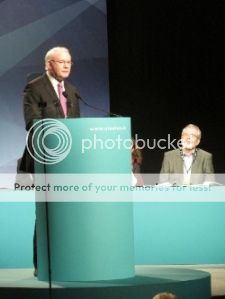
Martin McGuinnessIn his keynote address Martin McGuinness spoke about his concerns that the peace process was `under attack and needed defended’. He said that that was `the job of every political leader in the Assembly’. He said he continued to `stand foursquare for the peace process, for the political institutions and for the rights of all citizens regardless of who they are or where they come from, to live free from sectarian harassment or violence. I stand against those elements, who wish to drag us back to the past, regardless of where they come from. I make no apology for that. They will not succeed.’
He said Sinn Fein believed `that support for a united Ireland must be built through engagement, persuasion and agreement throughout Irish society. This can only happen through peaceful and democratic means’.
On the Haass talks, he said Sinn Fein had approached them `as we have every other negotiation we have been involved in, with the clear goal of reaching agreement and seeing that agreement implemented. We always knew that agreement would require compromise on all sides’.
He added, ` The Haass proposals as they currently stand represent a huge missed opportunity, if they are not accepted by all the parties. There are parts of the final Haass document that we are uncomfortable with. That is the nature of a five party negotiation. We approached the discussions in a positive way. We want to resolve these issues for all in our community’.
He went on to say `the time for agreement is not after the May election nor after the marching season – the time for agreement is NOW’ and said he was `frustrated at the failure of political unionism to take that leap into a better future’, and that `the issues involved in the Haass Talks are not going away’ and needed to be resolved.

Viable policies to take on the conservative establishment
In his speech to the Ard Fheis, Sinn Fein President Gerry Adams said strongly criticised the failed promises of the current Fine Gael/Labour coalition government who had made cuts to living standards and vital public services, an unsustainable banking debt, cut supports for people with disabilities and seen unemployment at 12.4%, with 179,000 long-term unemployed and some 140,000 householders in mortgage distress.
He said Sinn Fein’s alternative was of job creation and for a national public health service and for support for all those `who are making a stand’.
He criticesd the `toxic political culture’ adding `many of the problems that Ireland faces today are a direct result of a toxic political culture, which arose from the counter-revolution that followed the 1916 Rising and the Tan war’. He said `the counter-revolutionaries who succeeded Michael Collins, like their contemporaries in the North, copper-fastened Partition and the two conservative states, which it created’.
Gerry AdamsHe said `in this part of Ireland this toxic political culture led to the abuses of power in planning, in the banks, in Church and State-run institutions, and in the health service. An elite — politically represented by the Fine Gael and Fianna Fáil leaderships, often supported by the Labour Party – oversaw a culture of corruption and golden circles. These are the same interests that collapsed the Irish economy six years ago.’
Speaking about the north, he added Sinn Fein were making a difference and had `shown what is possible with real political leadership’.
He said there remained issues to be resolved, such as the Irish Language Act and the Bill of Rights. Referring to issues of identity and contentious Orange parades, he said he there were obstacles, but that `change will not be stopped’.
He said he was `happy to meet with the Orange Order at any time to discuss these matters. I want to see the Orange Order treating its Catholic neighbours with respect. I want to see it treated with respect. I want to see it upholding law and order. Orange is one of our country’s national colours. The Orange Order of Ireland is one of our national traditions’.
Sinn Féin, he said `wants all our traditions freed up from sectarianism from any quarter, to live together in peace and respect and with tolerance from everyone for everyone. The tide of history is with those who seek to build a peaceful and inclusive future. And Ireland, north and south, is changing.’
He said the ‘Border Poll’ or referendum on Irish unity `threatens nobody and gives all citizens their say on the future’.

Social and economic equality
He went on to say that the Ard Fheis had discussed proposals to protect and promote the rights of Lesbian, Gay, Bisexual and Transgender citizens. `This Ard Fheis has also discussed policy proposals to protect and promote the rights of workers’, he added `and other proposals aimed at bringing the political system in this state into the 21st Century’.
He added `If we are serious about changing this country, the Left needs to come together around viable alternative policies and take on the conservative establishment, who brought the economy to its knees and created the toxic culture that we are trying to break free from. The conservatives, the right wingers consistently unite around their issues. Those of us who have a different vision – a progressive, rights-based vision must do the same.’
The full text of Gerry Adams’ speech can be found here.

Political reform to end the toxic culture
In a speech on the need for political reform, Sinn Fein Vice President Mary Lou McDonald spoke about the `economic collapse, the failure of politics and the profound social damage that resulted’ and how `the root and branch reform promised by Labour and Fine Gael in the last general election has not been delivered’.
She said the current Dublin government, had to be `dragged kicking and screaming into doing the right thing – whether it is apologising to Louise O’Keefe, or to the women of the Magdalene Laundries – it is always an international judgement or a public outcry that is too loud to ignore that forces the Government’s hand’. She said they had yet to `acknowledge the survivors of the Bethany Home, or those who went through the Mother and Baby homes
She said the theme of the Ard Fheis – Putting Ireland First – `neatly summarises the challenge for Irish politics and politics and politicians at this time’ which meant `a change in direction’ and `for a Government that stands up for its citizens, at home and abroad’.

For growth, workers rights and public services – not cuts and austerity
Speaking on the economy, Sinn Fein TD Pearse Doherty said recent years had seen severe hardship for working people and families: `cut after cut, new tax, after new tax have seen €30 billion ripped from the economy’ and with another €2 billion in cuts and taxes in the next year. He said `every step of the way Sinn Fein has shown that there is a fair alternative’.
He rejected as `spin’ government talk of recovery, and urged an alternative to austerity. Sinn Fein, he said, `stands for real recovery, fair recovery that is not based on taxing the roof we live under and the water we drink’. He said Sinn Fein’s wanted an alternative where `the tax of hard working people, is not wasted on consultants paid obscene amounts to implement those unfair taxes. People’s taxes should go into jobs; infrastructure and fit for purpose public services.’ He said Sinn Fein’s alternative `of reducing the tax burden on low and middle income families; of protecting public services; and investing in Jobs are the ingredients of a real recovery and a fair recovery, that leaves no family behind’.
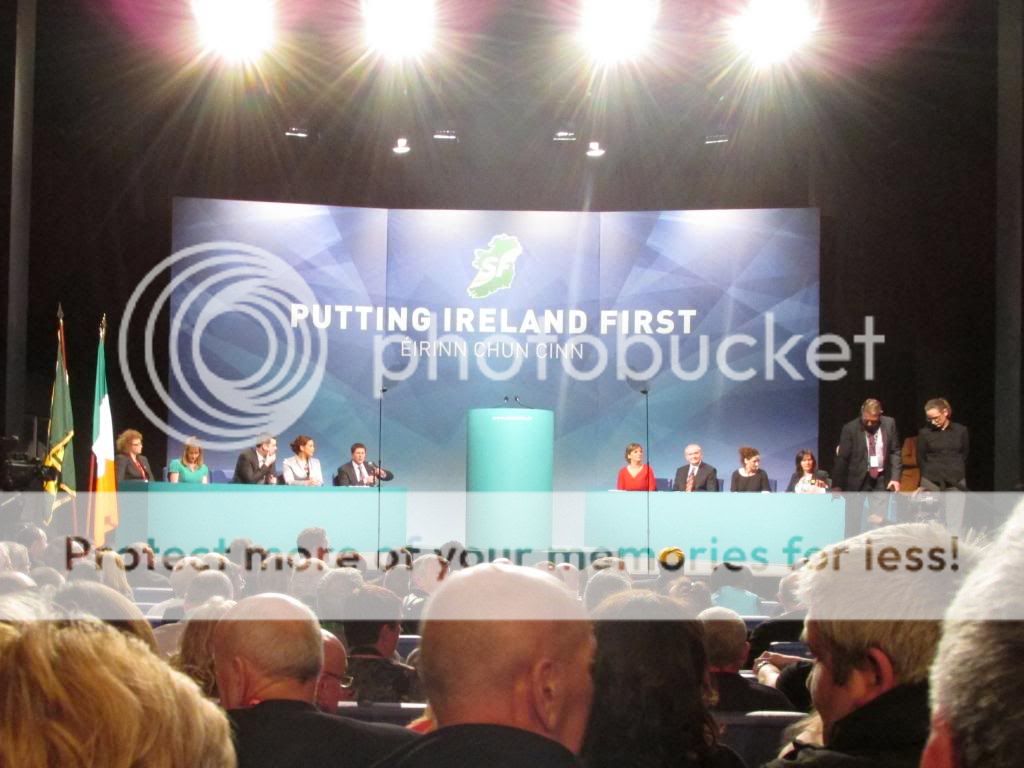
 photo IMG_0343_zpsa7637961.jpg
A packed Opera House heard a range of speakers and debates over the weekend, including on the Economy and workers’ rights, including Decent Work for Decent Pay, Reducing the Tax Burden on Ordinary Workers, Protecting the Conditions of those in Work, and Economic Sovereignty. Motions dealing with the Peace Process, including Dealing with the Legacy of the Past, Building a New Future Based on Equality and Respect, Policing and Justice were debated, alongside substantive discussions on Investing in Transport, Health including Radical Changes Needed in Health Policy, Mental Health Must be a Key Priority, Tackling Drug and Alcohol Abuse; The Way Forward in Education, Protecting the Most Vulnerable in Society, Investment in Social Housing and tackling the Mortgage Crisis.
Later debates included International Solidarity and EU Affairs, Environment, Energy and Infrastructure, Listening to Communities – Opposing Pylons, A Ban on Fracking, Climate Change, Defending Rural Ireland, Real Political Reform and Ending Cronyism and Promoting LGBT Rights – where a substantial party document was also disucssed. A specific debate Towards a New Republic will include Time to Set a Date for a Border Poll, Promoting the Irish Language, and Importance of Arts and Sports. The key role of women and supporting women’s rights and equality was a common thread throughout the Ard Fheis, and a packed fringe event `No Ordinary Women’ heard moving speeches from historian and writer Margaret Ward, Sinn Fein’s Rita O’Hare and Seamus Drumm, chaired by Mary Lou McDonald, which spoke about the central and leading role of women in the struggle for Irish unity from the 1916 rising until the present day.
Guest speakers were heard from Basque country, Palestine and from the ANC, where a special tribute to Nelson Mandela was given, introduced by Sinn Fein MLA Pat Sheehan.

Week in Review is circulated by Sinn Fein MPs. Email fisherj@parliament.uk to join the list. For further information visit www.sinnfein.ie or follow us on twitter @sinnfeinireland

Week in Review 23-30 January 2014

Sinn Fein
The Week in Review
23-30 January 2014

Conor Murphy MP in London – urges governments and parties to press for progress on Haass
Sinn Féin representative, Conor Murphy MP was in London this week where he spoke to MPs, briefed the media and addressed a Westminster public meeting on the need for political parties, and broad civic society, to urge the British government to clearly support the proposals which emerged from talks involving the North’s political parties, chaired by Richard Haass and Meghan O’Sullivan. Mr Murphy met cross-party British MP’s and hosted a briefing meeting for representatives of London-based Embassies on the current political situation emerging from the Haass talks.
On 28th January a well attended public meeting involving the wider Irish community and other individuals and organisations expressed support for progress and saw a wide ranging calls for political parties – including Labour – to also press the government to get behind the Haass proposals.
Mr Murphy said Sinn Féin `has made clear from the start our support for these proposals. We have called on the Irish and British Governments, as co-Equal guarantors of the Good Friday Agreement, to make clear statements in support of the Haass proposals and work with all parties towards their implementation. In recent weeks, our MP’s have been in London to press this case and to urge all those with political influence and who support progress to do likewise. It is time the government in London stepped up to the plate on this matter.’
He added `The party leaders in the north will be meeting again soon to plot a course forward based on Haass’ proposals. Not only do people at home want to see progress, but people in Britain, and particularly among the Irish diaspora, also want to see politics moving forward. There is immense goodwill towards the peace process and a transformation in relations between our two islands. The vast majority of people north and south, and in Britain, want to see this continue. This meeting reflects that interest, and it is a view the British government must take account of’.
Civic society urges progress,
He added `The current position of the British government is simply not good enough. Saying the proposals “have merit” is not enough, nor is standing aside as if only a spectator and seeking to leave it to the parties. We also reject the farcical suggestion that the costs of implementation of the proposals should come out of the block grant to the north, which has already been cut by the coalition government’s policy of austerity. It is time for the parties to implement what is there and for the governments to press those who are stalling to get on with it. These meetings have provided a timely opportunity for some important discussion on this, and with the wider community, who all have a stake in the success of this process to make their voices heard’.
Read Conor Murphy’s piece, published in the Morning Star this week, on the need to Build a society based on a Shared Future.

Sinn Fein Ard Fheis 2014 set for positive, wide ranging debate
Sinn Fein’s Annual Ard Fheis (Conference) takes place this year on 7-8 February in Wexford. The Clar (Agenda) is now available online with motions on a wide range of issues
Friday will see the Ard Fheis opened by Sinn Fein Senator David Cullinane, followed by debates on the Economy and workers’ rights, including Decent Work for Decent Pay, Reducing the Tax Burden on Ordinary Workers, Protecting the Conditions of those in Work, and Economic Sovereignty. Martin McGuinness will make his Keynote Address, followed by motions dealing with the Peace Process, including Dealing with the Legacy of the Past, Building a New Future Based on Equality and Respect, Policing and Justice.
On Saturday the Ard Fheis will debate Investing in Transport, Health including Radical Changes Needed in Health Policy, Mental Health Must be a Key Priority, Tackling Drug and Alcohol Abuse; The Way Forward in Education, Protecting the Most Vulnerable in Society, Investment in Social Housing and tackling the Mortgage Crisis.
Later debates will include International Solidarity and EU Affairs, Environment, Energy and Infrastructure, Listening to Communities – Opposing Pylons, A Ban on Fracking, Climate Change, Defending Rural Ireland, Real Political Reform and Ending Cronyism and Promoting LGBT Rights. A specific debate Towards a New Republic will include Time to Set a Date for a Border Poll, Promoting the Irish Language, and Importance of Arts and Sports.
Sinn Fein Presidential Address will be given by Gerry Adams. International speakers will be from the Basque country, Palestine and from the ANC, with a special tribute to Nelson Mandela.

Adams calls for regular Debates on North in Dáil
On 28 January, Sinn Féin President Gerry Adams, raised during Taoiseach’s Questions, the need for a regular, structured debate in the Dáil on the north.
While he welcomed the fact that there would be such a debate next week, the Sinn Féin leader urged the Taoiseach to do more.
He said the north was dealt with in `an ad hoc way, usually as a result of some crisis, or of some other difficulty in the political or peace process, and that’s not the best way to proceed.’
He said `citizens in this state expect a consistent involvement of the government in the matters that affect them’ and citizens in the north `expect the Dáil to do the same’. He said he wanted to see `issues of the past dealt with in a rational, reasoned, considered and informed manner but I also want to see the future discussed. I want to see us breaking out of what I can only characterise as Free Stateism, of partitionism’.
He said that the Good Friday Agreement `is an all-Ireland international agreement so we need to look at how we can get not just greater co-operation but also how we build future relationships based on equality with everyone who lives on the island. And how we get the British government to face up to its responsibilities and implement those aspects of the agreement that it has failed to implement’.
Concluding he urged `dedicated time on a regular basis set aside for discussion on matters relating to the north.’ In response, the Taoiseach indicated his willingness to look at doing this.

Victims of British state collusion meet MEPs in Europe
On 30 Sinn Féin MEP Martina Anderson hosted a 30-strong delegation in Brussels of family members, Lawyers, Pat Finucane Centre ( PfC), Relatives for Justice (RfJ) and campaign groups to meet MEPs and relate `first hand experiences of British State Collusion in the murders of citizens in Ireland’
Ms Anderson said the MEPs `heard how British Government Agents acted with impunity and the government itself actively suppressed the truth about its involvement in the Conflict in Ireland… [and] granted Public Interest Immunity Certificates (PIIC) as a means of suppressing and preventing evidence being presented in open Court and Coroners Inquests’. She said under the Inquiries Act `this ensured secrecy around British State Collusion and de facto immunity for its agents’, adding `this policy was clearly evident in the murders of Human Rights Lawyer Pat Finucane and Donegal Sinn Féin Councillor Eddie Fullerton’
She said that in many cases, `collusion was planned, authorised and endorsed at the highest level of the British Government’. Those in attendance represented families and spokespersons on behalf of those bereaved in the Ballymurphy Massacre, Kelly’s Bar in Whiterock area of Belfast, the Newlodge Six, Sean Graham Bookies, Loughinisland, the Shankill UVF killings, Pat Finucane, the Hooded men, Justice for the Forgotten highlighting the Dublin & Monaghan bombing and Sinn Féin Cllr Eddie Fullerton.
She said that the families of those who were victims of collusion were `not asking for favours, they are requiring the British State to discharge its legal obligation under EU articles and international law’. She said it was `unacceptable’ that the British Government was in breach of its legal obligation to discharge its Article 2 duties, and also `appalling that Eddie Fullerton’s family have to take the Irish Government to Court on its breach of Article 2 in relation to Eddie’s death, because the Irish State did not carry out a proper investigation into his murder – nor has it pursued the British Government for information in its possession just as it has failed to do in the case of the Dublin and Monaghan bombings’.
She added, `the European Court of Human Rights has already found against the British Government for breaching Article 2 in relation to 12 killings in the North of Ireland – and there are many more to come’.

Week in Review is circulated by Sinn Fein MPs. Email fisherj@parliament.uk to join the list. For further information visit www.sinnfein.ie or follow us on twitter @sinnfeinireland

Week in Review 20-23 January 2014

Sinn Fein
The Week in Review
20-23 January 2014

Sinn Fein urge British Political Parties to back Haass proposals
This week Sinn Fein continued to press the case for the parties to move forward in implementing the Haass proposals, and stepped up the pressure on the British government.
On 21 January, Sinn Féin MP Francie Molloy travelled to London today to brief MPs on the current situation and to specifically call on political parties in Britain to express support for the Haass proposals.
Mr Molloy held a number of meetings, including with the British Labour Party’s Shadow Secretary of State for the north of Ireland, Ivan Lewis MP. He said `Gerry Adams has already called on the Irish and British Governments to make clear statements of support for the Haass/Sullivan proposals and work with all parties towards their implementation. I will be urging all those I meet to support this call and demand the government in London step up to the plate on this matter’.
His trip came as party leaders in the north met again today `to plot a course forward based on Haass’ proposals’. He said there was a `frustration’ at the lack of progress in the general population and that the current position of the British government was `simply not good enough’. He added that `saying the proposals “have merit” is not enough, nor is standing aside and seeking to leave it to the parties’. He described as `farcical’ the suggestion by Secretary of State Theresa Villiers that that the costs of implementation of the proposals should come out of the block grant to the North, `which has already been sliced by the coalition government’s policy of austerity’.
He concluded: `It is for the parties to implement what is there and for the governments to encourage those who are stalling to get on with it. I hope Labour and others will play a positive role in helping us move this issue on.’

Engagement with wider community over need for progress
On 23 January Sinn Fein MP Conor Murphy announced that the party would hold a wider public meeting in London next week on 28 January to discuss the next steps after the Haass talks. The meeting will hear renewed calls upon the British government to clearly back the Haass proposals.
Mr Murphy will also speak to British MPs in Westminster and host a separate meeting for representatives of London-based Embassies on the current political situation.

The public meeting (details below), will be attended by the wider Irish community activists and other individuals and organisations.
Speaking in advance of the meeting, Mr Murphy said: `Sinn Fein have made clear from the start our support for these proposals. We have called upon the Irish and British Governments, as guarantors of the Good Friday Agreement, to make clear statements in support of the Haass proposals and work with all parties towards their implementation. In recent weeks, our MPs have been in London to press this case and to urge all those with political influence and who support progress to do likewise. It is time the government in London stepped up on this matter”.
He added `Not only do people at home want to see progress, but people in Britain, and particularly among the Irish diaspora, also want to see politics moving forward. There is immense goodwill towards the peace process and a transformation in relations between our two islands. The vast majority of people north and south, and in Britain, want to see this continue.’
 `After the Haas Talks – what next’ Tuesday 28 January, 7pm, Wilson Room, Portcullis House, House of Commons, London SW1A OAA. Speaker Conor Murphy MP, Hosted by Sinn Fein MPs. (Westminster Tube, public entrance to Portcullis House, Victoria Embankment.) Further information: fisherj@parliament.uk or 07940 565123.

Martin McGuinness address to Six County AGM
On 18 January around 500 Sinn Fein activists gathered in Guladuff, County Derry for the annual Six County Cuige AGM. The meeting was addressed by deputy First Minister Martin McGuinness. In the course of a wide ranging address Mr McGuinness dealt with the ongoing political fallout in the wake of the Haass negotiation.
Mr McGuinness said the Haass Talks were `like previous negotiations marked by a willingness by Republicans to take risks, to stretch ourselves and to seek to make agreements which consolidate the Peace Process, bed down further the political institutions and offer hope and opportunity for all citizens, particularly our young people.’
He said it was `a matter of regret that political unionism did not come to the table with the same objectives or intent’. He said this was `not only was this a mistake, it is a disservice not just to the political process but more importantly to the vast majority of people from whatever background or tradition they come from’.
`Ordinary unionists’, he added `want to see their political leaders make agreements. They want to see their political leaders reach compromises. They want to see their political leaders be peace makers’.
He said the past year had seen `the tiny minority have shouted the loudest; who have thrown the most stones and petrol bombs; who have blocked the most roads have been the ones allowed to influence the political direction of unionism instead of the silent majority who seek peace with their neighbours and an Assembly and Executive delivering for them and their children’.
However, he said that despite this he was `proud of the fact that despite the provocations, despite the negativity and the deliberate attempts to derail the efforts, Republicans were able to respond with generosity and with a total desire to see progress made’. That was evidenced `by the decision of the Ard Chomhairle last weekend to endorse the Haass package as the basis for moving forward’. The five political parties, supported by the Irish and British governments now needed to make this happen.
He said the final Haass document was a `compromise’ and that UUP leader Mike Nesbitt had claimed before the end of the talks that he was 80 or 90% content with the text. Mr McGuinness said `I have some advice for Mr Nesbitt as someone who is new to these sorts of negotiations from someone who has been around them all – if you have 80 or 90% of what you want in a negotiation – close the deal!’
He also noted that Peter Robinson had responded in the media to his interview on the View on Thursday evening: `Suffice to say this. There has been a leadership deficit within some sections of political unionism for a long time. There is very important work to do to give all our people the society they deserve. That is the responsibility of every party not some.’
He said Peter Robinson’s claims that he had a `visceral hatred of the Orange Order’ were `not true’ and that he wanted `to see the Orange treating its catholic neighbours with respect’ and upholding law and order. Mr McGuinness said he respected the Loyal Orders right to march, adding `they do that without incident in my city. That is what should happen everywhere’. He said he was `happy to meet the Orange at any time and discuss these matters’. He said `Orange is one of our country’s national colours. The Orange Order of Ireland is one of our national traditions. I want all our traditions to live together in peace and respect and with tolerance from everyone for everyone’.
He expressed frustration `at the failure of political unionism to so far take that leap into a better future’ and that the issues involved in the Haass Talks `are not going away’. He said it was `simply not tolerable to allow these matters to hold back progress and even worse contaminate the daily business of trying to deliver for citizens who want to see welfare, education, health and other issues to the fore, not those we have spent so much time on over the past 12 months’.
He concluded by commending Sinn Fein’s activists and members who had `not allowed the issues around flags or parades to deflect you from our job – to build our party, to advance our struggle and to create the political conditions within which Irish reunification will happen.’

Adams raises imprisonment of peace activist and writer Margaretta D’arcy case with Taoiseach
On 21 January Sinn Féin Leader Gerry Adams TD raised the imprisonment of Galway peace activist and writer Margaretta D’arcy with the Taoiseach, Enda Kenny.
The 79-year-old Aosdana member is serving a sentence at Limerick Prison in relation to her involvement in protests at the use of Shannon Airport by the US military en route to wars in the Middle East.
Ms D’arcy was previously jailed at Armagh women’s prison for her protest activities in support of republican prisoners there. Her book Tell them Everything, is an account of her experience in Armagh Jail.
Speaking to the Taoiseach, today Gerry Adams pointed out `Ms D’arcy suffers from Parkinson’s disease, is reliant on the use of a zimmer frame and is undergoing cancer treatment. She is not a criminal and poses no danger to the public.’
He asked whether the Taoiseach believed that Limerick Prison was an appropriate place for a woman of Margaretta’s D’arcy’s age and condition.

Week in Review is circulated by Sinn Fein MPs. Email fisherj@parliament.uk to join the list. For further information visit www.sinnfein.ie or follow us on twitter @sinnfeinireland

Prosperity in the debate about reunification

By Michael Burke

The question of economic prosperity is not as central as it might be in the debate on the de/merits of the Union with Britain or a United Ireland. This is a large topic but it is important to set out some facts to inform that debate and to push this issue up the agenda.
The key issue in all economics is, or should be, what determines the optimal growth in the living standards of the population? A key measure of that is the level and growth rates of per capita GDP.
Chart 1 shows the levels of per capita output in 1921 in what were later to become Northern Ireland (NI), the Republic of Ireland (RoI) and the UK.

    Chart 1.

Prosperity in the debate about reunification - Chart 1 photo chart1_zpsa5fb7ab5.jpg

The industrial area around Belfast had long been the most prosperous part of Ireland and enjoyed a particular boom during the course of the First World War. As a result, despite the post-World War I decline the UK Treasury estimates show that per capita GDP was fractionally higher in NI than the UK as a whole at that time. By contrast outside of Dublin the rest of Ireland was largely rural. On UK Treasury estimates at the time of Partition per capita GDP in what is now the RoI was 45% of the level of what is now Northern Ireland.
Chart 2 shows the most recent data, from the OECD (using their estimates of Purchasing Power Parities, which are comparable but not identical to the Maddison data cited above). This shows two opposite trends. In the 90 years following Partition per capita GDP in the RoI has caught up and then surpassed that of the UK (around the turn of the 21st century). Meanwhile per capita GDP in Northern Ireland has relatively declined, to just under 80% of the level in the UK. While incomes in the North have grown by five times in 60 years, in the South they have grown by twenty times.

    Chart 2.

Prosperity in the debate about reunification - Chart 2 photo chart2_zps8538f213.jpg

There can be no single explanation for these trends. But similar trends have been noted elsewhere. In particular, colonies always face two key problems in relation to the metropolitan centre relating to the relative lack of investment and ‘closed’ trade patterns (not integrated into the world economy through trade).
This can be illustrated by Chart 3 which shows three former colonies of Britain and their cumulative growth pre- and post-independence. The 3 colonies are China, India and Ireland. For each country the 100-year period of growth in per capita GDP between 1850 and 1950 is shown (Maddison).
For China there was no growth on this measure at all over the course of a century. Per capita GDP actually fell by a quarter under British/French/US and then Japanese rule. In India per capita GDP grew by one-sixth over that period while in Ireland it almost doubled.

    Chart 3.

Prosperity in the debate about reunification - Chart 3 photo chart3_zpsd4bd5eb0.jpg

However, taking the shorter 60-year period from 1950 to 2010 the growth rates of per capita GDP have been transformed (Maddison & OECD). In India per capita GDP has increased by over 330% in 60 years. In RoI it has increased by more than 10 times. In China it has risen by more than 16 times.
It might be argued that this was simply a tendency to ‘catch-up’ with the living standards of more advanced western economies. But that would not explain why Ireland was able to surpass the UK at the end of last century. Crucially, it cannot explain why that catch-up did not occur in any case while the 3 countries remained colonies.
The technical objection that Irish GDP is inflated by the tax accounting activities of multinational companies is valid and widely-known. But so too is Britain’s GDP inflated, though less discussed through its related network of ‘offshore’ financial centres. If unidistorted measures such as value added in industry are used the same conclusion is drawn; per capita output in the RoI surpassed the UK before the turn of this century and remains there despite the crisis.
This does not exhaust the questions relating to economic policy and Northern Ireland’s place in the Union or its potential place in a United Ireland. Neither should it be interpreted as an endorsement of the economic policy of successive Dublin governments. In the view of this author, the exceptional growth rate of the Irish economy for part of the post-1921 period was caused by the combination of globalisation meeting a wave of increased investment, mainly from the EU. But it does highlight the difficulties of all colonies in maintaining relative prosperity and their greater potential to prosper once the colonial status has ended.

How Reunification can fail

In general, the larger the size of the home market, the greater potential exists for raising the productivity of the economy. That potential can only be realized through both increasing participation in the division of labour (including the international division of labour) and high rates of investment.
If we look at a reunification in Europe that has failed to deliver on the potential the most important recent example is Germany. The growth rate of the German economy is lower now than prior to reunification, as shown in the chart below.
Prosperity in the debate about reunification - Chart 4 photo chart4_zpsebc78bfe.jpg

The home market for German firms certainly increased with the fall of the Berlin Wall and Germany increasingly participates in the international division of labour through growing international trade (in 1990 exports and imports combined accounted for 40% of GDP. Now they account for 97% of GDP). However the rate of investment has been falling from around 24% of GDP to less than 17.5% of GDP in 2012.
Without investment, the potential arising from increasing a home market cannot be realised.