Unionists dared to defend welfare cuts in their communities

Daithí McKay MLA – An Phoblact News – 12th August

McKayThe DUP and Ulster Unionist Party have been challenged by Sinn Féin MLA Daithí McKay to go into unionist communities and defend their surrender to welfare cuts being forced on them by millionaire MPs in the Tory-led Westminster Parliament.
These cuts would punish the poor and the vulnerable and will drive those who are already struggling on low incomes further into poverty, the North Antrim Assembly member said.
“No one in the North, unionist or nationalist, voted for that. Welfare cuts are not part of our Programme for Government.
The reality is that these cuts, if implemented, will have a crippling effect on individuals, on people in low-income jobs, on the disabled and on entire communities living in areas of high unemployment.”

Daithí McKay (pictured) threw down the gauntlet to DUP leader Peter Robinson and UUP leader Mike Nesbitt as well as the Alliance Party:
“I challenge unionists and those who support the Tory cuts agenda to go into their communities and attempt to explain why they are so committed to drastically lowering people’s standards of living,”
They need to explain to people struggling to get by in working-class areas the real impact of supporting a remote, unelected government of elites in London.
Unionist leaders would be serving their electorate far better by uniting with those of us who are standing up for all communities, regardless of their political outlook, in resisting these savage cuts.”

Week in Review 07-14 August 2014‏

Sinn Fein
The Week in Review
07-14 August 2014

Gerry Adams warns: Political process in troubleAdams
On 8 August Sinn Fein President Gerry Adams TD warned that the political process faced `its greatest challenge since the Good Friday Agreement negotiations in 1998.’
The Sinn Féin leader made the following points:

    * The anti-Good Friday Agreement axis within unionism, the pro-unionist stance of the British secretary of state, the refusal of Downing St to honour its own obligations are combining to create the most serious threat to the political institutions in the north in recent years.

    * Most worryingly there is no evidence from Downing Street or the NIO or the Unionist leaderships of any likelihood of a real negotiation on all of these issues commencing in September. This therefore presents a very significant challenge to everyone who wants to see progress and to all those who support the Good Friday and other agreements, this includes leaders of civic society, the community sector, the trade union movement, the business sector, as well as political parties.

    * David Trimble in his day and Peter Robinson, despite some positive periods, have undermined their role as First Minister. Instead of actively and determinedly working with the Deputy First Minister to maximise the potential for a new beginning they have minimised the promise and potential of the Good Friday Agreement.

    * The fact is that the anti-agreement axis has been very active in asserting a negative agenda. Too many in the pro-agreement axis, with some notable exceptions, have been passive. This includes the Irish government.

    * The DUP has repeatedly demonstrated an unwillingness to participate positively in any of the institutions. Instead it has adopted a tactical approach aimed at serving the political agenda of a fundamentalist rump in their party rather than the needs of the whole community.

    * As Martin McGuinness has noted ‘We are in government with unionists because we want to be. They are in government with us because they have to be.’ ”

    * The Tory-led government in London wants to impose changes to the welfare benefits system mirroring similar changes that have been introduced in England, Scotland and Wales – changes that have resulted in disastrous consequences for the disabled, the unemployed and those in low-paid jobs.

    * These should be opposed by a united Executive. These changes are not about reform. They are about cuts and they are part of a Thatcherite agenda designed to dismantle the welfare state. And Sinn Féin will oppose them.

    * The effect of all of this and of the British government’s handling of the political situation has been to reinforce political logjams.

    * The political process is in trouble.

    * The British Secretary of State is contemplating conceding to another of the recent unionist demands by setting up some form of inquiry into the Parades Commission decision on the Ardoyne march – a move that would dangerously damage the integrity of the Parades Commission, undermine the residents and further undermine the Haass proposals.

    * Regardless of political allegiance everyone who values a future based upon equality must become a champion for progress in their own community, in the workplace, in the voluntary and community sector, across the trade union movement, in the churches and the media.

    * If the unionist leaderships refuse to engage positively in new negotiations then the Irish and British governments, as co-equal guarantors of the Agreement, must ensure that outstanding issues are implemented.

The full text of Mr Adams’ remarks.

Kelly urges unionists: return to party leaders’ talks
On 8 August Sinn Féin MLA Gerry Kelly urged unionist parties to re-engage in party leaders talks deal with the issue of the legacy of the past, flags and parades.
Gerry Kelly was speaking after yesterday’s lockdown of Belfast City Centre during a loyalist protest at an anti-internment march and the impact on business in Belfast City Centre.
The North Belfast MLA pointed out that the Belfast Chamber of Commerce had called for political leadership to resolve the issues following yesterday’s parade and protest, and added `Sinn Féin remains ready and willing to resume the party leaders talks process on these contentious issues as soon as possible’.
He said that Sinn Fein had `urged unionists repeatedly to move away from their obsession with a small section of a single parade in North Belfast and re-engage in talks immediately on the issues of flags, parades and the past’.
He concluded by calling again `on unionists to demonstrate the sort of political leadership demanded both by local communities and the Belfast chamber of commerce.’

Welfare cuts will be `devastating’ on communities and economyMcKay
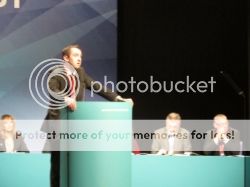
On 11 August Sinn Féin MLA Daithí McKay said unionist leaders should `tell the truth about welfare cuts. The North Antrim MLA said Unionist leaders `and their pro-austerity allies in the Alliance party’ had been `queuing up recently to tell us that Tory welfare cuts are unavoidable’.
However, he added `they have not explained to their voters and everyone else the effect that these devastating cuts would have on the most vulnerable in our society’. Instead they had `simply swallowed the justification given to them by the Tory government and they parrot the lines of millionaire cabinet ministers’.
Mr McKay said that the reality of the cuts would be `crippling… on individuals, on people in low-income jobs, on the disabled and on entire communities living in areas of high unemployment’.
He said the cuts would `punish the poor and the vulnerable and drive those already struggling on low incomes further into poverty’. He said no one had voted for this `unionist or nationalist’, adding `welfare cuts are not part of our Programme for Government’.
He challenged unionists `and those who support the Tory cuts agend’ to `explain to people struggling to get by in working-class areas the real impact of supporting a remote, unelected government of elites in London’.
He concluded `Growing numbers of people are starting to realise the true consequences welfare cuts will have and are looking for an alternative. Unionist leaders would be serving their electorate far better by uniting with those of us who are standing up for all communities, regardless of their political outlook, in resisting these savage cuts.’

Is Robinson’s vision for society dependence on food banks? – Sinn FeinMurphy
Sinn Féin MP Conor Murphy said last week that Peter Robinson was continuing to `duck responsibility for the growing difficulties in the political process’.
He said Mr Robinson was `pandering to anti-agreement elements’ and supporting `anti-working class Tory cuts’, evidence that under Peter Robinson’s leadership, `unionism is moving steadily to the right’.
Mr Murphy said that Peter Robinson had `unilaterally walked away from commitments made in the Programme for Government’ and that `he and his party walked away from the Haass process’ and had `walked out of the talks on flags, parades and the past on the back of an Orange Order demand to parade through a Catholic area. That is the real measure of DUP politics’.
He added `Instead of all-party talks he has joined with anti-agreement unionists including the UVF, which has been orchestrating a campaign of sectarian and – increasingly _ racist attacks in East Belfast.’
Mr Murphy said this unionist shift to the right `is reflected also in their support for the anti-working class policies of the Tory party in London’, adding `Sinn Féin for our part makes no apology for opposing vicious Tory welfare cuts’.
He said that, if implemented `in the way the DUP want, these cuts would take money out of the pockets of the disabled, of parents with young children, of low paid workers and the unemployed’. As has already happened in Britain, he added, `these cuts would drive thousands of people into increased poverty and dependence on charities and food banks’. He added, `Is that Peter Robinson’s vision for our society?’
He concluded: `Peter Robinson needs to get back into talks to deal with the outstanding issues of the Good Friday Agreement and the Haass process. He needs to stand up for his constituents and he needs to stand up to the British government in resisting these Tory cuts.’
`Tackling racism and sectarianism, defending the poor and the vulnerable, building a process of reconciliation – these should be the priorities for Peter Robinson rather than the bizarre obsession with an Orange parade in North Belfast.’

Sinn Fein mobilise for national rally for Palestine
On 9 August Sinn Féin’s spokesperson on Foreign Affairs, Seán Crowe TD, attended the national demonstration for Palestine in Dublin today.
Speaking after the event Deputy Seán Crowe commended all of the people who `across the island came out in their thousands today to show solidarity with the besieged people of Gaza’.
He said that the large numbers in attendance `sent a clear message that Irish people will not stand idly by while Israel commits war crimes and exasperates the humanitarian crisis in Gaza deepens’. He added `five more Palestinians were killed by Israeli airstrikes in Gaza today and 2wo Palestinians died in clashes in the West Bank as tensions rise’. He concluded: `Although the peace talks in Egypt collapsed, there is still the potential for an inclusive peace process. We need to see an end to all hostilities Israel must immediately lift its illegal siege of Gaza for this to happen.’
JayneFisherMeanwhile, in London, Sinn Fein President Gerry Adams sent a message of solidarity to the 150,000 strong march in support of Gaza and urging a just peace. Mr Adams said that Sinn fein `stand with the Palestinian people and for their right to live in peace, dignity and in a viable state’. He said that international pressure `can make a difference and commended all those in Ireland, Britain and around the world who had come out to show solidarity.

Week in Review will be taking a break over the Summer and will be back in September.

Week in Review is circulated by Sinn Fein MPs. Email fisherj@parliament.uk to join the list. For further information visit www.sinnfein.ie or follow us on twitter @sinnfeinireland

Political process in trouble – Gerry Adams TD

AdamsSinn Féin President Gerry Adams TD in a keynote statement has warned that the “political process faces its greatest challenge since the Good Friday Agreement negotiations in 1998.”
The Sinn Féin leader said:

    * “The anti-Good Friday Agreement axis within unionism, the pro-unionist stance of the British secretary of state, the refusal of Downing St to honour its own obligations are combining to create the most serious threat to the political institutions in the north in recent years.”

    * “Most worryingly there is no evidence from Downing Street or the NIO or the Unionist leaderships of any likelihood of a real negotiation on all of these issues commencing in September. This therefore presents a very significant challenge to everyone who wants to see progress and to all those who support the Good Friday and other agreements, this includes leaders of civic society, the community sector, the trade union movement, the business sector, as well as political parties.

    * “David Trimble in his day and Peter Robinson, despite some positive periods, have undermined their role as First Minister. Instead of actively and determinedly working with the Deputy First Minister to maximise the potential for a new beginning they have minimised the promise and potential of the Good Friday Agreement.

    * “The fact is that the anti-agreement axis has been very active in asserting a negative agenda. Too many in the pro-agreement axis, with some notable exceptions, have been passive. This includes the Irish government.

    * “The DUP has repeatedly demonstrated an unwillingness to participate positively in any of the institutions. Instead it has adopted a tactical approach aimed at serving the political agenda of a fundamentalist rump in their party rather than the needs of the whole community.

    * “As Martin McGuinness has noted ‘We are in government with unionists because we want to be. They are in government with us because they have to be.’ ”

    * “The Tory-led government in London wants to impose changes to the welfare benefits system mirroring similar changes that have been introduced in England, Scotland and Wales – changes that have resulted in disastrous consequences for the disabled, the unemployed and those in low-paid jobs.

    * “These should be opposed by a united Executive. These changes are not about reform. They are about cuts and they are part of a Thatcherite agenda designed to dismantle the welfare state. And Sinn Féin will oppose them.

    * “The effect of all of this and of the British government’s handling of the political situation has been to reinforce political logjams.

    * “The political process is in trouble.

    * “The British Secretary of State is contemplating conceding to another of the recent unionist demands by setting up some form of inquiry into the Parades Commission decision on the Ardoyne march – a move that would dangerously damage the integrity of the Parades Commission, undermine the residents and further undermine the Haass proposals.

    * “Regardless of political allegiance everyone who values a future based upon equality must become a champion for progress in their own community, in the workplace, in the voluntary and community sector, across the trade union movement, in the churches and the media.

    * “If the unionist leaderships refuse to engage positively in new negotiations then the Irish and British governments, as co-equal guarantors of the Agreement, must ensure that outstanding issues are implemented.

The full text of Mr Adams’ remarks.

Political process in trouble – Gerry Adams TD [Full Text]

“The Orange state was built on partition, unionist domination, inequality and injustice.
It was an apartheid state in which citizens were denied the right to a vote, to a job, to a fair justice system and to a home. The failure of unionism and of the British government to agree fundamental reform in the 1960s led to a militarisation of the situation and to decades of conflict.
20 years ago this month unionism responded in a similar vein in response to the unilateral initiative by the IRA to call a complete cessation. Ian Paisley claimed that unionists now faced the worst crisis in Ulster’s history. Jim Molyneaux said it was a de-stabilising move. In his view it was not an occasion for celebration, quite the opposite.
For both unionist leaders it was a threat to a status quo which favoured unionism.

An opportunity to build peace
Others saw it differently. They saw the cessation as an opportunity to end the conflict. An opportunity to replace violence with peace, and replace discrimination with equality.
The majority of people across the island of Ireland voted in favour of the Good Friday Agreement.
But a small rump within political unionism were vehemently opposed to it. In the years since the Good Friday Agreement, not least because of the absence of consistent and positive leadership, the pro-Agreement unionist vote has stayed at home. The leaderships of unionism have moved increasingly to the right; more concerned with election rivalry than the common good.
Consequently the potential for the Agreement to create a new society and to demolish the sectarian mindsets and the physical walls which divide communities, has been delayed as some unionist leaders pander to sectarianism and racism. David Trimble in his day and Peter Robinson, despite some positive periods, have undermined their role as First Minister.
Instead of actively and determinedly working with the Deputy First Minister to maximise the potential for a new beginning they have minimised the promise and potential of the Good Friday Agreement.

The DUP is undermining the institutions
Last year the leaderships of political unionism ignored the democratic decision of Belfast City Council on the flying of the union flag and helped stoke months of street disturbances and attacks on the Alliance Party and threats against Sinn Féin members.
Later Peter Robinson reneged on the Programme for Government commitment to develop the old Maze/Long Kesh site. This commitment was to create an economic hub with the potential for thousands of much-needed jobs alongside a peace and conflict resolution centre with enormous tourism and education potential. Money from the EU and private money from the USA had been secured. The announcement of the breaking of this Programme for Government commitment was contained in a letter from Florida by Mr Robinson to the DUP.
Martin McGuinness was given no notice of this and neither was he contacted by Peter Robinson after the letter was publicised. This was bad manners, bad politics and bad economics. Job creation opportunities were lost.
That has increasingly been the mark of the DUP’s participation in the political institutions, within the Executive, and within the Office of OFMDFM over the last year.
The DUP has repeatedly demonstrated an unwillingness to participate positively in any of the institutions.
Instead it has adopted a tactical approach aimed at serving the political agenda of a fundamentalist rump in their party rather than the needs of the whole community.
As Martin McGuinness has noted ‘We are in government with unionists because we want to be. They are in government with us because they have to be.’
In other words the DUP and UUP have bought into the political institutions in terms of elections, salaries, and status but not into the need for real partnership government, the effective development of north-south co-operation, equality, mutual respect and parity of esteem.
This overall shift to the right has left the DUP’s tactical engagement with the institutions threadbare. The strategy of stalling and blocking has seriously undermined the credibility of the Assembly and Executive.
This has been added to by the assertion of some that the difficulties in the institutions are the fault of two dysfunctional parties, that is Sinn Féin and the DUP.
This idea is peddled by elements in the media, the Fianna Fáil leader and Irish government spokespersons.
This, despite all of the evidence to the contrary, including the positive and patient role of Martin McGuinness.

An anti-Agreement axis
After years of refusal by the unionist parties to engage properly to resolve issues, which were dogging the political process, US diplomat Richard Haass and Professor Meghan O Sullivan were invited by OFMDFM to facilitate a process to bring forward proposals to deal legacy issues, the past, flags and symbols and parades.
When these two eminent public servants brought forward proposals based on discussions with all of the political parties and outreach into civic society they were rejected by the unionist parties.
Subsequently after the elections the DUP and UUP forged a negative political axis with the Loyal Orders, the parties linked to the UDA and UVF and Jim Allister’s Traditional Unionist Voice. Within 48 hours of all-party negotiations commencing they staged a walk out over the Parades Commission’s determination on the Ardoyne march.
But the walk out was never really about Ardoyne and the right of the Orange to march.
There are more loyalist and Orange parades taking place this year than ever before. Nine years ago in 2005 there were 2120 marches in the north. By last year that had more than doubled to 4,637. Two thirds of these are loyalist parades.
Claims by unionists and loyalists that the objections of a handful of nationalist areas to Orange parades going through their communities is an attack on the Orange is clearly a nonsense.
The construction of an anti-Agreement unionist axis and the walk out are part of a unionist political agenda aimed at subverting the Good Friday Agreement and its equality and parity of esteem ethos.
It’s about turning the clock back to the days when unionism was dominant. The anti-Good Friday Agreement axis within unionism, the pro-unionist stance of the British secretary of state, the refusal of Downing St to honour its own obligations are combining to create the most serious threat to the political institutions in the north in recent years.
The result of all of this is directly undermining power sharing and partnership government.

A partisan British government
The unionist leaderships have been encouraged in their posture by a British government that has not been fully engaged with the political process for four years. Evidence of this can be found in the British failure to back the Haass compromise proposals on dealing with the past and legacy issues, flags and symbols, and parades.
It can be found in the speed with which the Cameron government acquiesced to Peter Robinson’s demand for the establishment of the Hallett Inquiry into the OTR issue. It is a fact that the Cameron government, like the Major government in the 1990s, has been explicitly partisan in championing a unionist agenda.
The Tory government has also failed to make progress on those matters arising out of the various agreements, including the Good Friday Agreement, the Weston Park Agreement, and the St Andrew’s and Hillsborough agreements, which have not been implemented.
These include the Bill of Rights, the all-Ireland Charter of Rights, Acht na Gaeilge, the North South Consultative Forum, the Civic Forum and the inquiry into the killing of Pat Finucane. These are not matters for negotiation.
They are agreements made and are the responsibility of the British and Irish governments to implement. The effect of all of this and of the British government’s handling of the political situation has been to reinforce political logjams.
The political process is in trouble.
The British Secretary of State is contemplating conceding to another of the recent unionist demands by setting up some form of inquiry into the Parades Commission decision on the Ardoyne march – a move that would dangerously damage the integrity of the Parades Commission, undermine the residents and further undermine the Haass proposals.
In addition the Tory-led government in London wants to impose changes to the welfare benefits system mirroring similar changes that have been introduced in England, Scotland and Wales – changes that have resulted in disastrous consequences for the disabled, the unemployed and those in low paid jobs.
These should be opposed by a united Executive. These changes are not about reform. They are about cuts and they are part of a Thatcherite agenda designed to dismantle the welfare state. And Sinn Féin will oppose them.

Political process faces greatest challenge
Most worryingly there is no evidence from Downing Street or the NIO or the Unionist leaderships of any likelihood of a real negotiation on all of these issues commencing in September.
This therefore presents a very significant challenge to everyone who wants to see progress and to all those who support the Good Friday and other agreements. This includes leaders of civic society, the community sector, the trade union movement, the business sector, as well as political parties.
The fact is that the anti-agreement axis has been very active in asserting a negative agenda. Too many in the pro-agreement axis, with some notable exceptions have been passive. This includes the Irish government.
We are moving into another election cycle with the Westminster elections next May and Assembly elections the following year. Elections invariably see unionist leaders adopt ever more strident language and an unwillingness to find solutions to difficulties.
I believe that the political process faces its greatest challenge since the Good Friday Agreement negotiations in 1998.
I also believe that the vast majority of citizens value the political institutions.
Sinn Féin is committed to the Good Friday Agreement and to the political institutions.
We will resist all efforts by unionist leaders to roll the agreement back or return to the darker days of unionist misrule.
With a deepening political crisis there is an onus on the Irish and British governments to create a different paradigm, a different political context to that which currently exists.
That requires the two governments, in conjunction with the US government, establishing a pro-Agreement axis with those parties in the north that want the Good Friday Agreement to work.
It means the Irish and British governments making progress on those issues which are their direct responsibility.
It means the governments and pro-Agreement parties standing resolutely in support of the Agreement. This will require citizens from all sectors and none raising their voices for progress and positive change.
Regardless of political allegiance everyone who values a future based upon equality must become a champion for progress in their own community, in the workplace, in the voluntary and community sector, across the trade union movement, in the churches and the media.
If the unionist leaderships refuse to engage positively in new negotiations then the Irish and British governments, as co-equal guarantors of the Agreement, must ensure that outstanding issues are implemented.”

Tory hypocrisy on welfare cuts exposed as Minister resigns – Paul Maskey MP

Sinn Fein

MaskeySinn Féin MP Paul Maskey said the resignation of Tory Cabinet Minister, Mark Simmonds exposes Tory hypocrisy and DUP complicity in attacking the most vulnerable in society when a cabinet minister claims to be unable to live on £290,000 a year.
The West Belfast MP said:
“The Tory minister resigned because he claims he can’t afford to live on a combined husband/wife publicly funded salary of £114,435 plus £173,436 expenses (2013). This highlights the sheer hypocrisy of the British Tory welfare cuts policy and the DUP’s demand for the cuts to be imposed here.
How can the DUP justify supporting policies imposed by a Cabinet of millionaires which would force people here onto the breadline. Policies being imposed by a party whose members claim to be unable to live on almost £290,000 a year, including £30,000 rent allowance.
DUP spokespersons don’t seem to be able to find the political courage to stand-up to this Tory government, which never received a single vote here, on welfare cuts.
In the face of this resignation and the reasoning behind it, can Peter Robinson explain the rationale of his support for Tory austerity policies which will mean economic despair for many of those who elected him?”

Right decision by minister to block ‘fracking’ – Michelle Gildernew MP

Sinn Fein

GildernewSinn Féin MP Michelle Gildernew has said the environment minister has made the correct decision in denying Tamboran a licence to carry out test drilling in Fermanagh.
Ms Gildernew said,
“The decision to deny Tamboran to begin deep bore test drilling in Belcoo Fermanagh is the correct decision giving the clear opposition to ‘fracking’ in the area.
There has been universal support in opposition to fracking in County Fermanagh since Tamboran applied to begin test drilling.
Sinn Féin has fully supported those involved in campaigning against fracking across Ireland.
We congratulate all those in Belcoo who stood firm against this project.
The decision today is the correct one and it will give heart to communities right across this island who are opposed to fracking.”

“Additional engineering training facilities needed in Mid-Ulster” Francie Molloy MP tells Minister Farry

Sinn Fein

MolloySinn Féin Mid-Ulster MP, Francie Molloy at a recent meeting pressed Employment Minister Stephen Farry to provide additional engineering training facilities in the constituency..
Mr Molloy said:
“I met with Minister Farry last week to discuss,among other things, the shortage of skilled trainees to meet the needs of local engineering firms.
South east Tyrone and Mid Ulster has over 150 engineering firms, many of which have indicated the need to recruit employees in other European countries because of the shortage of training provision locally to meet their needs.
Given the increase in unemployment in the Mid-Ulster constituency due to the collapse of the construction industry there is a golden opportunity to provide ongoing training for new and existing employees in the engineering sector.
Many of these local firms contribute to our growing export trade and deserve government attention to ensure the supply of a well-trained and skilled work force.
I was encouraged that Minister Farry has committed to consult with the local South West College and Northern Regional College to review the current training provision.
It is hoped that by identifying existing gaps in the present training curriculum and in consultation with local engineering companies, training programmes for both young people just entering the workforce and those recent and long-term unemployed seeking retraining can be devised.
I believe that given the number of engineering companies in the Mid-Ulster constituency, many of whom are world leaders, that a case exists for the establishment of a training faculty of excellence dedicated to the sector to be located at one of the local college campus.”

Solidarity greetings from Gerry Adams read out at London demo on Gaza

Sinn Fein

The following statement from Sinn Féin President Gerry Adams was read out at yesterday’s massive demonstration in London (09/08/14) in support of the people of Gaza attended by 150,000 people:
JayneFisher“I would like to send solidarity greetings to you today, on behalf of myself and Sinn Féin, in solidarity with the people of Gaza.

Many tens of thousands of people across the island of Ireland, like all of you here today, have come out in cities, towns and villages to say that this is unacceptable, and that ‘we stand with the Palestinian people’ for their right to live in peace, dignity and in a viable state.

We stand for a just and peaceful settlement – not one which attempts to starve the people of Gaza into submission through an illegal blockade; not one, which breaks international law.
Not one, which believes you can negotiate peace by excluding political representatives.
Nor one, which believes it can bomb and massacre innocent children and civilians with impunity.
That is why I called for the expulsion of the Israeli Ambassador to Ireland. We need to send a clear and strong message. This must stop now.
I have urged the Irish government to end its shameful silence.
We in Sinn Féin have demanded a recall of our parliament, the Dáil, but to no avail.
Like in Britain, they want to avoid, at all costs, facing up to their complicity in the horror we have seen.
International pressure can make a difference.
So I commend everyone out in London today. We will continue to demand a just peace and stand with the Palestinian people.”

Is Robinson’s vision for society dependence on food banks? – Conor Murphy MP

Sinn Fein

MurphySinn Féin MP Conor Murphy said today that Peter Robinson continues to duck responsibility for the growing difficulties in the political process.
Conor Murphy said:
“Peter Robinson’s response to Gerry Adams’ warning that the political process is facing its greatest challenge since the signing of the Good Friday Agreement ignores his own responsibility for the growing difficulties we are facing. His pandering to anti-agreement elements and his support for anti-working class Tory cuts are clear evidence that, under Peter Robinson’s leadership, unionism is moving steadily to the right.
For example, he unilaterally walked away from commitments made in the Programme for Government. He and his party walked away from the Haass process. They walked out of the talks on flags, parades and the past on the back of an Orange Order demand to parade through a Catholic area. That is the real measure of DUP politics.
Instead of all-party talks he has joined with anti-agreement unionists including the UVF, which has been orchestrating a campaign of sectarian and – increasingly _ racist attacks in East Belfast. The unionist shift to the right is reflected also in their support for the anti-working class policies of the Tory party in London. Sinn Féin for our party makes no apology for opposing vicious Tory welfare cuts.
If implemented in the way the DUP want, these cuts would take money out of the pockets of the disabled, of parents with young children, of low paid workers and the unemployed. As has already happened in Britain, these cuts would drive thousands of people in areas like Ballybeen and Ballymurphy into increased poverty and dependence on charities and food banks. Is that Peter Robinson’s vision for our society?
Peter Robinson needs to get back into talks to deal with the outstanding issues of the Good Friday Agreement and the Haass process. He needs to stand up for his constituents and he needs to stand up to the British government in resisting these Tory cuts.
Tackling racism and sectarianism, defending the poor and the vulnerable, building a process of reconciliation – these should be the priorities for Peter Robinson rather than the bizarre obsession with an Orange parade in North Belfast.”

Paul Maskey MP calls for bonfire removal

Sinn Fein

MaskeySinn Féin MP Paul Maskey has called for the removal of a bonfire, which has closed a daycare centre for vulnerable adults in west Belfast to be removed.
Speaking after anti-social behaviour at a bonfire site at Beechmount Drive led to the closure of the Mica Day Centre, the West Belfast MP said;
“I want to see this bonfire dismantled and the material removed from the site.
Not only has this bonfire caused disruption to the area, it has led to the closure of the Mica Day Centre which provides an invaluable service to vulnerable adults.
The users of the day centre depend on this facility and it is unacceptable that it is being closed by a bonfire.
The local community have made it clear they do not want bonfires in the area.
Positive alternatives to bonfires have been provided and the community have responded to them very positively.
These bonfires have also been described as anti-internment bonfires but they have nothing to do with internment. In fact, former internees have made it clear that they are opposed to these bonfires and have spoken to the young people involved in building them.”